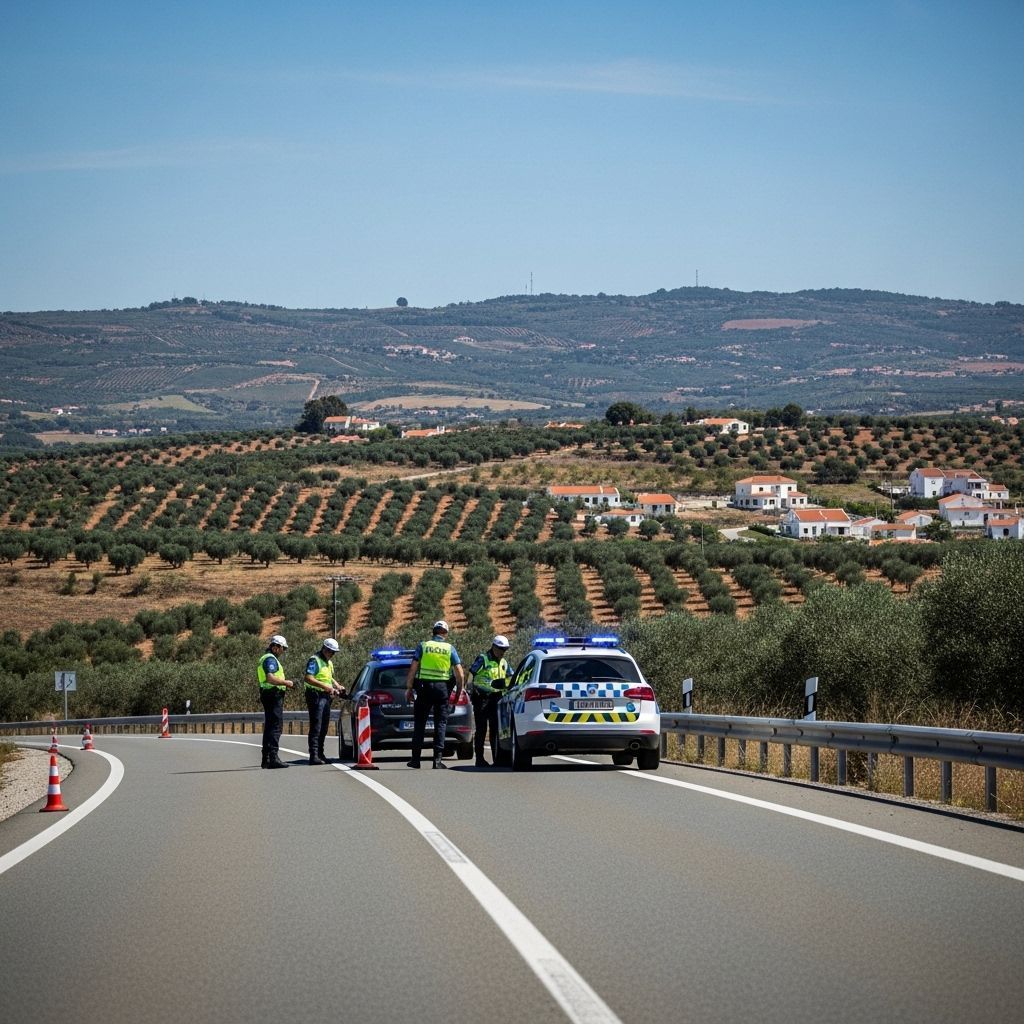
The Mirene Cardinali Circus, a traveling entertainment troupe performing in Portugal's Alentejo region, became the scene of a violent robbery attempt on May 15 when its owner was stabbed. Two suspects were detained at the scene but released within hours by a local prosecutor.
The Attack: What Happened
On the evening of Friday, May 15, two men approached the box office of the Mirene Cardinali Circus as families gathered outside the performance tent in Ferreira do Alentejo, a municipality in the Beja district of southern Portugal. One suspect attempted to enter without paying; when denied access, both men forced their way toward the cash registers in the restricted artist area.
The circus owner—stepfather of Isabela Cardinali, a former reality television participant—intercepted the intruders. During the confrontation, one assailant stabbed him with a knife. The owner, who practices martial arts, managed to immobilize one attacker, but the second suspect struck him repeatedly with a traffic sign torn from the roadside. Witnesses reported that stones were thrown toward the crowd, which included children and families waiting to enter the venue.
Isabela Cardinali, present during the assault, helped evacuate minors to safety inside the tent while other staff members called the Guarda Nacional Republicana (GNR), Portugal's national gendarmerie. Officers arrived and apprehended both suspects at the scene.
The Release Decision
Despite the knife wound and eyewitness accounts, the prosecutor assigned to the case in Almodôvar—a neighboring jurisdiction—declined to present the suspects before a judge. According to the prosecutor's assessment, insufficient evidence existed to justify pre-trial detention or formal charges at that stage.
Isabela Cardinali posted on Instagram to express her concerns, naming the prosecutor publicly. "Shame on having this type of person with power making decisions completely misaligned with public safety," she wrote. "What is necessary for someone to be convicted in this country?"
Her social media post generated significant online responses, with many residents from Ferreira do Alentejo and surrounding areas sharing similar experiences with law enforcement outcomes. By May 17, Cardinali posted an update: GNR officers had informed the family that authorities were pursuing deportation proceedings against the two suspects, both of whom lacked legal residency status in Portugal.
The Justice System and Prosecutorial Discretion
The incident reflects the discretionary authority Portuguese prosecutors exercise in deciding whether to request pre-trial detention. Under Portuguese law, factors include flight risk, likelihood of reoffending, and the strength of available evidence.
For small business owners and itinerant workers—particularly those operating in municipalities with limited police presence—such cases raise practical concerns:
• Immediate security risks: Traveling circuses, outdoor markets, and seasonal festivals often handle cash transactions in temporary facilities with minimal security infrastructure.
• Limited recourse: When suspects are released pending investigation, victims may face renewed threats, especially if the accused remain in the area.
• Economic pressure: Many entertainment businesses operate on thin margins; canceling performances after violent incidents can jeopardize entire tours.
The Beja district, which encompasses Ferreira do Alentejo, recorded violent crime incidents in 2025, with Ferreira do Alentejo identified among Portuguese municipalities with elevated rates of assault and bodily harm offenses. In early 2026, separate robbery incidents were reported in the municipality, including a January detention for attempted theft.
Ferreira do Alentejo established a Municipal Security Council in 2022, tasked with coordinating prevention efforts across domestic violence, traffic safety, and petty crime. The council's operational capacity remains constrained by the municipality's limited budget and staffing.
Traveling Circuses in Rural Portugal
Traveling circuses occupy a unique position in Portugal's entertainment economy. Unlike permanent theaters or festivals backed by municipal subsidies, these troupes rely entirely on ticket sales and operate under precarious conditions—moving between small towns, setting up temporary infrastructure, and navigating local regulations with minimal institutional support.
The Mirene Cardinali Circus, a family-run operation, has toured rural Portugal for years, offering affordable live entertainment in areas with limited cultural programming. The May 15 attack occurred during a multi-week swing through Alentejo, a region where circuses often fill gaps left by shrinking municipal budgets for public events.
Isabela Cardinali's social media presence—she gained a following after appearing on Portugal's "Secret Story" reality program—contributed to the incident's visibility online, generating discussion about justice system responses to violent crime.
What Happens Next
As of late May, the two Algerian suspects remain subject to deportation proceedings. Portuguese immigration law allows for expedited removal of non-residents who pose a public safety threat, particularly when combined with criminal charges. However, the timeline for such proceedings can stretch from weeks to months, depending on consular cooperation and appeals.
The GNR's notification to the Cardinali family suggests the case is receiving attention from authorities. Whether formal charges will be filed—and whether deportation will proceed before trial—remains to be determined.
For residents and business owners in Ferreira do Alentejo and similar municipalities, the case underscores the challenges facing Portugal's justice system in balancing due process with public safety accountability. The incident and its aftermath have generated discussion about prosecutorial discretion and its impact on victims and communities.
In the meantime, the Mirene Cardinali Circus continues its tour, demonstrating the resilience of Portugal's itinerant cultural workers.