

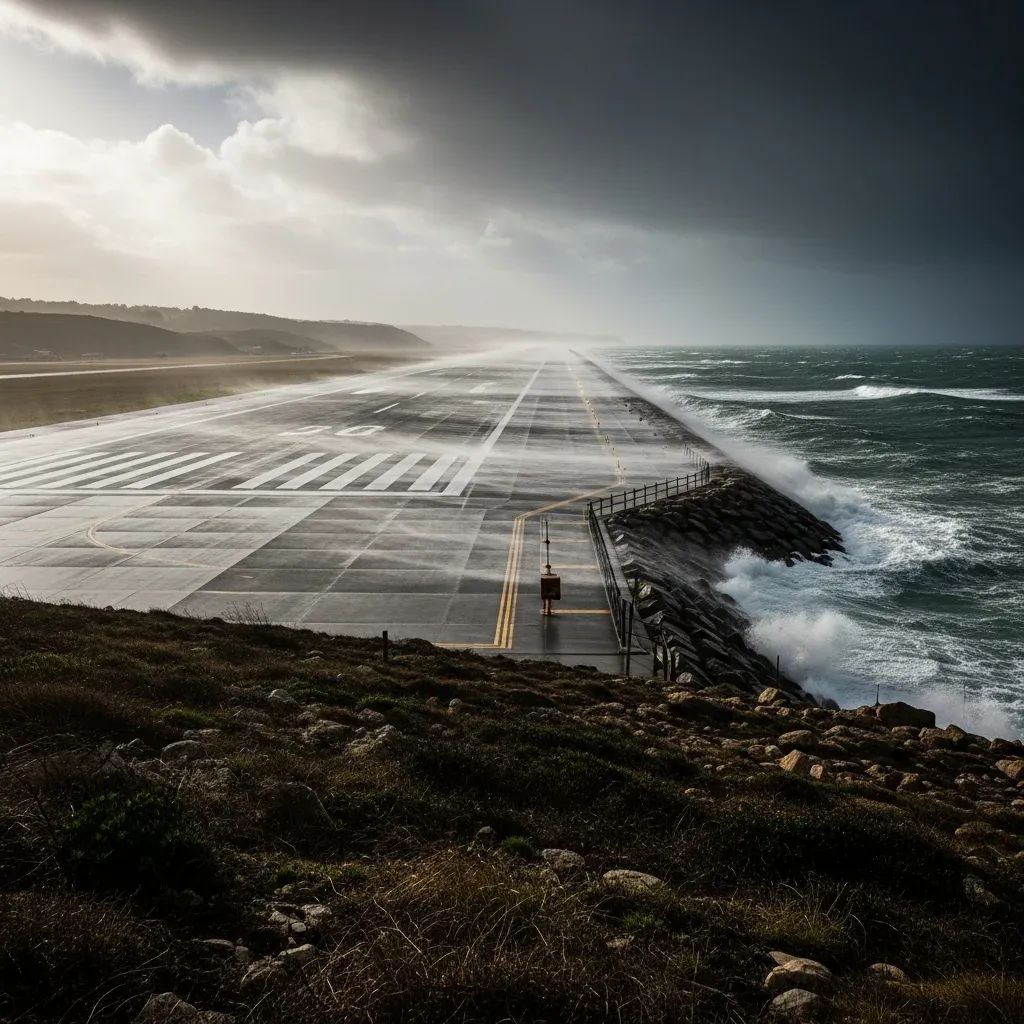
A 60-year-old foreign national was detained by authorities at Cristiano Ronaldo Madeira International Airport after breaching the perimeter fence in a desperate attempt to catch his flight to Belgium, an incident that underscores both the effectiveness of Portugal's airport security systems and the consequences of impulsive travel decisions.
Why This Matters
• Security response worked: The airport's surveillance system detected the intrusion within seconds of the breach at 5:20 a.m. on Tuesday, June 2, 2026.
• No operational disruption: The Ryanair flight to Charleroi departed on schedule despite the security incident.
• Clear legal boundaries: Even without criminal intent, bypassing airport perimeters triggers immediate law enforcement intervention.
How the Breach Unfolded
The passenger, running late for his early-morning departure, scaled the perimeter fencing at Funchal airport shortly after 5 a.m. on June 2, 2026. According to reports from RTP Madeira, he later explained to the Portugal Security Police (PSP) that he believed cutting across the restricted airside area represented the fastest route to his aircraft.
What the traveler apparently failed to consider was the layered security infrastructure protecting Portuguese airports. Modern perimeter systems at facilities like Madeira employ a combination of physical barriers and continuous surveillance technology designed to detect unauthorized access instantly. The moment his foot touched restricted ground, monitoring systems flagged the intrusion and security personnel were dispatched.
Officers intercepted him before he reached any aircraft or posed a danger to ongoing operations. He was escorted to the local PSP station for questioning—a standard protocol for any perimeter breach, regardless of apparent intent.
Security Protocols and Passenger Rights
After several hours of questioning, authorities determined the man posed no threat to civil aviation. He had no weapons, no malicious intent, and his story—though reckless—was consistent and verifiable. The PSP released him without charges, though the incident will remain on record.
This outcome reflects Portugal's balanced approach to aviation security incidents. While airport perimeter breaches are treated with utmost seriousness given international aviation security standards, Portuguese authorities distinguish between genuine security threats and poor judgment calls made by frustrated travelers.
The response aligns with broader European Union aviation security regulations, which Portugal has implemented since the bloc established its common civil aviation security regime in 2002. These rules aim to protect passengers and property from unlawful interference while maintaining proportionate responses to different threat levels.
What This Means for Travelers
For anyone flying through Portuguese airports, this incident serves as a stark reminder of several realities:
Legal consequences vary by country. This passenger was released without charges in Portugal, but it's important to understand that consequences differ significantly across Europe. In other jurisdictions like France, similar perimeter breaches have resulted in fines reaching €20,000 and multi-year flight bans, particularly as authorities have tightened penalties for disruptive passenger conduct. Portuguese handling tends to be more measured, but the incident still cost this traveler his flight and substantial rebooking expenses.
Security delays are built into procedures for good reason. Average wait times at Madeira's security checkpoints run approximately 7 minutes, extending to 11 minutes during peak periods. These are built into recommended arrival times for genuine operational reasons. Attempting to circumvent them creates exponentially worse delays and potential legal complications.
Missing your flight shouldn't be solved by breaching security. If you miss your flight at any Portuguese airport, contact your airline immediately. Rebooking options, standby lists, and alternative routes are available through legitimate channels. The cost and stress of attempting to bypass security vastly exceeds any benefit from saving a few minutes.
Lessons for Incident Response
From a security perspective, the Madeira incident demonstrated the effectiveness of Portugal's aviation security infrastructure. The immediate detection, rapid response, and measured consequence represent textbook handling of what could have escalated into a more serious situation.
Airlines operating in Portugal benefit from this security reliability. Even with a person on the restricted side of the perimeter, normal operations continued without delay. The Ryanair service to Belgium departed on time, and no other flights were affected—a testament to both security protocols and airport operational resilience.
For the broader traveling public in Portugal, the incident reinforces confidence in the safety systems protecting commercial aviation. Whether departing from Faro, Lisbon, Porto, or Funchal, passengers can trust that unauthorized access attempts will be detected and contained quickly.
The man's story will likely become a cautionary tale in travel forums: the expensive, stressful consequence of trying to outsmart airport procedures. For a few minutes saved, he gained hours of interrogation, legal uncertainty, and a missed journey—a poor trade by any measure.


