

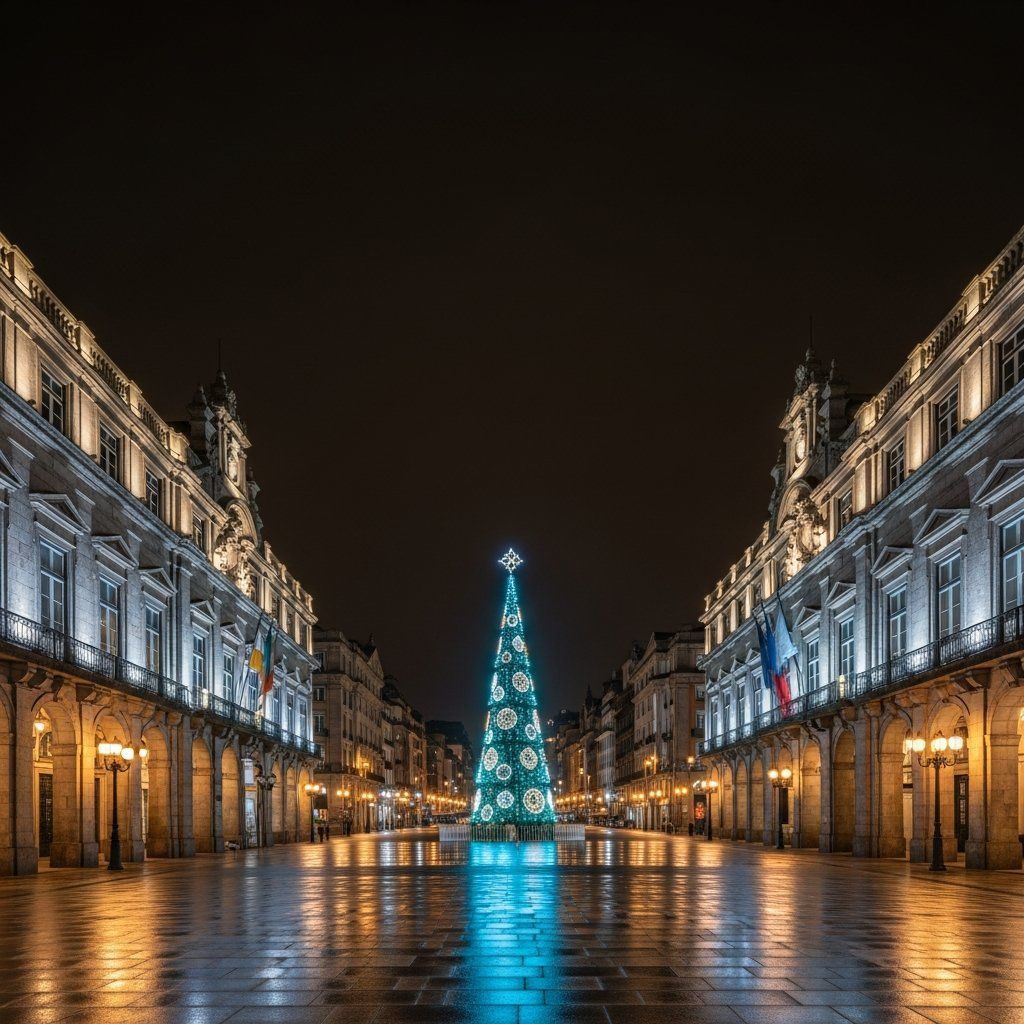
A Question of Trust: How Lisbon's Christmas Lights Became a Transparency Test
When the Polícia Judiciária launched Operation Lúmen in March 2025, investigators uncovered a decade-old arrangement built on presumed corruption. Two figures once central to Lisbon's festive infrastructure faced charges: the president of the city's largest business federation and a senior municipal administrator. The immediate fallout forced Câmara Municipal de Lisboa to overhaul how it funds and procures the capital's most visible seasonal symbol—the Christmas illuminations that frame December evenings from Baixa to Avenida da Liberdade. By July, that restructuring reached its first practical outcome: a new contractor, a recalibrated budget, and a shift in who decides where light falls each winter. What this reorganization means for shopkeepers, residents, and the city's reputation extends far beyond festive decoration.
Why This Matters
• Governance overhaul: A corruption probe dismantled the UACS' 14-year monopoly over Christmas-light procurement. Budget authority now rests with Associação Turismo de Lisboa (ATL), funded through hotel taxes rather than municipal protocol renewals.
• Public procurement restored: The Câmara Municipal launched competitive bidding for the first time, replacing a closed-door arrangement that allegedly embedded kickback mechanisms into historical budgets.
• Real cost emerges: The winning bid—€556,000 from Iluminações Teixeira Couto—sits notably below recent annual spending, raising questions about whether past budgeting practices inflated costs or whether legitimate market rates have never been properly tested.
The Corruption Investigation That Triggered Change
For 14 consecutive years, the UACS (União de Associações de Comércio e Serviços)—an umbrella body representing Lisbon's retail sector—held exclusive authority over the city's Christmas display through a standing municipal protocol. The arrangement created predictability: each December, approximately €750,000 flowed from municipal coffers to fund design, installation, daily operation, and eventual dismantling. That consistency bred complacency, and complacency, prosecutors contend, enabled systematic fraud. When the Polícia Judiciária executed search warrants across UACS offices and municipal annexes in March 2025, officers alleged that the bidding process was choreographed—that preferred contractors were selected in advance and that legitimate competition never existed. Court filings suggest that historical arrangements involved illicit financial mechanisms benefiting UACS leadership.
Investigators named Carla Salsinha, president of UACS since its restructuring in the early 2020s, and Alberto Laplaine Guimarães, a former administrative secretary at Lisbon City Hall, as suspects in charges including active and passive bribery, undisclosed economic participation in contracts, abuse of administrative authority, and criminal association. Both were detained briefly; both have denied wrongdoing. The judicial process remains ongoing, with trial dates unscheduled as of mid-year. Regardless of ultimate verdicts, the political and reputational damage proved immediate and irreversible: the Câmara Municipal severed its protocol with UACS within weeks of the detention announcements.
A New Model Takes Shape
By May, Câmara Municipal de Lisboa had formally voted to transfer Christmas-light responsibility to Associação Turismo de Lisboa, an organization focused on visitor attraction and urban branding rather than retail advocacy. The decision reflected both scandal management and a genuine philosophical reorientation. Where UACS framed Christmas lights as infrastructure supporting neighborhood shops, ATL positioned them primarily as cultural spectacle and tourist asset. The source of funding shifted too: instead of general municipal allocation, the Câmara drew €750,000 from the Fundo de Desenvolvimento Turístico, a pool capitalized by nightly lodging taxes. That redirection matters operationally. Visitors now implicitly fund the atmosphere that attracts them—a model that theoretically aligns incentives more cleanly than generic municipal budgeting.
ATL then launched a formal public procurement process in late spring, inviting sealed bids for the complete cycle of Christmas illumination work: conceptual design, material sourcing, installation, assisted operation through early January, maintenance, and full dismantling. The tender specified technical requirements mirroring the scope that UACS had historically managed. Two companies submitted proposals. Iluminações Teixeira Couto, a Porto-based firm headquartered in the rural municipality of Paredes, won with a bid of €556,272. The company's credentials proved decisive in evaluation: more than 50 years specializing in large-scale festive lighting installations across Portugal, from municipal celebrations to religious pilgrimages to commercial-district displays. Its track record suggested technical competence and logistical capacity to execute on schedule.
What the Cost Reduction Actually Signals
The €556,000 contract value represents a reduction compared to historical spending patterns, which had stabilized at or near €750,000 annually through recent years. That decrease invites competing interpretations. One narrative emphasizes efficiency gains and genuine market competition: the company's expertise and operational scale enable it to deliver identical scope at lower cost. A second narrative points toward past inflation, arguing that historical arrangements involved artificially padded financial flows. A third suggests scope reduction—that Teixeira Couto is contracted to deliver a less elaborate installation than what residents experienced in recent years. ATL has not publicly articulated any reduction in technical scope, and the contract documents reference historical specifications for the 2026 installation. That alignment implies continuity rather than retrenchment.
When the Polícia Judiciária makes public prosecutorial findings—if charges against Salsinha and Guimarães proceed to trial verdict—the judicial accounting of historical practices may definitively answer which narrative applied. For now, residents and shopkeepers encounter ambiguity: is the lower spending evidence of cleaner procurement, or does it signal a materially diminished experience?
How Retailers Are Processing the Shift
For Lisbon's business community, the governance transition brings tactical uncertainty overlaid on strategic relief. On the strategic level, relief: the Câmara has signaled sustained financial commitment to the displays, confirming the €750,000 budget as roughly equivalent to recent annual levels. Merchants will not face dimmed streets or abbreviated seasons. On the tactical level, uncertainty: the philosophical pivot from UACS to ATL reorients how display design decisions get made. Where UACS historically consulted directly with merchant associations on placement and intensity—prioritizing decorative choices that maximized spillover foot traffic into side-street shops—ATL operates within a tourism framework. Decisions now emphasize visitor-experience optimization and media-coverage potential. Merchants on secondary commercial streets relying on illuminated pathways drawing customers from main thoroughfares may discover less advocacy for their neighborhoods.
The UACS itself issued a carefully circumscribed public response: "We respect the Câmara Municipal de Lisboa's decision regarding the model for 2026 Christmas illuminations, a choice that lies exclusively with municipal authority." The statement's cautious phrasing—neither welcoming nor contesting—reflected institutional self-protection. With Salsinha facing ongoing investigation, public defensiveness would invite additional scrutiny. Strategic silence became the safer position.
The Technical Continuity Question
If execution unfolds as contracted, residents will encounter a familiar December landscape in 2026. Installation commences in late October as crews prepare for the seasonal display. The ceremonial inauguration will likely occur in mid-November, preserving the Praça do Comércio event—a spectacle featuring concert performances and celebrations—that has become embedded in Lisbon's seasonal calendar. Daily illumination will follow the conventional schedule: 17:30 to 23:00 Sunday through Thursday, extended to midnight on weekends, continuing through early January when dismantling teams restore the urban landscape to non-festive status.
Whether Teixeira Couto introduces subtle design modifications remains unannounced. ATL has made no public statements signaling major reimagining, and the contract scope mirrors technical requirements from prior years, suggesting continuity as the default.
Institutional Durability and Political Risk
The resilience of this restructured arrangement hinges on factors beyond immediate procurement success. If judicial proceedings against Salsinha and Guimarães reach conviction, the legal validation of past corruption may permanently delegitimize the old UACS model, embedding competitive tender processes as permanent institutional practice. Conversely, if investigation falters or prosecution stalls—a realistic possibility given Portugal's chronically congested judicial system—future municipal administrations might face merchant pressure to restore a direct UACS role, arguing that the scandal was aberrant rather than systemic. Political memory fades. Institutional inertia reasserts itself. The current governance structure represents a necessary correction, not a guaranteed permanent architecture.
For households across Lisbon, the practical impact centers on governance transparency: December nights will glow as they have for a decade, backed this time by cleaner procedural governance and formal competitive selection rather than protocol renewal. Whether that translates into measurably stronger commercial activity, enhanced community experience, or sustained visitor magnetism will become apparent only in the weeks following the November inauguration and the weeks of December 2026 operation themselves. The season will reveal whether governance reform and market competition deliver not just fiscal prudence but also genuine improvement to the urban experience that prompted the investment in the first place.


