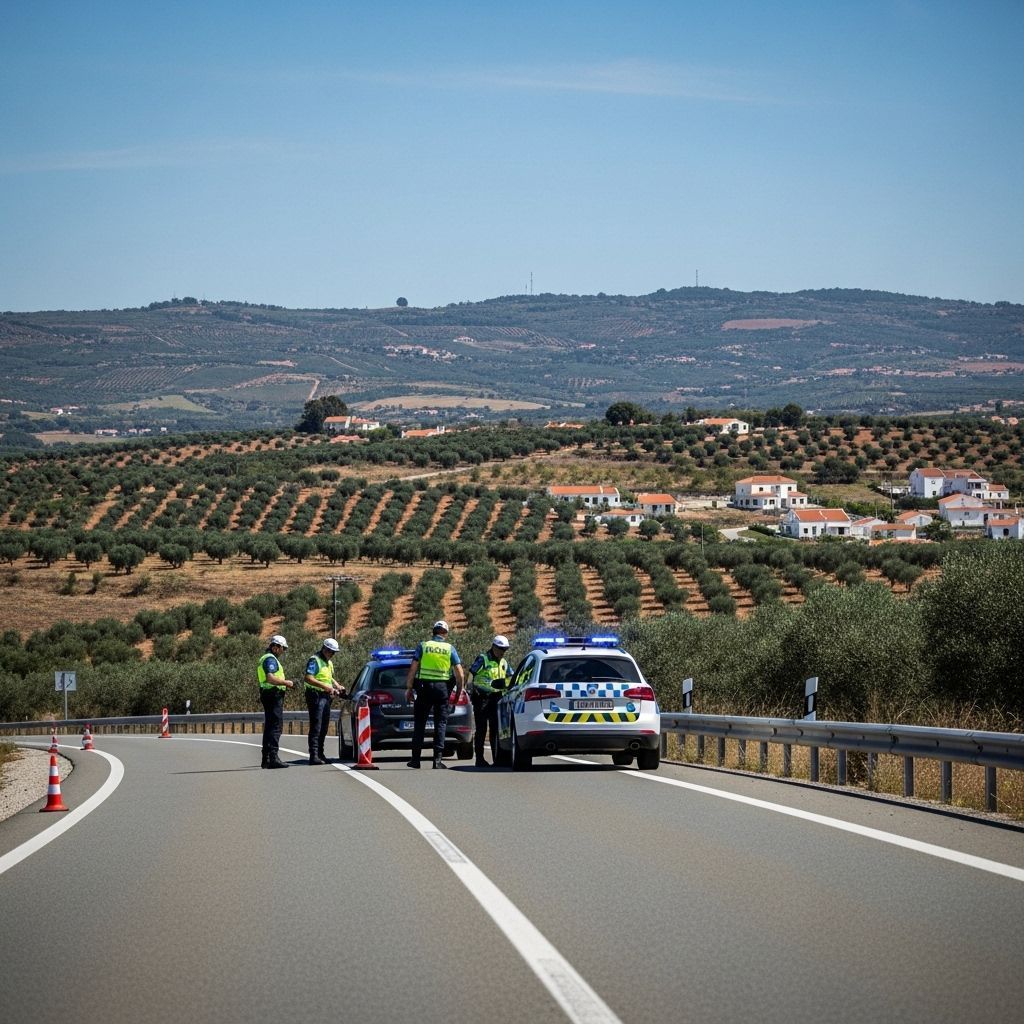
The Portugal Security Police (PSP) has dismantled a drug trafficking network operating in central Portugal, detaining 7 suspects and seizing nearly €18,000 in a coordinated sweep that mobilized 80 officers from four separate police commands. The multi-month investigation, which culminated on July 8, targeted a street-level distribution operation centered in Leiria's Dr. Francisco Sá Carneiro neighborhood—a district authorities say has become a focal point for narcotics enforcement.
The arrests mark the conclusion of Operation Lótus, an inquiry that began in 2025 under judicial supervision. All seven detainees—men aged 22 to 29—have prior convictions for drug-related offenses, according to the PSP District Command of Leiria. One suspect was caught in the act; the remaining six were taken into custody under court-issued warrants. Following their July 10 arraignment, all were released under identity and residence terms, with four ordered to report weekly to a police station.
What Authorities Seized
During synchronized home searches, investigators recovered a small-scale trafficking operation's infrastructure:
• €17,900.40 in cash
• 29.08 grams of hashish (59 street doses)
• 5.62 grams of cocaine (22 doses, described as "rocks")
• 11 mobile phones
• 46 packs of untaxed tobacco with English-language packaging
• 3 knives
• Hermetically sealed bags, a precision scale, and a cash-counting machine
The untaxed tobacco—a common side-business for organized crime groups—suggests potential ties to contraband smuggling routes, though the PSP has not publicly linked the network to international supply chains.
Why Leiria Matters in Portugal's Drug Landscape
The Dr. Francisco Sá Carneiro neighborhood, a residential zone on Leiria's outskirts, has repeatedly appeared in PSP enforcement actions over recent months, signaling persistent trafficking activity at the street level. The presence of precision scales and hermetically sealed packaging materials indicates the operation was selling directly to consumers, not merely middlemen—meaning residents likely encountered the network's street-level dealers.
Nationally, Portugal remains a key European entry point for South American cocaine shipments, which are often concealed in container cargo passing through Lisbon and Porto. While Operation Lótus targeted a modest street-level operation—the haul totaled just 34.7 grams of narcotics—the repeat offender profile of the detainees underscores the difficulty authorities face in permanently disrupting local distribution cells.
A Coordinated Show of Force
The PSP Leiria Criminal Investigation Squad led the operation but required reinforcements from the Metropolitan Command of Lisbon, as well as district commands in Santarém and Coimbra. The 80-officer deployment reflects a strategic shift toward overwhelming force in neighborhood sweeps, a tactic designed to execute multiple simultaneous warrants and minimize the risk of evidence destruction.
Portugal's security forces have conducted large-scale anti-drug operations in recent months. In July, the Republican National Guard (GNR) arrested 26 people in Aveiro and Porto, seizing 40 kilograms of hashish—roughly 80,000 doses—and two replica firearms. That operation dismantled a logistics network spanning two districts, a contrast to Leiria's localized cell.
What This Means for Residents
For Leiria residents: The Dr. Francisco Sá Carneiro neighborhood's recurring appearance in drug enforcement actions reflects ongoing trafficking activity. The PSP identified these arrests as a priority enforcement success. All seven suspects were released with reporting obligations pending trial, a standard pretrial measure under Portuguese law.
For broader context: The presence of precision scales and hermetic packaging materials indicates the operation was engaged in retail-level sales to consumers. The untaxed tobacco—a detail often recorded in seizure inventories—highlights how criminal enterprises sometimes diversify revenue streams beyond narcotics.
Legal Outcomes and Judicial Framework
The suspects' criminal histories suggest the network comprised individuals previously involved with authorities. Under Portugal's decriminalization framework, trafficking charges distinguish between trafficking and personal possession based on quantity thresholds. For reference, Portugal's trafficking threshold is 25 grams for cannabis and 2 grams for cocaine—amounts the detainees exceeded. The requirement for four suspects to report weekly to a police station is a standard monitoring measure used in pretrial supervision.
Portugal's Enforcement Focus
Operation Lótus exemplifies current enforcement strategy—targeting neighborhood-level distribution cells. This approach focuses police resources on dismantling retail operations that directly affect local communities. The modest drug haul (less than 35 grams total) and absence of firearms confirm the network operated at the retail tier, far removed from the port-to-warehouse logistics that move multi-ton shipments.
Current Status
The PSP has not disclosed whether the investigation will continue or whether additional suspects remain at large. The 11 seized mobile phones—likely containing communications records—could yield leads to other members of the network, though Portuguese courts maintain strict rules on digital evidence admissibility.
For residents of the Dr. Francisco Sá Carneiro neighborhood, the operation represents active law enforcement presence. Whether these arrests produce sustained effects on local drug availability remains to be seen as the investigation continues.