

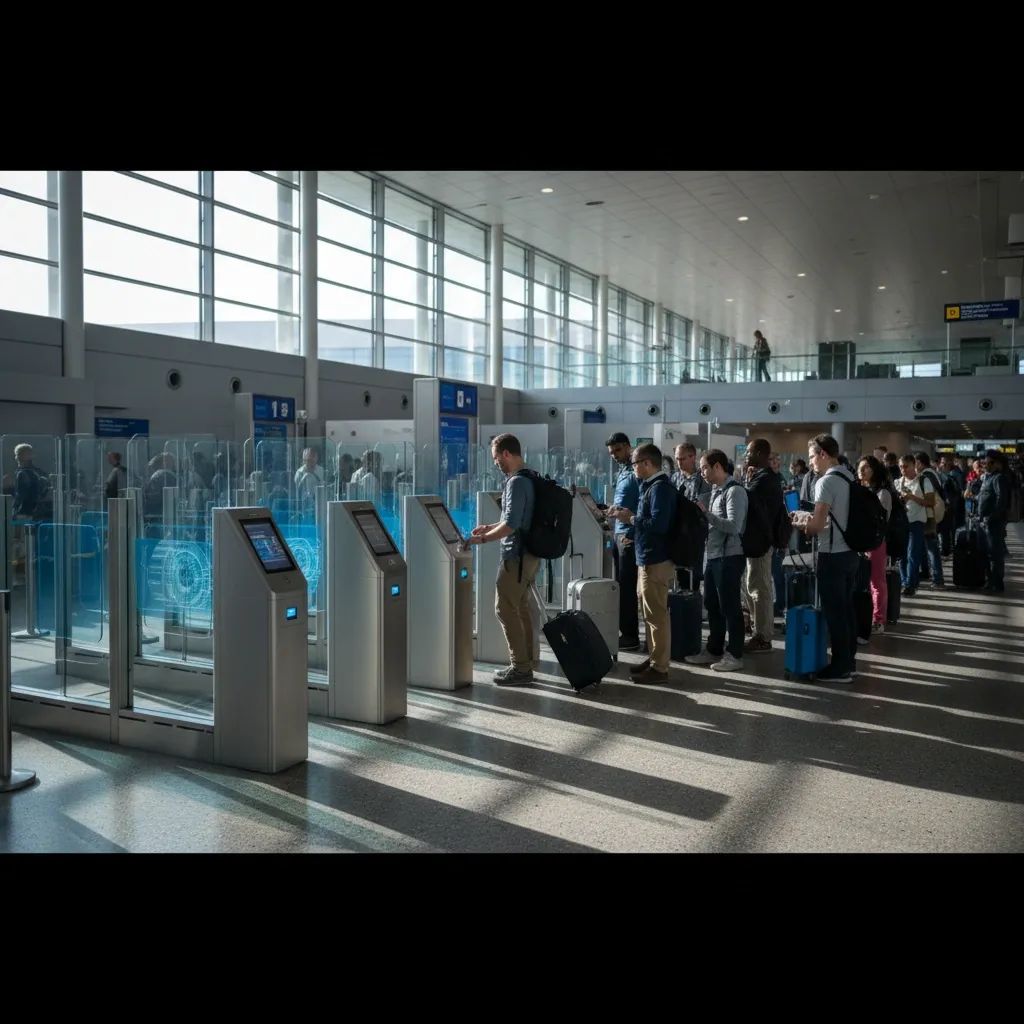
The Portugal Public Security Police confirmed Friday morning that arriving passengers at Lisbon's Humberto Delgado Airport faced up to 65 minutes at passport control — the latest indicator that the country's main aviation gateway remains under significant operational strain even after months of promised improvements.
Why This Matters:
• Border wait times at Lisbon arrivals reached 65 min on 12 June, despite infrastructure upgrades deployed in late May.
• The airport ranks 274th out of 279 globally in a new AirHelp performance study, making it the fifth-worst airport worldwide.
• The ongoing disruption threatens Portugal's reputation as a tourism destination at the start of the critical summer travel season.
Portugal's Capital Gateway Languishes at Bottom of Global Rankings
Lisbon's airport has plummeted to near-bottom status in the latest international performance assessment, ranking 274th out of 279 airports evaluated by AirHelp, an industry watchdog that measures punctuality, passenger experience, and facility quality. The study assigns 60% of its rating to on-time performance, with the remainder split between passenger amenities and comfort.
The diagnosis is blunt: Humberto Delgado is handling a volume of flights far beyond its design capacity, and the operational failures cascade into chronic delays. The airport's infrastructure, originally conceived for a fraction of current traffic, has seen commercial zones expand aggressively while critical bottlenecks — security lanes, boarding gates, and immigration checkpoints — remain constrained.
Meanwhile, Faro Airport, serving the Algarve, held onto its national lead at 125th place globally, though it slipped seven positions from 2025. AirHelp credits Faro's lower traffic density for its comparatively better punctuality. Porto Airport nudged upward from 205th to 192nd, registering improvements in the passenger experience category. Cristiano Ronaldo Airport in Madeira, however, fell 61 places to 262nd, penalized for deteriorating facility scores and passenger comfort.
The Border Bottleneck: 65-Minute Wait Times and a Structural Crisis
The 65-minute wait at arrivals passport control on Friday morning was not an anomaly — it is the visible symptom of a deeper infrastructure crisis. The Portugal Cabinet and border authorities have acknowledged that Lisbon's arrival halls are severely undersized for current demand, a problem intensified by the rollout of the European Union's Entry/Exit System (EES) in late 2025.
The EES, which went into full operation across Portugal on 10 April 2026, mandates biometric data collection — facial photographs and fingerprints — from all non-EU arrivals. Each registration takes 30 to 60 seconds, and technical glitches have compounded delays. At peak hours, insufficient staffing and a limited number of manned control booths have left arriving passengers stranded in serpentine queues.
In late May, the Portugal Ministry of Internal Administration announced that border wait times had been cut by 50% thanks to infrastructure additions: 14 extra control desks (bringing the total to 34) and 14 new e-gates (totaling 32) dedicated to automated checks. Officials claimed arrivals waits had dropped to "just under an hour." Friday's 65-minute figure suggests those improvements remain fragile under load.
A temporary deployment of 48 additional officers was rushed into place in early June, and authorities have promised a further 340 Public Security Police officers — 140 of them assigned to Lisbon — starting 4 July, following specialized training. Under "exceptional circumstances," the PSP has been authorized to partially suspend biometric collection to prevent extreme queue buildup, a provision it has exercised intermittently.
How Saturation Cascades Into Delay
Aviation analysts identify a cluster of mutually reinforcing problems at Lisbon:
Structural Saturation: The airport is operating at or near maximum capacity with minimal buffer to absorb disruptions. Commercial retail space has ballooned while passenger circulation zones have not kept pace.
Flight Concentration: A pronounced bunching of arrivals and departures during morning and late-afternoon windows creates predictable congestion spikes.
Reactionary Delays: Weather constraints, airspace restrictions, and en-route congestion produce a domino effect, where delays accumulate from flight to flight throughout the day. Lisbon is the second-most weather-affected airport in Europe, trailing only Amsterdam Schiphol.
EES Implementation Lag: While Brussels designed the Entry/Exit System years in advance, Portugal underestimated the preparation required, leaving border facilities scrambling to retrofit technology and retrain staff.
The rate of severe delays — flights arriving more than 60 minutes late — jumped to 6.74% in early 2026, versus 3.34% a year earlier. The average delay for affected flights was 88 minutes, placing Lisbon fourth-worst in Europe for serious punctuality failures.
What This Means for Tourists and Business Travelers
For anyone flying into Lisbon this summer, the practical advice is straightforward:
Allow buffer time. International travelers should arrive at the airport at least three hours before departure to account for security, check-in, and border processing. For arrivals, factor in potential delays when scheduling onward connections or appointments.
Pre-register via the "Travel to Europe" app. Non-EU nationals can enter passport and travel details up to 72 hours before arrival, generating a QR code that expedites processing at immigration. Self-service kiosks are available in the arrivals hall for biometric data capture.
Use e-gates where eligible. U.S. passport holders, among others, can use automated gates unless traveling with children under 16.
Track real-time updates. The ANA Aeroportos de Portugal website, the PSP border service alerts, and flight-tracking platforms like Skyscanner provide live information on wait times and delays. The U.S. Embassy in Lisbon has been issuing regular traveler advisories.
Reputational Risk and Economic Stakes
The chaos at Lisbon's airport carries consequences beyond inconvenience. For many visitors, the airport is their first and last encounter with Portugal, and images of disorganized queues and overwhelmed staff circulate widely on social media, undermining the country's brand as a modern, welcoming destination.
The International Air Transport Association (IATA) has identified Lisbon's infrastructure constraints as the single greatest risk to Portugal's tourism sector for summer 2026. A 2022 study by the Confederação do Turismo de Portugal (CTP) warned that continued delay in building additional airport capacity could cost the economy up to €6.8 billion in lost value-added by 2027, with cumulative losses potentially reaching €21.4 billion by 2034 under worst-case scenarios, alongside tens of thousands of lost jobs and reduced tax revenues.
Yet the sector has shown resilience. Tourism officials project Portugal will host between 31.1 and 34 million visitors in 2026, generating between €6.6 and €7 billion in revenue. The sector's contribution to GDP is expected to reach 17.5%, with gross value added hitting €23.1 billion. Aviation contributes roughly €17.3 billion to the Portuguese economy and supports 335,000 jobs.
Economists believe the impact of delays on overall growth will be temporary and contained, particularly as geopolitical instability in the Middle East redirects long-haul travelers toward European destinations. However, the long-term reputational damage and the risk of airlines cutting routes due to operational unreliability remain unresolved concerns.
Europe-Wide Strain from the Entry/Exit System
Lisbon is not alone. Airports across France, Germany, Italy, Spain, Belgium, and Greece have reported multi-hour delays since the EES launched. The European Airports Council (ACI Europe) has warned of wait times exceeding 3.5 hours during peak periods and anticipates a "particularly difficult summer."
Several strategies are emerging across the continent:
App-based pre-registration: The "Travel to Europe" mobile app, promoted by multiple EU states, allows advance data submission, though adoption rates vary.
Expanded e-gate eligibility: The minimum age for automated border gates was lowered from 18 to 16, and more nationalities now qualify, though the "persistent inability to use e-gates effectively" remains a bottleneck.
Flexible biometric enforcement: National authorities have exercised the option to suspend biometric collection temporarily during surges, prioritizing flow over data completeness.
The European Commission maintains that the system is functioning well in most member states, with some airports achieving 30-second average processing times. Yet it acknowledges technical failures and national interface issues, and emphasizes that harmonization and resource optimization remain critical.
Government Pressure and Ongoing Uncertainty
Prime Minister Luís Montenegro publicly expressed dissatisfaction with border services in May, pledging to increase staffing, upgrade equipment, and, if necessary, suspend biometric requirements to protect national economic interests. The CEO of ANA Aeroportos de Portugal promised expanded control capacity by late May to account for longer EES processing times.
No firm date has been set for full resolution of the delays, and officials have cautioned that the situation may worsen during the peak July and August travel window. Authorities have deployed stopgap measures — temporary personnel, partial suspension of biometrics, and kiosk installations — but the fundamental constraint remains: Lisbon's airport is too small for the role it is being asked to play, and structural relief is years away.


