

Portugal's main gateway airport ranks sixth from the bottom globally, while the southern coastal hub continues to outperform expectations—an outcome that underscores the widening service gap between the country's aviation infrastructure and the demands placed on it by record passenger volumes.
Why This Matters
• Lisbon Humberto Delgado Airport placed 274th out of 279 airports worldwide, making it the nation's weakest link and one of the planet's most problematic hubs.
• Faro Airport retained its national lead at 125th globally, benefiting from lower traffic and superior on-time performance.
• Porto's Francisco Sá Carneiro facility climbed 13 positions, signaling operational recovery and improved passenger satisfaction.
• The assessment covers data from May 1, 2025, to April 30, 2026, evaluating punctuality, passenger experience, and facility comfort.
A Tale of Two Terminals: Faro Leads, Lisboa Lags
The Portugal Civil Aviation Authority oversees four airports that were assessed in the 2026 AirHelp Score, an industry benchmark that this year evaluated 279 airports across 76 countries—the largest sample to date. The results paint a stark picture of divergence: the Algarve's Faro hub scored 7.61 out of 10, while the capital's Humberto Delgado terminal limped to a 6.59, barely escaping the global bottom five.
Faro's performance rests on three pillars: punctuality at 7.90, passenger experience at 7.60, and facilities graded at 6.90. Its success correlates directly with manageable traffic volumes, a luxury Lisboa does not enjoy. The southern airport slipped seven positions year-on-year but retained top billing nationally.
Porto's climb from 205th to 192nd marks the study's most encouraging trend. The northern hub notched a composite score of 7.41, driven by an 8.20 rating for passenger experience—the highest figure among Portuguese facilities. That improvement follows a difficult 2025 and suggests operational adjustments are taking hold.
Madeira's Cristiano Ronaldo Airport, by contrast, tumbled 61 places to 262nd with a 6.96 score. The drop reflects underwhelming infrastructure and comfort ratings of just 5.70, hinting that travelers find the island's amenities less satisfactory than they once did.
What Lisboa's Chronic Underperformance Means for Travelers
For anyone transiting through Lisboa Humberto Delgado Airport—which handles approximately 225,000 flights annually—the AirHelp data confirms lived experience: punctuality sits at a dismal 6.30, the worst mark in the country. Long passport-control queues, cramped boarding zones, and insufficient air conditioning have become synonymous with the Lisboa experience, especially for passengers connecting to European hubs or arriving from non-Schengen origins.
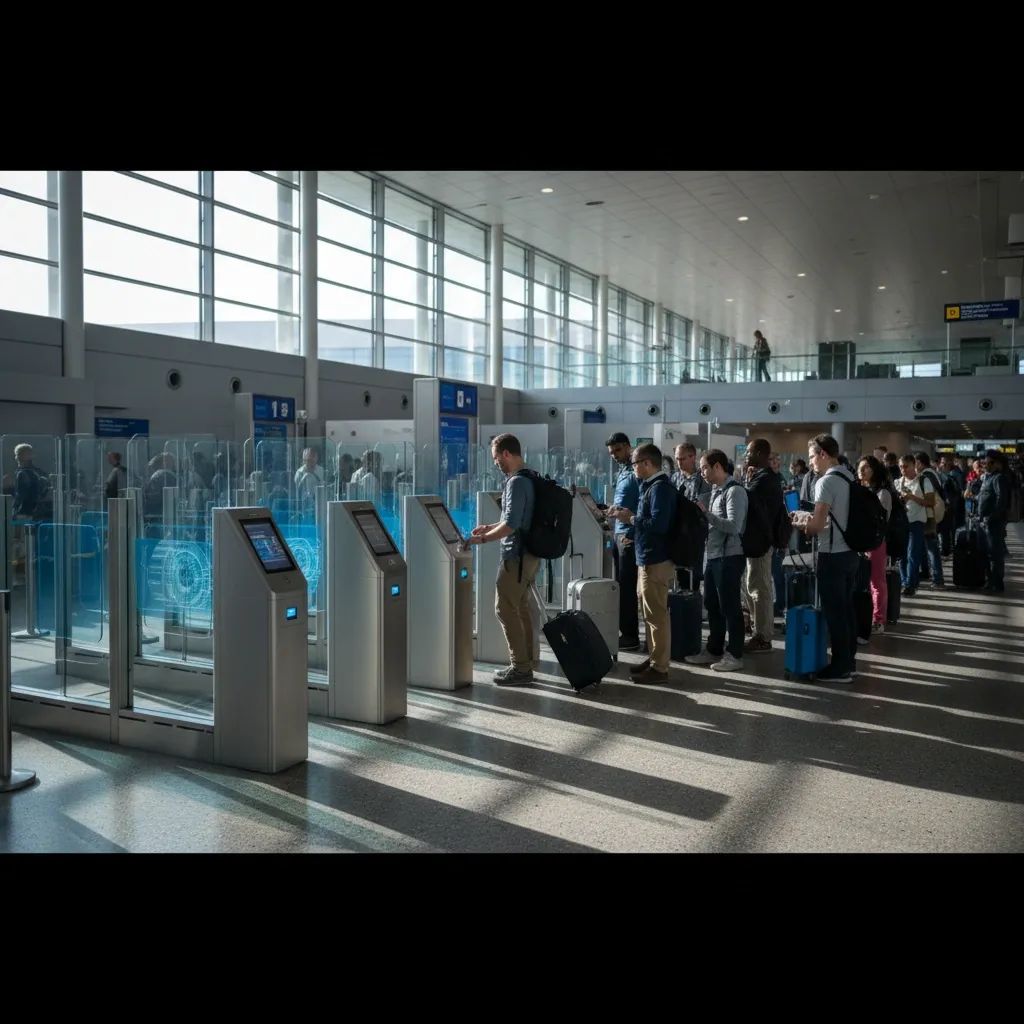
The European Union's Entry/Exit System (EES), which rolled out in stages during the assessment period, has compounded bottlenecks at border checkpoints. Biometric scanning requirements, while intended to streamline security, initially slowed processing times as infrastructure and staffing lagged behind implementation schedules.
Frequent flyers know the drill: arrivals at Terminal 1 often face 45-minute waits at immigration, while Terminal 2's Schengen departure gates see clusters of passengers standing for lack of seating. Pedro Miguel Madaleno, AirHelp's Portugal representative and a passenger-rights specialist, noted that smaller airports and emerging-market facilities consistently outrank major European hubs burdened by congestion and legacy infrastructure.
The Investment Push: Modernization Underway at Lisboa
ANA – Aeroportos de Portugal, the state-linked operator privatized under VINCI Airports, has committed to significant infrastructure upgrades for Humberto Delgado through late 2026. The centrepiece is a new South Pier at Terminal 1, which will add substantial additional space and jet bridges for improved boarding capacity. Redesigned central halls promise more natural light, expanded seating, and improved flow dynamics.
Terminal 2's Schengen boarding area has already been modernized with biometric gates at every departure door, cutting boarding times and eliminating paper boarding-pass requirements for enrolled passengers. The project introduced more charging points, expanded retail options, and reconfigured queuing zones to ease crowding.
Yet these measures address symptoms, not root causes. Lisboa's capacity crunch stems from handling traffic volumes the facility was never designed to absorb. Until the Luís de Camões Airport in Alcochete opens—currently slated for 2034–2037—the capital's aviation gateway will remain under strain.
Global Context: Panama and Brazil Dominate, Europe Falters
Panama City's Tocumen International Airport claimed the 2026 global summit with an 8.48 score, displacing Cape Town International (8.36 points), which held the crown in 2025. Brazilian airports occupied five of the top 10 slots—Fortaleza, Brasília, Rio's Santos Dumont, Belém, and Rio Galeão—reflecting operational efficiency less disrupted by the staffing shortages and air-traffic control issues plaguing transatlantic hubs.
The pattern holds: mid-size airports in emerging economies consistently outperform legacy European terminals strained by growth that outpaced investment. Lisboa's challenges mirror those at Frankfurt, Heathrow, and Charles de Gaulle, where aging infrastructure collides with surging demand.
Impact on Residents and Business Travelers
For Portugal-based professionals, the AirHelp rankings translate into tangible friction. Departing from Porto or Faro guarantees smoother check-in and shorter security queues, while routing through Lisboa invites delays and stress. Business travelers increasingly favor Porto connections when schedules allow, while expatriates and digital nomads living in the Algarve benefit from Faro's reliability and smaller crowds.
The data also matters for incoming tourism, a sector that generates roughly 15% of Portugal's GDP. First impressions form in immigration halls; a chaotic arrival at Lisboa can sour perceptions, especially for visitors accustomed to seamless experiences at Nordic or Gulf hubs.
The Road Ahead: Benchmarking Against European Leaders
To close the gap, Portuguese aviation authorities and ANA must look beyond piecemeal fixes. Helsinki-Vantaa, Zurich, and Istanbul set the standard with intuitive signage, climate-controlled spaces, and real-time queue management powered by AI and predictive analytics. Porto has begun adopting best practices; Lisboa needs accelerated deployment of biometric systems, expanded PSP staffing at border control, and a comprehensive overhaul of Terminal 1's ground-floor layout.
Faro's success offers a blueprint: manageable traffic, proactive maintenance, and focus on passenger flow yield measurable results. But scaling that model to a hub processing millions more travelers demands political will and sustained capital infusion, not just stopgap renovations.
Until then, savvy travelers will continue to route around Lisboa whenever possible—and the airport's basement ranking will remain a reminder that infrastructure investment, once deferred, extracts a steep price in reputation and efficiency.


