

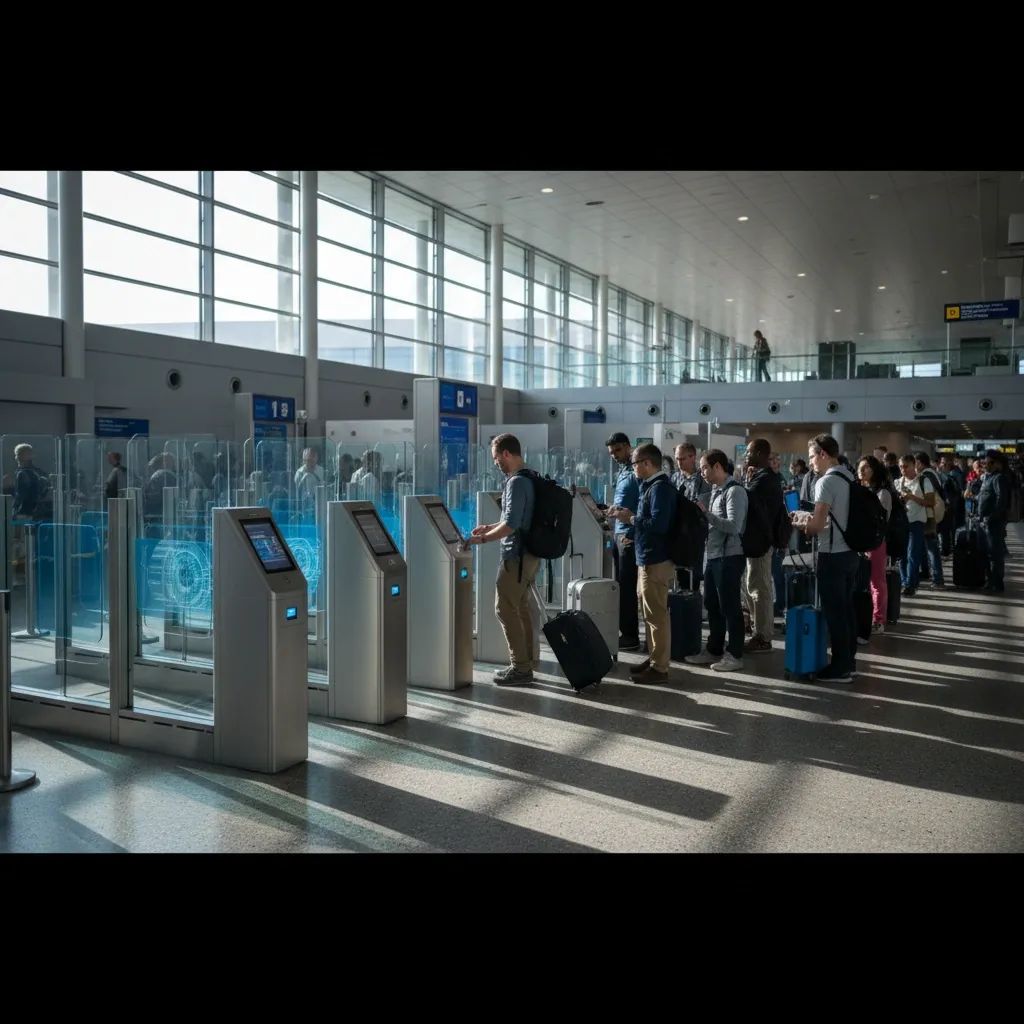
Lisbon Airport border queues are expected to drop significantly after a major staffing and technology boost launched on May 29, according to ANA – Aeroportos de Portugal, though the country's busiest hub still faces structural pressure from the EU's biometric entry system and an unusually high share of non-European passengers.
Why This Matters
• 50% reduction claimed: The Portugal Cabinet says border wait times fell by half during the morning peak on May 29, the first day of the new deployment.
• 140 officers coming: An additional 140 Portuguese Public Security Police (PSP) guards will join Lisbon Humberto Delgado Airport in July, part of a nationwide rollout of 360 newly trained border officers.
• Travel planning essential: Even with reinforcements, passengers flying into Lisbon should still expect up to 55 minutes at arrivals during peak hours; Porto and Faro can see similar delays.
Emergency Activation Clause Confirmed
The Portuguese Interior Ministry has notified Brussels that it will invoke an emergency derogation clause built into the EU Entry/Exit System (EES), allowing border guards to skip biometric collection when queues become unmanageable. Interior Minister Luís Neves confirmed on May 29 that the legal tool—available to all Schengen member states—will be used "whenever necessary," though it was not in effect at the time of his statement.
"What the law allows is, in situations of excessive delay, the suspension of biometric data collection, which does not compromise the security of the country or the European Union," Neves told reporters inside the airport departures hall, where no visible lines were forming at that moment.
This emergency clause acts as a pressure release when queues become unmanageable—a critical tool since the EES went fully operational on April 10, 2026, after a phased rollout that began in Portugal on October 12, 2025. The digital system replaces passport stamps with fingerprint and facial scans for all non-EU travelers, a process that can add five minutes per passenger on first registration and has triggered wait times of 3.5 to 6 hours at major European airports during peak periods, according to the European airport trade group ACI Europe.
What the Reinforcement Includes
ANA's plan includes three main changes: more staff, more equipment, and more space.
Personnel: The airport received 22 additional PSP officers on May 29, with a total of 48 expected to be in place by mid-June. In July, 360 new border guards—graduates of a four-week training course—will be distributed across Portugal's airports, with 140 assigned to Lisbon.
Control Booths: The departures area now has 18 manual inspection boxes (up from 14) and 18 e-gates (up from 14). On the arrivals side, the airport operates 34 boxes (an increase of 14) and 32 e-gates (14 more than before).
Operational Space: ANA allocated over 1,200 square meters for expanded border processing zones.
Infrastructure Minister Miguel Pinto Luz insisted that "security at our borders was never at stake" during recent delays, framing the expansion as a capacity response rather than a correction of enforcement gaps.
Current Performance and the Portugal Exception
On the first full day after the reinforcement went live—Monday, June 1, 2026—the PSP processed 51,980 passengers across all national airports by 3:00 PM, logging 56 interceptions and 16 precautionary measures under Schengen border regulations. No entry refusals were recorded. At Lisbon Airport, maximum wait times reached 32 minutes on arrival and 14 minutes on departure during the counted window.
Porto Sá Carneiro Airport saw a peak of 55 minutes for arrivals and 35 minutes for departures, while Faro Gago Coutinho Airport recorded maximums of 30 minutes inbound and 35 minutes outbound.
ANA CEO Thierry Ligonnière acknowledged that Lisbon's delays remain above some European peers but highlighted the airport's atypical passenger mix. "There are airports better and worse than Lisbon elsewhere in Europe," he said. "Lisbon has a particular situation due to the volume of non-European passengers traveling through the airport." The city serves as a transatlantic hub for routes to Brazil, Angola, Mozambique, and North America, generating a disproportionate share of travelers subject to EES checks compared to intra-Schengen hubs.
Persistent Structural Weaknesses
Despite official optimism, transport specialists and airline industry groups have raised concerns about whether the measures address deeper operational flaws. An EU assessment in December 2025 flagged "serious deficiencies" in Portugal's implementation of the EES, citing inadequate IT infrastructure, staffing shortages, poor risk analysis, and insufficient training.
Airline association APA warned that Lisbon Humberto Delgado lacks the physical layout to handle the biometric system at scale, and complained that the prolonged processing times force schedule adjustments and disrupt boarding. ANAC, the national civil aviation authority, has clarified that airlines are not liable for passenger compensation when travelers miss flights due to border delays, as these fall outside the carrier's control and rest with the PSP.
Sporadic technical breakdowns have compounded the problem. In mid-April, biometric collection was suspended at Lisbon, Porto, and Faro for two days because wait times became unacceptable. The PSP is now installing a dedicated fixed data link to supplement the existing 5G Wi-Fi system in an effort to stabilize connectivity and prevent manual fallback procedures.
Impact on Residents and Summer Travelers
For anyone flying out of Portugal this summer—whether resident, digital nomad, or tourist—the practical guidance is straightforward: arrive three to four hours before international flights, especially for departures between 6:00 AM and 10:00 AM or 3:00 PM and 8:00 PM.
Important distinctions: If you hold an EU passport, you can use the e-gates in the departures hall—though arrivals still require standard processing for all travelers. Non-EU residents should allow extra time for first-time EES registration, which captures fingerprints and facial data. The Frontex Travel to Europe app is now available in Portugal and allows you to pre-submit your passport data and travel questionnaire up to 72 hours in advance, potentially speeding up processing.
If you miss your flight: While airlines are not liable for compensation when border delays cause you to miss departure, you have rights: contact your airline immediately about rebooking on the next available flight at no additional cost. If you purchased a non-refundable ticket, document the delay through the airport's official channels—this may support a claim through travel insurance.
Practical tips: Carry water, phone chargers, and confirm check-in deadlines with your airline, as some carriers have tightened cutoffs to account for border variability. If traveling with non-EU family members, inform them about the biometric collection process in advance so they're prepared for longer processing times.
Minister Pinto Luz said the government is "absolutely committed" to resolving the bottlenecks and predicted that operations will be "positively very different" once the full staffing deployment is complete in July. ANA's Ligonnière echoed the sentiment, adding that "each day is different" and that sustained improvements will depend on further refinements to system stability and passenger flow management.
For now, the combination of added officers, more control lanes, and the readiness to suspend biometric capture under pressure offers modest relief—but the summer test looms, with ACI Europe already warning of a "particularly difficult" season across the continent.


