
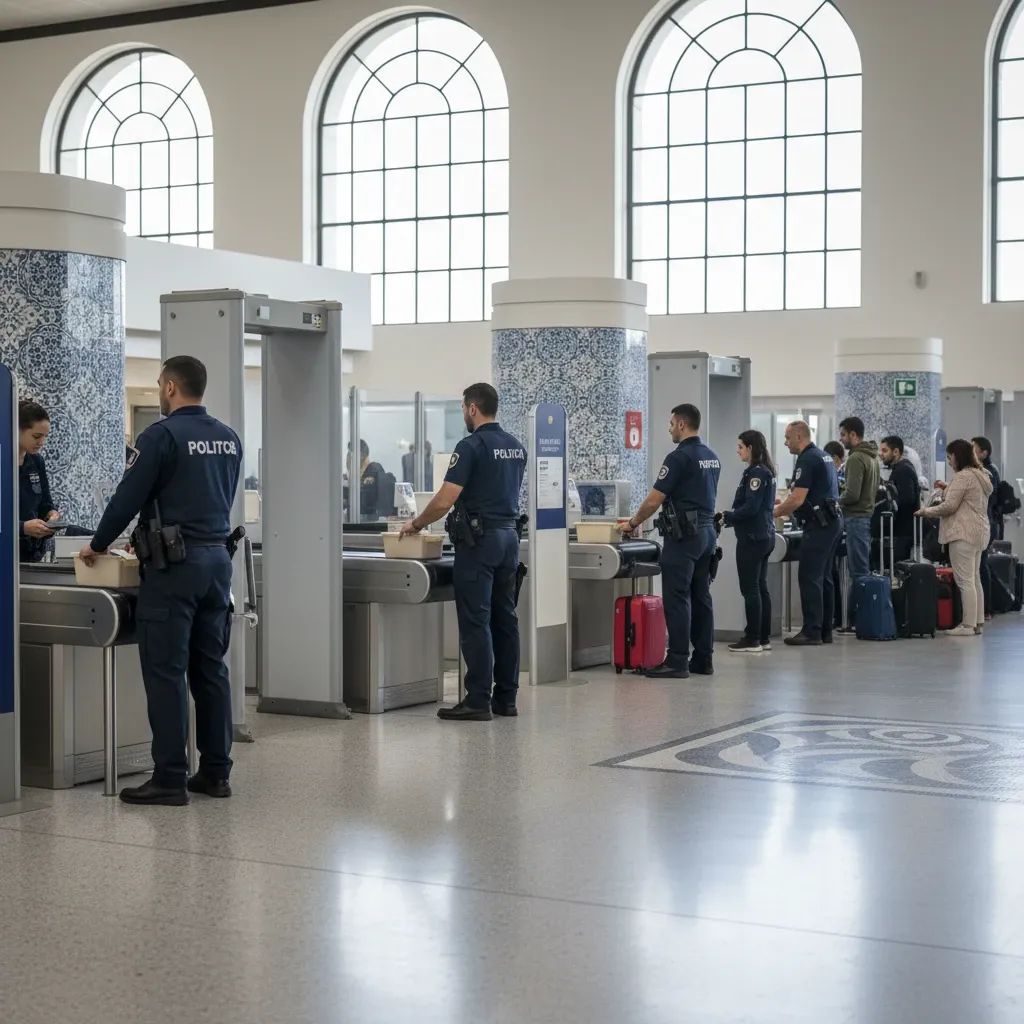
The Portugal Public Security Police (PSP) executed an international arrest warrant on May 31, catching a Serbian fugitive with forged identity documents who was actively dealing drugs in the capital—a case that highlights Portugal's growing role in cross-border law enforcement networks and ongoing efforts to dismantle trafficking operations in Lisbon neighborhoods.
Why This Matters for Residents
Portugal's law enforcement agencies are embedded in multinational intelligence-sharing frameworks—Europol, Interpol, and bilateral agreements—that allow them to identify fugitives who assume false identities to evade justice. For those living in the capital, this arrest underscores an important reality: Lisbon remains a transit and distribution hub for narcotics entering Southern Europe, with street-level dealing concentrated in central parishes such as Santa Clara, Mouraria, and Marvila. The intensifying enforcement activity—including more searches, seizures, and arrests reported in Q1 2026 than the prior year—reflects both increased police resources and improved international coordination in tackling this challenge.
The Arrest: What Happened
Officers patrolling the Santa Clara parish in Lisbon approached the 28-year-old man Sunday evening on suspicion he was selling narcotics on the street. A search confirmed their instincts: police recovered 154.65 doses of cocaine, 33.98 doses of hashish, 42.59 grams of an unidentified substance, and €321 in cash.
The suspect initially presented what appeared to be legitimate Slovenian travel documents—a passport, national ID card, and driver's license—all bearing his photograph but listing a false identity. Inconsistencies in his story and irregularities in the security features of the papers prompted officers to escalate scrutiny. The PSP's Document Inspection, Analysis and Expertise team subjected the materials to forensic examination and confirmed all three were sophisticated forgeries.
Further investigation revealed the man's true identity: a Serbian national wanted by authorities in Belgrade. Interpol records showed an active international arrest warrant issued by Serbia, where the suspect had been convicted of drug trafficking and sentenced to more than three years' imprisonment.
The Legal Process Ahead
The suspect is now in the custody of Portuguese authorities. Following his first judicial interrogation, the case moves to the Lisbon Court of Appeal, which has jurisdiction over extradition matters involving non-EU countries. The court will review the Interpol warrant, the Serbian arrest warrant, and evidence confirming the individual's identity.
The European Extradition Convention of 1957 and its protocols govern the process between Portugal and Serbia. Under these treaties, Portugal can—and routinely does—extradite foreign nationals convicted of serious crimes, provided the offense is punishable in both jurisdictions and the requesting state guarantees humane treatment. Drug trafficking offenses, which carry penalties exceeding one year in both countries, meet this threshold.
Extradition to Serbia cannot proceed if there is a risk of torture, inhuman treatment, or the death penalty. Portugal's constitution and adherence to the European Convention on Human Rights prohibit surrendering anyone who might face such conditions. Serbia abolished the death penalty in 2002, clearing a major legal hurdle.
If the court approves extradition, the individual will be transferred to Serbian custody to serve the remainder of his sentence. If it does not, Portugal retains the option to prosecute him domestically for the drug offenses and document fraud committed on Portuguese soil.
A Broader Pattern
This case reflects Portugal's increasingly active role in global law enforcement networks. The PSP and PJ routinely contribute to Interpol-led operations targeting fugitives and trafficking. Recent months have seen significant results: in a six-month Interpol campaign from June to November 2025 across 17 countries, Portugal participated in the capture of Daniel Zago, a Brazilian national allegedly linked to transatlantic cocaine trafficking routes. Another Interpol operation, Neptune VII, ran from July to September 2025 across 20 countries and resulted in 153 arrests linked to trafficking and terrorism.
For foreign nationals seeking to exploit Portugal's open borders and urban centers, the risk of detection—and subsequent extradition—is rising. The country's legal framework, combined with robust international cooperation, makes it increasingly difficult for fugitives to disappear into Lisbon's neighborhoods or to rely on forged documents as a shield against accountability.


