The Portuguese olive oil sector generated roughly €700 M in revenue during the 2025/2026 harvest, underscoring how a once-modest domestic industry has transformed into an export powerhouse that now ranks among the top three suppliers in Europe.
Why This Matters
• Production scale: Portuguese olive oil output has quintupled over 26 years, reaching 160,000 tonnes in the latest campaign—despite a 10% dip from the prior year.
• Export footprint: Portugal sits as the 3rd-largest European exporter, trailing only Spain and Italy, and the 6th-biggest global producer.
• Economic contribution: The crop generated €700 M for the 2025/2026 season, with more than half sold in bulk for international distribution.
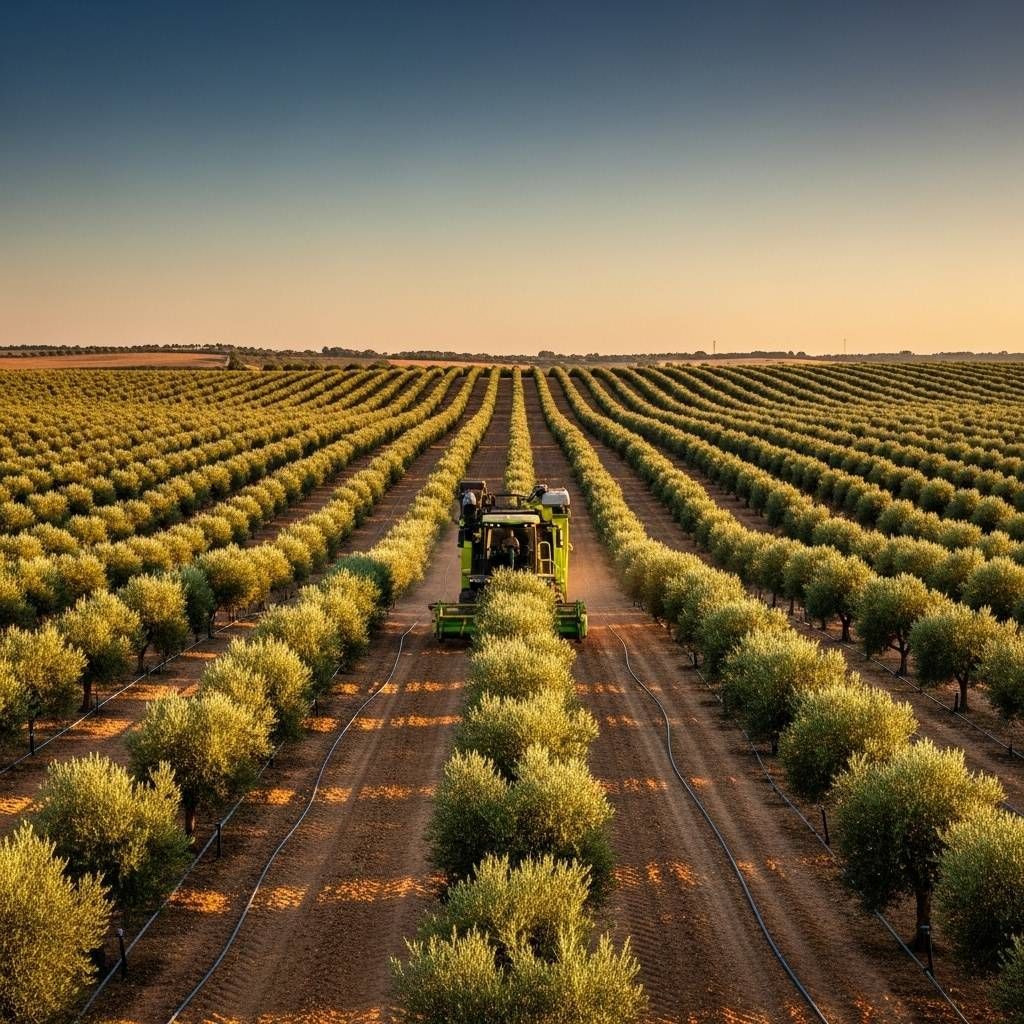
• Infrastructure bet: Super-intensive groves in the Alentejo, powered by the Alqueva irrigation project, anchor a sector eyeing 300,000 tonnes within five years.
From Traditional Groves to Industrial Scale
Two-and-a-half decades ago, Portugal's olive oil scene was a patchwork of small family farms and low-density plantations. Since 2000, total production has multiplied fivefold, driven by three overlapping shifts: the Alqueva dam's irrigation network opened tens of thousands of hectares in the sun-scorched Baixo Alentejo; agronomists introduced super-intensive planting systems that pack far more trees per hectare than traditional layouts; and state-of-the-art extraction mills replaced centuries-old stone presses, lifting both yield and quality.
Portugal now cultivates approximately 350,000 hectares of olive groves, the majority sprawling across the Alentejo plains. Super-intensive orchards can yield several times what a traditional grove produces, and the country became the first to replace modern plantations with even more advanced designs—effectively leapfrogging a generation of agricultural technology. The Portugal National Statistics Institute projects the 2026 harvest could rebound to 179,000 tonnes, a figure that would match the 2024/2025 campaign and erase most of this year's weather-induced shortfall.
Weather Dents the 2025/2026 Harvest
Growers harvested 160,000 tonnes in the season that ended in early 2026, down roughly 10% from the previous year's 177,000 tonnes. Industry analysts attribute the dip to a classic "off year" in the olive's natural production cycle, compounded by a brutal summer—soaring temperatures stressed trees—and then heavy autumn rains during picking. Yet the decline would have been steeper had new groves not come online; those young plantations softened the blow and kept total output well above historic norms.
Quality held firm despite the volume drop. The percentage of extra-virgin grade remained exceptionally high, and agronomists recorded no major pest or disease outbreaks. Bulk prices stayed elevated relative to the past decade, cushioning revenue even as truckloads leaving lagares fell slightly short of forecasts.
Export Machine Built on Bulk Sales
More than 50% of Portuguese olive oil ships abroad in bulk tankers, destined for Italian and Spanish bottlers who blend it into their own brands or re-export under different labels. That model delivered record €1 B+ in annual export revenue in both 2023 and 2024, a milestone the sector had never reached before. Preliminary customs data for January and February 2026 show a €92 M trade surplus in olive oil, though volumes slipped 15% year-on-year and value dipped 14%, reflecting tighter supplies and a stronger dependence on the North American market.
Industry groups acknowledge the paradox: Portugal punches above its weight in volume but captures only a fraction of the retail margin because most oil leaves the country anonymously. The Olivum association—which represents growers and mills—is spearheading efforts to create a "Portugal umbrella brand" that would elevate recognition and command premium shelf prices in supermarkets from New York to Mumbai. The goal is to shift more production into branded bottles before it crosses the border, keeping a larger slice of the value chain inside the country.
What This Means for Residents
For anyone living in Portugal, the olive oil boom translates into jobs, infrastructure investment, and fiscal revenue flowing into rural areas that once struggled with depopulation. The Alentejo, in particular, has seen wage growth in agricultural sectors and an influx of seasonal workers during harvest months. Small-town services—mechanics, hospitality, retail—benefit indirectly as olive money circulates locally.
On the consumer side, Portuguese shoppers enjoy abundant domestic supply and a reputation for quality that rivals any Mediterranean neighbor, yet retail prices have climbed in step with global markets. A liter of extra-virgin can cost €8 to €12 in Lisbon supermarkets, reflecting tight supply across southern Europe and robust export demand. The Portugal Revenue Department has also noted the sector's contribution to the country's agricultural export balance, which helps offset chronic trade deficits in other categories.
Environmental trade-offs are becoming more visible. Super-intensive groves rely on drip irrigation, and the expansion has increased pressure on Alqueva reservoir levels during dry years. Water-rights debates flare in municipal councils, especially when summer rain disappoints. At the same time, innovative producers are closing the loop: olive pomace and leaf waste now fuel composting schemes that return organic matter to the soil, and some mills install solar arrays to power extraction lines.
Climate Pressures and the Push North
A recent study co-authored by researchers at the Universities of Évora and Algarve warns that rising temperatures and erratic rainfall will shrink the environmental suitability for olives across central and southern Iberia—precisely the heartland of Portugal's current production. High summer heat stresses trees, late frosts damage blossoms, and torrential autumn downpours complicate harvest logistics. The same research suggests cooler northern districts may become more favorable as climate zones shift, though replanting an entire industry is neither quick nor cheap.
Water scarcity looms largest. Industry leaders are calling for "mini-Alquevas"—regional reservoirs and pipeline networks—to guarantee summer irrigation when rain vanishes for months. Without additional storage, the super-intensive model that underpins Portugal's production surge risks hitting a ceiling. Drought years already trigger the olive tree's natural alternate-bearing cycle, in which a bumper harvest is followed by a lean one; climate stress can deepen those swings.
Sustainability Certification and Technology Leaps
Responding to both market expectations and environmental reality, the Olivum association partnered with the University of Évora to launch a Sustainability Framework covering 98 criteria across environmental performance, social responsibility, economic viability, and cultural heritage. Casa Relvas, a prominent Alentejo estate, became the first operation to earn the certification, signaling a sector-wide ambition to position Portugal as the global benchmark for sustainable premium olive oil.
Parallel innovation tracks are underway. The MiOlive3 biotechnology project is developing micropropagated, mycorrhized, and micro-grafted olive seedlings engineered for greater drought tolerance and nutrient uptake. Meanwhile, agronomists are deploying artificial intelligence to optimize irrigation schedules, predict pest outbreaks, and fine-tune harvest timing. Some lagares now feature automated sorting lines that grade olives by ripeness in real time, ensuring each batch enters the press at peak flavor.
Technology also extends to financial planning: cooperatives use satellite imagery and soil sensors to model yields months ahead, smoothing cash flow and helping members negotiate forward contracts with buyers. The shift from artisanal guesswork to data-driven farming mirrors transitions seen in California's wine country or Australia's almond belt.
Future Trajectory and Market Risks
Optimists point to the pipeline of young groves not yet in full production and forecast Portugal could hit 300,000 tonnes within three to five years—a volume that would vault the country into second place in Europe behind Spain and challenge Italy's long-held third spot globally. Trade agreements between the European Union and the Mercosur bloc, plus a potential pact with India, promise to open vast consumer bases where olive oil remains a niche luxury product.
Yet risks cluster on several fronts. Bulk dependence leaves Portuguese producers vulnerable to price volatility set in Spanish and Italian markets; if those countries enjoy bumper harvests, Portuguese margins compress. Geopolitical instability and rising shipping costs—container rates spiked during recent Red Sea tensions—can erode export competitiveness overnight. Domestically, labor shortages during the narrow harvest window drive up wages and tempt some estates to mechanize picking, a move that works well in super-intensive rows but struggles with older, irregularly spaced trees.
Climate adaptation will demand sustained public and private capital. Constructing reservoirs, upgrading irrigation networks, and replanting heat-stressed groves require multiyear commitments that smaller cooperatives struggle to finance. If summer temperatures continue their upward march, some marginal zones may exit olive production altogether, concentrating output in fewer, larger operations.
The Brand Challenge
For all the volume gains, Portuguese olive oil still lacks the instant recognition that Spanish or Italian labels command on foreign shelves. Shoppers in New York or Tokyo may recognize a Tuscan hill-town name but draw a blank on Alentejo appellations. Industry groups argue that a unified "Portugal" marque—akin to how New Zealand markets its wines or Norway promotes its salmon—could overcome fragmentation and justify premium pricing.
Building that brand means coordinating hundreds of independent mills, defining quality standards enforceable at every bottling line, and funding international marketing campaigns. The Portugal Ministry of Agriculture has signaled interest, and the European Union's Common Agricultural Policy offers co-financing for promotional activities. Success would let Portugal capture more of the €15-to-€20 per liter that top extra-virgins fetch in gourmet stores, rather than settling for bulk rates that hover around €5 per liter at the farm gate.
Long-Term Viability
Portugal's olive oil sector demonstrates that even a small country can punch above its weight when infrastructure investment, agronomic innovation, and favorable geography align. The Alqueva project, initially conceived to irrigate cereals, turned out to be the catalyst for an export industry worth three-quarters of a billion euros. Super-intensive orchards and high-tech mills proved the model scales beyond Mediterranean tradition.
Sustaining that trajectory hinges on three pillars: securing reliable water supplies as the climate dries, transitioning from anonymous bulk to recognized brands, and embedding environmental stewardship deeply enough to satisfy both regulators and conscious consumers. If those pieces fall into place, the five-fold growth of the past quarter-century may prove only the opening chapter.