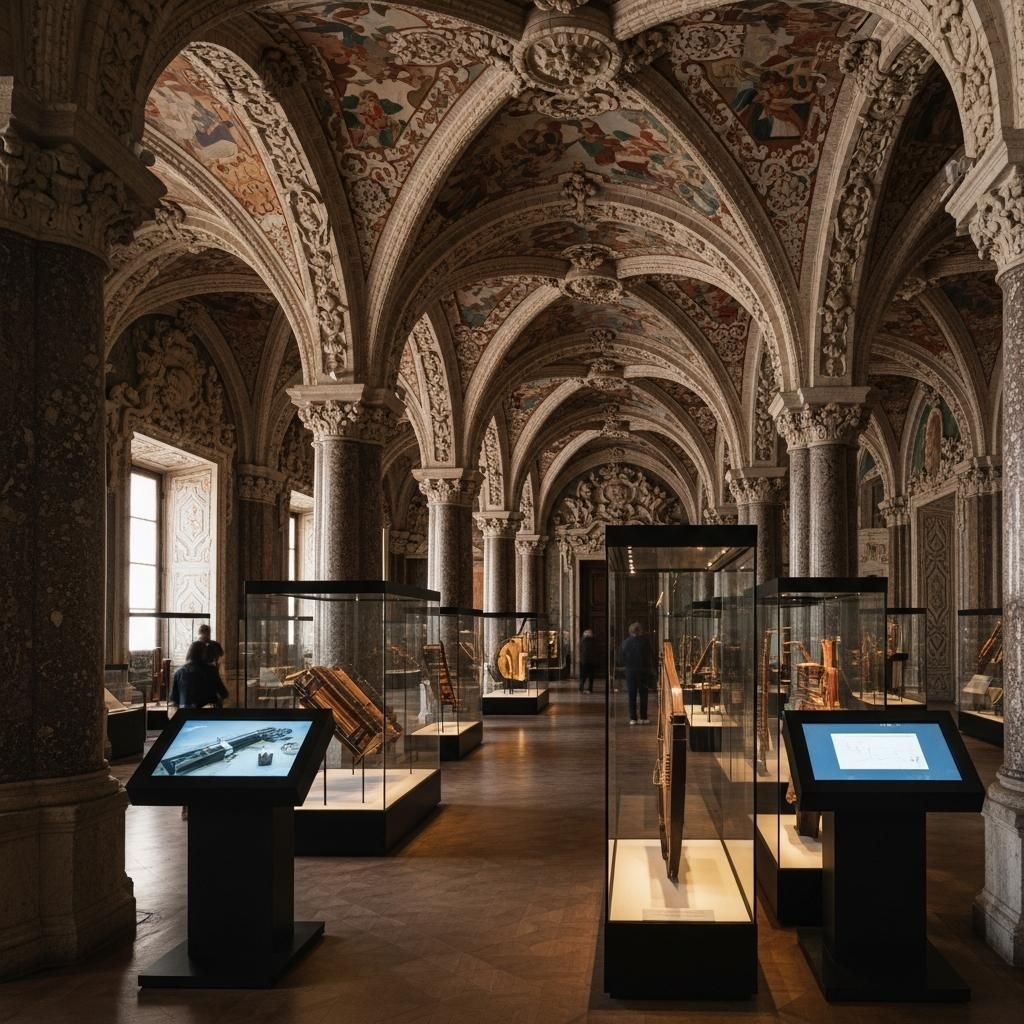
A family-run museum in Ponta Delgada has preserved hundreds of handmade miniatures depicting traditional Azorean life, but its custodians say the collection remains largely unknown to locals despite decades of existence and free admission.
Why This Matters:
• Free entry makes this an accessible cultural activity for residents and visitors on São Miguel.
• Advance booking required — the space is small and visits must be scheduled.
• Preserves disappearing trades and traditions that vanished from daily life decades ago.
• Family seeks partnerships with travel agencies to increase visibility.
One Man's Precision Work
Floriberto Melo spent years transforming tiny blades of wood into entire worlds. The former civil construction drafter, who died in 2017 at 81, built hundreds of ethnographic miniatures at 1:10 scale entirely by hand using pocket knives. What began as a carpenter's bench evolved into a permanent exhibition inaugurated on February 27, 1996 — a passion project that captured professions, customs, and traditions from São Miguel that had already fallen out of use.The Cantinho Etnográfico, housed in a small building attached to a family home on Travessa das Laranjeiras in the São Pedro parish, represents one man's meticulous effort to stop time. Coopers, shoemakers, carpenters, cabinetmakers, photographers, barbers, and blacksmiths all appear in miniature form, frozen at their workbenches. A windmill turns. A watermill moves. The Espírito Santo chapel glows with tiny lights.
What Visitors Actually See
The collection goes beyond professional recreations. Floriberto built a pineapple greenhouse, a wine press, a traditional kitchen, a classroom complete with desks, and displays of regional costumes. Some scenes incorporate movement and illumination — the watermill and the Spirit Room activate for viewers, offering a glimpse of mechanized rural life that once defined the Azorean interior.Antique objects fill additional display cases: cameras, gramophones, telephones, keys, coins, banknotes, miniature glass bottles, tobacco packs, medals, and pens. A coin-operated electric machine called a "GingaJoga" animates figurines when visitors insert one euro.Each numbered diorama connects to a button repurposed from computer keyboards. Press it, and a small rectangular screen illuminates against a black background, projecting explanatory text. Everything is labeled in Portuguese, English, and French — a practical nod to the international tourists who trickle through.
A Family's Promise
Joaquim Melo, 63, never helped his father build the miniatures. "I didn't have the knack," he admits. But he has become the space's dedicated caretaker, handling maintenance and cleaning. His brother João, 54, remembers their father collecting cameras, tobacco packs, and pens long before the museum took shape. As a drafter, Floriberto always had skill with models and maquettes."He started recreating the past with those models and those miniatures," João recalls. "No one else remembers these things anymore. It's all from the past."The family's stance is unequivocal: the collection stays together, stays in family hands, and remains for future generations. Joaquim puts it plainly: "I'm not going to destroy it, I'm not going to sell it."Cristina Andrade, 36 — Joaquim's daughter and Floriberto's granddaughter — now manages the space. As a child, she helped her grandfather glue tiny corn husks for the rural harvest scene. She remembers his warnings not to touch anything. Now she safeguards everything.
The Challenge of Visibility
Despite its historical value, the Cantinho Etnográfico struggles with recognition. The museum reopened in 2020 after closing following Floriberto's death, but visitors remain sparse. Tourists make up the majority, with some locals stopping in out of curiosity. School groups and elderly associations occasionally visit."Not as many as we'd like," Cristina admits.The family has specific plans: install modern LED lighting, energize the space with better presentation, and forge partnerships with travel agencies. They want Floriberto's work seen — but strictly on their terms. "We want to keep it in the family, above all," Cristina says. "We'll maintain his wish."
How to Visit
The museum operates daily by appointment only. Entry is free, though donations appear welcome given the family's stated goals for improvements. Visitors should call ahead — the intimate scale of the building limits how many people can move through at once.Located in the São Pedro parish of Ponta Delgada, the site sits close enough to the city center to combine with other cultural stops. For residents who have lived in the Azores for years without visiting, the collection offers something increasingly rare: a look at trades and daily routines that photographs rarely captured in detail.
What This Means for Residents
The Cantinho Etnográfico represents a different kind of museum experience in the Azores. Most regional institutions operate under public administration or belong to the Rede de Museus e Coleções Visitáveis dos Açores — a network designed to support museum quality, institutional cooperation, and resource optimization. This family project stands outside that structure, funded and maintained entirely by descendants with no professional museum training.That independence comes with trade-offs. Without institutional backing, marketing relies on word-of-mouth and whatever partnerships Cristina can negotiate with travel agencies. The family has expressed interest in joining regional cultural networks, though no formal agreements have been announced.For Azorean history enthusiasts, the collection fills a specific gap: granular detail about professions that disappeared before video documentation became common. Flemish emigration archives and whale hunting museums dot the islands, but few spaces document the carpenter's workbench or the cooper's tools with this level of miniature precision.Visitors with children may find the interactive elements — the button-activated information screens and the coin-operated animated display — useful for holding younger attention spans. The multilingual labeling removes language barriers for mixed-nationality households or expat visitors hosting family from abroad.The museum's free admission policy makes it viable as a low-risk stop between better-known attractions like the Ponta Delgada city gates or the Gruta do Carvão lava tube. Residents hosting visitors from outside Portugal might consider it a quieter alternative to crowded tourist sites.