
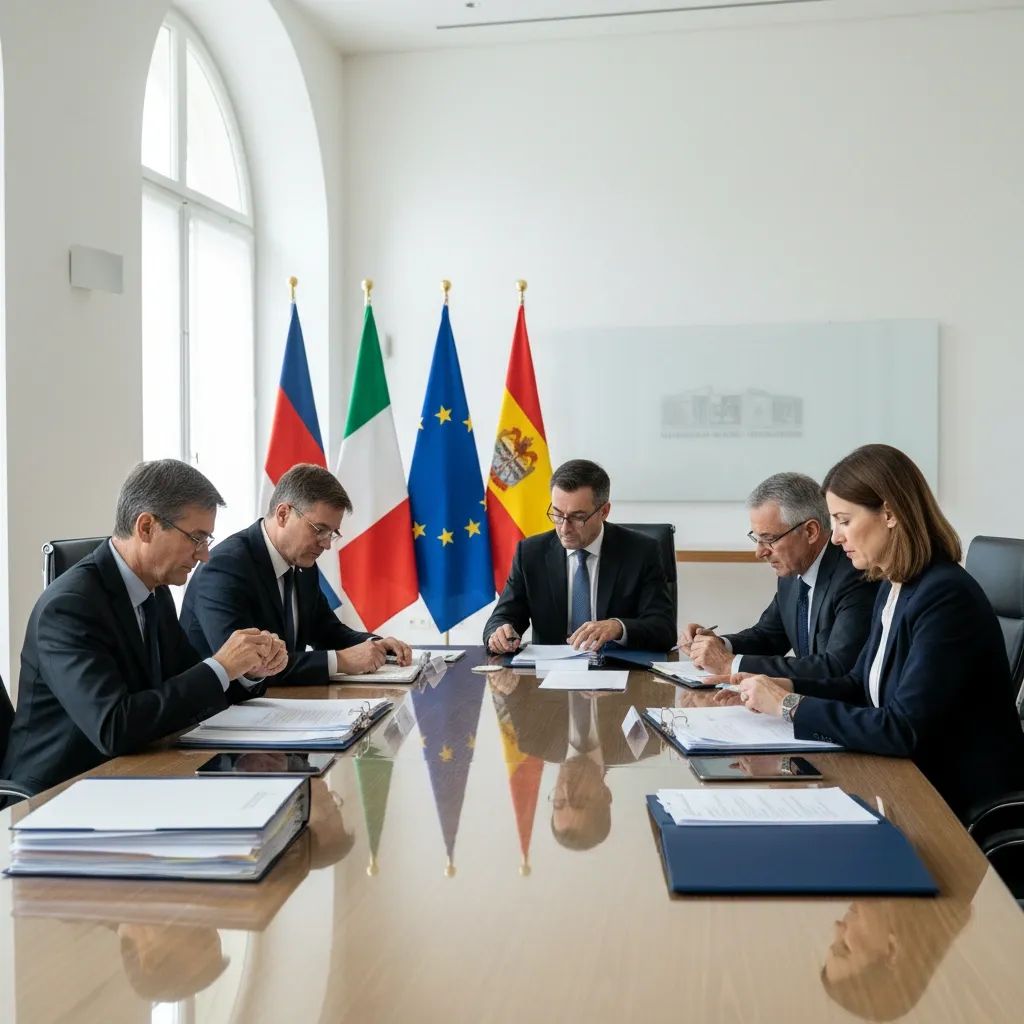
The European Union has sanctioned 16 Russian individuals and 7 state-linked organizations accused of orchestrating the systematic deportation and indoctrination of Ukrainian children—a campaign European officials describe as an attempt to erase Ukrainian identity and potentially constitute crimes against humanity. The measures, formally adopted on May 11, 2026, target camps, officials, and education bodies allegedly complicit in transferring more than 20,500 minors into Russian custody since February 2022.
Why This Matters
• Legal precedent: These sanctions reinforce the International Criminal Court's arrest warrants against Russian President Vladimir Putin and child rights commissioner Maria Lvova-Belova, issued in March 2023.
• Humanitarian crisis: Only 2,126 children have been repatriated as of May 2026, while tens of thousands remain unaccounted for or subjected to forced assimilation.
• Broader implications: The EU's move underscores growing international consensus that child deportation violates the Geneva Conventions and may amount to genocide under international law.
The Deportation Machine: Camps, Adoption, and Militarized Indoctrination
Among the sanctioned entities are three prominent youth centers tied to Russia's Ministry of Education: Orlyonok, Scarlet Sails, and Smena. These facilities, ostensibly recreational camps, have been accused by EU investigators of serving as hubs for pro-Russian ideological training, including patriotic rallies, military-themed activities, and paramilitary drills. According to the EU Council's official statement, the institutions "organize programs in coordination with occupation authorities" to subject Ukrainian children to forced cultural reeducation.
The sanctioned list also includes regional officials from illegally occupied Ukrainian territories, as well as directors of youth clubs and patriotic organizations. EU officials assert these individuals "promote military and patriotic education through ideological indoctrination, exposure to Russian military culture, and participation in events glorifying Russia's war of aggression."
Beyond camps, the deportation scheme involves irregular adoption by Russian families, alteration of children's names and identities, and integration into Russian state systems—often without consent from parents or legal guardians. A March 2026 UN commission report confirmed the forced expulsion or transfer of at least 1,205 children, noting that 80% of those cases resulted in no return to their homes. The commission formally classified these actions as crimes against a humanity.
What This Means for Global Accountability
The International Criminal Court arrest warrants remain in force, making Putin and Lvova-Belova subject to detention if they enter any of the 123 ICC member states—a constraint that has already limited their international travel. The EU's sanction package, which freezes assets and bans travel to the bloc's 27 member states, adds a second layer of legal isolation for those directly involved in the deportation apparatus.
Portugal, as an EU member state, is obligated to enforce these travel bans and asset freezes within its jurisdiction. Any sanctioned individual attempting to enter Portuguese territory or access financial services would face immediate legal consequences under EU Common Foreign and Security Policy regulations.
The timing of the sanctions is significant: they were announced during a high-level meeting of the International Coalition for the Return of Ukrainian Children, held in Brussels on the same day. Co-chaired by Ukraine and Canada, the coalition has expanded to 49 member countries and international organizations as of May 2026, with a mandate to coordinate diplomatic, humanitarian, and legal efforts to locate and repatriate the missing children.
The Numbers Behind the Crisis
Estimates of the total number of deported Ukrainian children vary widely depending on the source. The EU cites approximately 20,500 cases of illegal deportation or forced transfer. Ukrainian authorities, through the Bring Kids Back UA initiative, have registered at least 20,000 documented cases, though officials believe the true figure is significantly higher. In March 2025, Andriy Yermak, chief of staff to Ukraine's president, stated that around 1.6 million Ukrainian children remain under Russian regime control in occupied territories.
A UN investigative commission in March 2026 confirmed the deportation or transfer of 1,205 children through verified case files, but acknowledged that thousands more are believed to have been moved from occupied zones into Russian territory. Alarmingly, the commission found that 80% of children in analyzed cases never returned home, and Russian authorities systematically failed to disclose their whereabouts to families.
Russia has publicly claimed to have "received" 744,000 Ukrainian children in 2023 alone, framing the transfers as humanitarian evacuations. International legal experts reject this narrative, citing Article 49 of the Fourth Geneva Convention, which explicitly prohibits the forced removal of civilians from occupied territories. The Yale Humanitarian Research Lab documented more than 6,000 Ukrainian minors in 43 Russian reeducation camps and orphanages by February 2024.
Repatriation Efforts Lag Far Behind
Despite the International Coalition's efforts, the pace of return remains painfully slow. As of May 2026, Ukraine has successfully repatriated 2,126 children—a fraction of those believed to be in Russian custody. In June 2025, that figure stood at just 1,345, highlighting the glacial progress.
The coalition's pilot tracking program has located over 1,300 children and identified leads on another 1,800, but access to Russian-controlled territories remains a formidable barrier. Ukraine's Commissioner for Children's Rights has warned that, at the current rate, it could take decades to bring all deported children home.
In March 2026, the United States committed $25 million to a dedicated fund supporting identification, return, and rehabilitation of displaced Ukrainian children. The EU has pledged technical, financial, and institutional support to Ukrainian authorities and civil society organizations working on repatriation. Yet without Russian cooperation—which Moscow has consistently refused—the coalition's work remains largely dependent on third-party mediation and intelligence gathering.
Legal Framework: War Crimes and Genocide
The deportation of children falls squarely within the legal definition of war crimes under Article 8 of the Rome Statute, which governs the International Criminal Court. Forced population transfer from occupied territory is also classified as a crime against humanity under Article 7 of the same statute.
Beyond immediate criminal liability, scholars and human rights advocates argue the deportations may constitute acts of genocide under the 1948 Genocide Convention, specifically Article 2(e), which defines genocide as "forcibly transferring children of the group to another group" with intent to destroy, in whole or in part, a national, ethnic, racial, or religious group. The UN commission's findings that children have had their identities systematically altered, been subjected to forced adoption, and been denied reunification with their families lend weight to this interpretation.
Portugal, as a signatory to both the Rome Statute and the Genocide Convention, is legally bound to support enforcement mechanisms and cooperate with ICC investigations. Portuguese authorities are required to arrest any ICC-indicted individual on national soil and facilitate their transfer to The Hague.
Implications for Residents and Expats in Portugal
For Portuguese citizens and residents, these sanctions carry several practical implications:
• Financial compliance: Any Portuguese bank, investment firm, or business entity found facilitating transactions for sanctioned individuals or organizations faces substantial penalties under EU financial regulations.
• Travel restrictions: Sanctioned individuals are barred from entering Portugal or transiting through Portuguese airports, reinforcing the country's alignment with EU foreign policy on the Ukraine conflict.
• Humanitarian response: Portugal has welcomed thousands of Ukrainian refugees since 2022, and the continued focus on child repatriation underscores the long-term nature of the displacement crisis. Civil society groups and diaspora organizations in Portugal may play a role in supporting reintegration efforts as more children are eventually returned.
• Legal precedent: The EU's coordinated sanction strategy demonstrates the bloc's willingness to use economic and legal tools to address war crimes—a model that could extend to other conflicts and humanitarian crises in which Portugal participates through EU or NATO frameworks.
Russia's Defense and International Rejection
Moscow has consistently maintained that the transfer of children was necessary to protect them from harm amid active hostilities. Russian officials cite humanitarian grounds and claim that families were notified and consented to the moves. However, UN investigators, the ICC, and multiple EU fact-finding missions have found no evidence to support these claims. Instead, investigators documented systematic identity alteration, unauthorized adoptions, and deliberate obstruction of family reunification efforts.
The International Coalition for the Return of Ukrainian Children has called for the development of a concrete roadmap for member states, implementation of UN General Assembly resolutions, and full compliance with ICC arrest warrants. The coalition's May 11 meeting in Brussels produced a renewed push for new sanctions packages and increased diplomatic pressure on third countries that maintain relations with sanctioned individuals.
What Comes Next
The EU has now sanctioned more than 100 individuals and entities involved in the deportation and forced transfer of Ukrainian children since 2022. The United Kingdom announced parallel sanctions on May 11, 2026, signaling continued transatlantic coordination. Yet without direct access to Russian-controlled areas or cooperation from Moscow, the coalition's ability to verify conditions and facilitate safe returns remains severely limited.
Ukraine's Bring Kids Back UA initiative continues to operate with international support, but the challenge is immense. At the current pace, full repatriation could extend well beyond the end of the decade. Meanwhile, children subjected to prolonged ideological indoctrination, military training, and forced adoption face profound risks to their psychological well-being, cultural identity, and legal status—consequences that experts warn may persist across generations.
For residents of Portugal and the broader EU, the sanctions represent both a moral stance and a legal commitment: that the forced displacement and assimilation of children will not be tolerated, and that those responsible will face isolation, accountability, and, if the ICC has its way, prosecution.


