
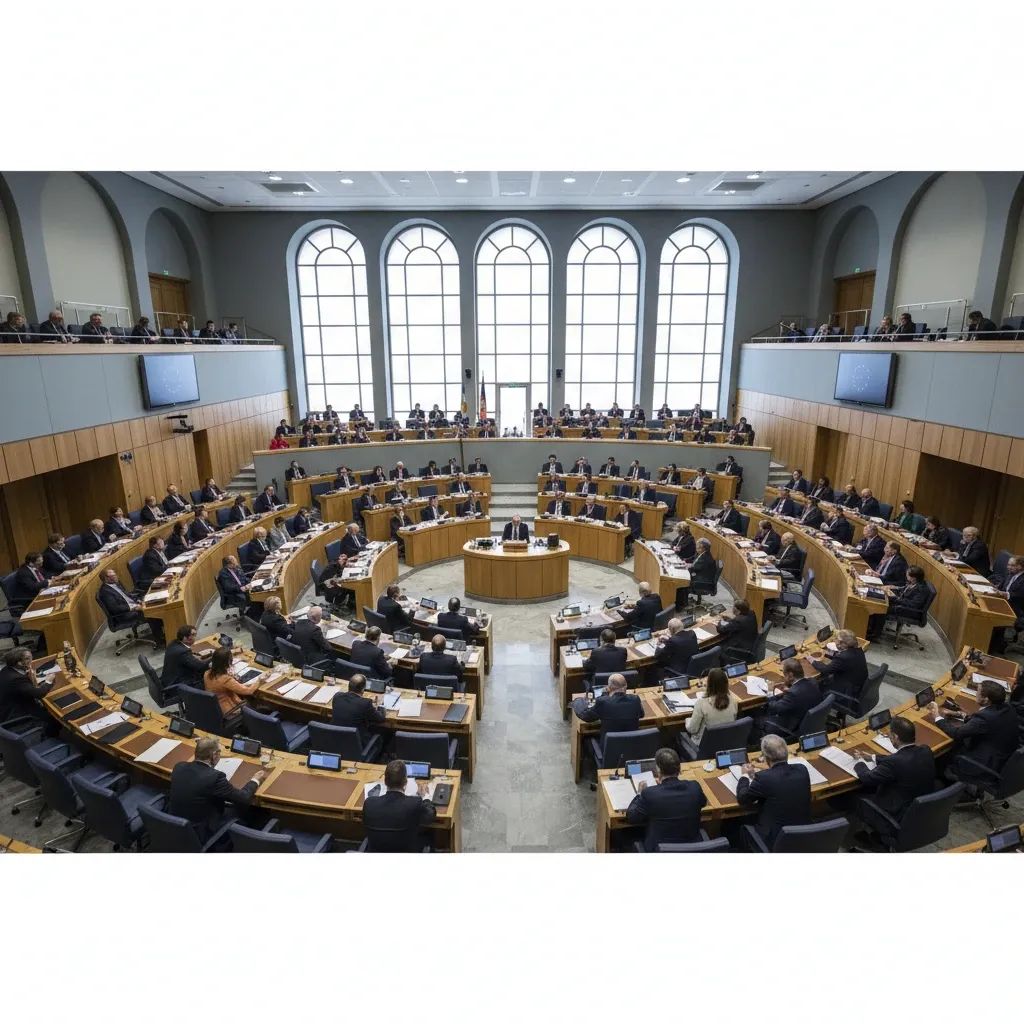
On May 18, the European Parliament is set to formalize an ultimatum: a demand for an additional €200 billion in the European Union's 2028–2034 budget, escalating a standoff that threatens to delay approval of the bloc's €2.01 trillion spending framework. With negotiations stalling and major net-contributor states pushing back, this clash over fiscal priorities could reshape how Brussels allocates funds for everything from agriculture to defense in the coming decade.
Why This Matters
• The Parliament's demand: On April 28, lawmakers approved a €2.01 trillion budget proposal—roughly 10% above the Commission's baseline—targeting competitiveness, cohesion, and external action. Now they're formalizing an official ultimatum with the May 18 vote.
• Portugal's veto threat: Prime Minister Luís Montenegro has publicly warned that Portugal may block the entire budget if cohesion policy funding is diluted. For Portuguese residents, this is critical: cohesion funds finance infrastructure, regional development, and jobs programs across the country.
• The "frugal" opposition: Germany, Austria, Finland, Sweden, and the Netherlands—wealthy northern states with strict budget rules—are resisting a larger envelope, citing domestic fiscal pressure and inflation concerns.
Portugal's Stand on Cohesion Funding
Portugal's government has drawn a firm line around cohesion funding, the regional-development envelope that channels billions to lower-income areas. With Portugal's GDP per capita still hovering below 90% of the EU average, Lisbon insists that convergence policy must retain dedicated, ring-fenced resources. The Commission's draft envisages folding multiple programs into a single National Partnership Plan framework, which critics fear would dilute transparency and give capitals excessive discretion to redirect money toward headline projects at the expense of lagging regions.
Luís Montenegro's veto warning carries weight: under EU treaty rules, unanimous Council approval is required for the seven-year budget framework. A single dissenting capital can block the entire package, forcing emergency annual budgets or protracted negotiations. Portuguese diplomats have signaled they will demand explicit cohesion-policy ceilings and safeguards against regional funding being siphoned away by national governments.
The Parliament's Budget Crisis and Three-Pillar Demand
Members of the European Parliament contend that an additional €200 billion is indispensable to address overlapping crises—climate transition, migration management, defense capacity, and technological sovereignty—without gutting established policies. The increase is earmarked for three priority baskets:
Agriculture, Social Policy & Cohesion: Lawmakers insist the Common Agricultural Policy and structural funds remain distinct, fearing that a consolidated competitiveness fund would pit farmers against start-ups in a zero-sum fight.
Competitiveness, Research & Innovation: Parliament backs a new European Competitiveness Fund, yet demands it supplement rather than replace existing programs such as Horizon Europe (the EU's research funding program).
External Action: With geopolitical flashpoints multiplying, MEPs argue the bloc's foreign-policy budget must scale up to match ambitions in Africa, the Balkans, and Ukraine.
To finance the uplift, Parliament has proposed new own resources (revenue streams that feed EU coffers directly)—levies on online gambling, digital-platform revenues, and crypto-asset transactions. Proponents say these would reduce reliance on member-state transfers; detractors warn that tax harmonization will trigger sovereignty disputes.
Clash Over Spending Levels
The European Commission first tabled its long-term budget blueprint in July 2025, proposing approximately €1.8 trillion in commitments—equivalent to 1.26% of the EU's gross national income—with debt repayment for the post-pandemic NextGenerationEU facility folded into the ceiling. By April 2026, Parliament countered with a resolution calling for €2.01 trillion at current prices, excluding NextGenerationEU reimbursements from the cap and lifting the spending ratio to 1.27% of GNI. The 370–201 vote in Strasbourg underscored deep divisions: lawmakers from southern and eastern member states backed the increase, while representatives from fiscally conservative capitals voiced alarm.
France has emerged as a surprising ally of the higher figure, citing security threats from Russia and the need for strategic autonomy. Yet Berlin and its "frugal" partners argue that domestic budgets are already stretched by energy subsidies and social spending. Analysts note that Germany's sluggish growth and persistent inflation have hardened the Chancellor's stance, even as Paris presses for robust investment in defense and industrial policy.
Frugal Coalition Digs In
The so-called "frugal five"—Germany, Austria, Finland, Sweden, and the Netherlands—have made clear they will not rubber-stamp a double-digit increase. Finance ministers from these countries argue that the Commission's original €1.8 trillion envelope already represents a meaningful real-terms rise and that efficiency gains, not higher ceilings, should unlock headroom for new priorities. In private Council sessions, Berlin has floated the idea of conditional top-ups tied to economic reform, echoing the NextGenerationEU model but on a smaller scale.
Economic headwinds reinforce their caution. Germany's industrial output has stagnated, the Dutch coalition government faces public pushback on EU contributions, and Austria's budget deficit remains above the Stability Pact threshold. Each capital confronts vocal domestic constituencies skeptical of Brussels bureaucracy, making large increases in net payments to the EU a difficult political case to make.
Timeline and Next Steps
Under the EU's legislative calendar, the Council presidency aims to establish a "negotiating box" (a bracketed set of figures and policy options) by late June—framing the formal trilogue (three-way negotiations between Parliament, Council, and Commission). The goal is to secure a final political agreement at the European Council summit before the end of 2026, giving member states and regions time to prepare operational programs for the January 2028 start date.
If talks deadlock, the Union would revert to an annual-budget regime, rolling forward the previous framework's ceilings adjusted for inflation. That scenario would freeze cohesion allocations, delay new competitiveness initiatives, and leave the Commission scrambling to honor commitments.
What This Means for Residents in Portugal
For individuals and businesses in Portugal, the outcome will directly shape investment flows over the next seven years. A diluted cohesion policy could slow infrastructure upgrades, digital connectivity rollouts, and vocational training programs that underpin regional development.
Conversely, a robust settlement that preserves ring-fenced cohesion funding would sustain the pipeline of EU grants for municipalities, universities, and SMEs. For example, cohesion funds have supported motorway construction, university research hubs, and small-business incubators in regions like the Alentejo and Algarve—delays or cuts would halt similar initiatives.
Taxpayers across the bloc may also see indirect effects. If Parliament's new own-resources package gains traction, crypto traders and online-gambling operators could face EU-level duties, while member states might adjust national tax rates to offset reduced Brussels contributions.
The standoff underscores a broader tension in European integration. Wealthier northern states prize fiscal discipline and measurable returns on transfers, while southern and eastern partners—including Portugal—argue that solidarity and convergence remain the Union's core promises. With May 18 looming as the date Parliament formalizes its ultimatum, the next six weeks will test whether compromise or brinkmanship prevails in Brussels.


