

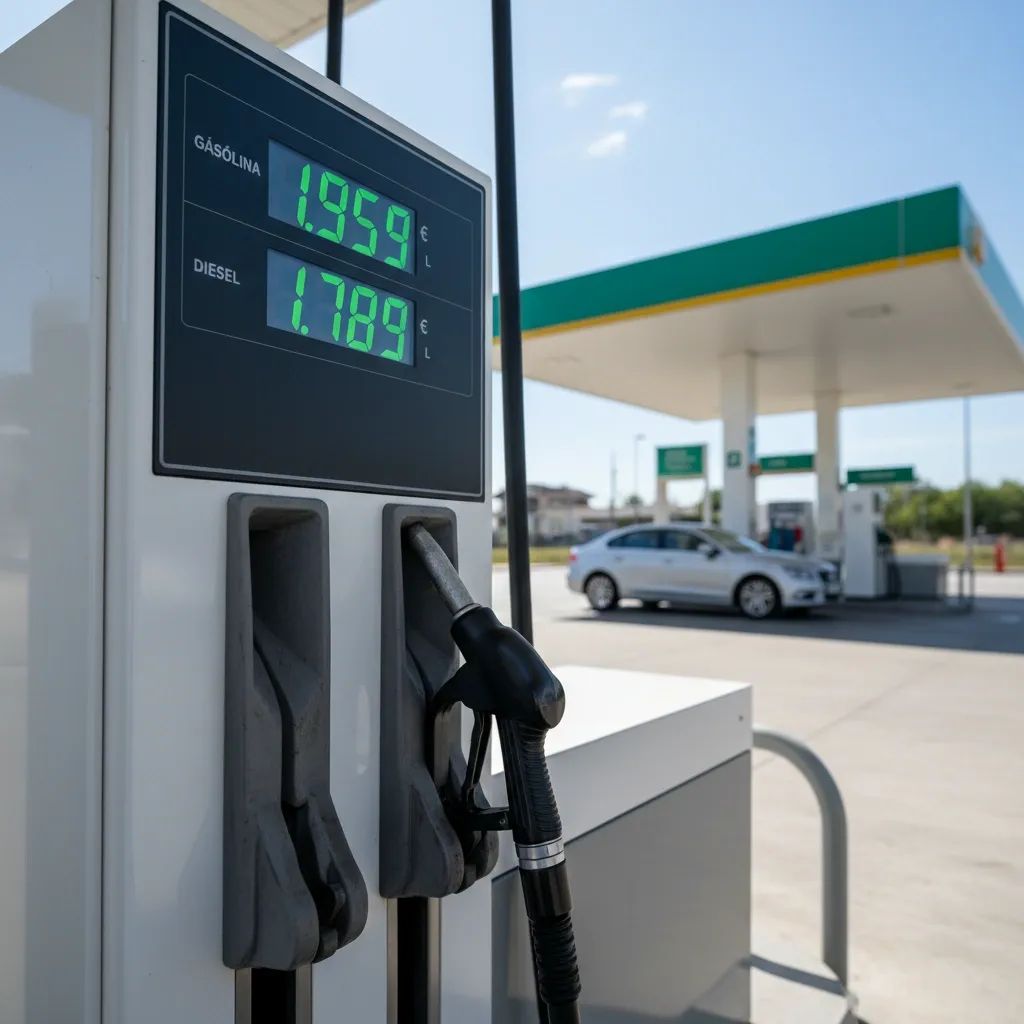
Portugal drivers with diesel vehicles face a small reprieve next week, as diesel prices are forecast to drop approximately 2.6 cents per liter, while gasoline motorists will see a marginal uptick of around half a cent. The diverging trajectory marks yet another swing in a volatile fuel market heavily influenced by Middle East geopolitics and an accelerating fight against tax fraud that's costing the Portuguese treasury hundreds of millions annually.
Why This Matters
• Diesel drops to roughly €1.884/L at the beginning of next week, down from the current €1.910/L average.
• Gasoline inches up by 0.5–1 cent, hovering near €1.925/L.
• Tax evasion schemes imported from Spain are forcing the Portugal Cabinet to overhaul the VAT collection system for fuel—a move that may reshape how refineries and distributors operate nationwide.
• Portugal remains 20th most expensive in the EU-27 for gasoline, with prices 7.4% above the continental average.
Diesel's Downward Turn, Gasoline's Stubborn Climb
According to sector sources quoted by the Portugal Directorate-General for Energy and Geology (DGEG), diesel (gasóleo simples) is set to fall by approximately 2.6 cents per liter when pumps update their boards at the beginning of next week. Gasoline (gasolina simples 95), meanwhile, will edge up between 0.5 and 1 cent, a figure calculated before VAT and subject to final negotiation in Friday trading sessions.
The anticipated dip in diesel comes as welcome news for commercial fleets, freight operators, and the majority of private vehicle owners in Portugal—where diesel engines still dominate the passenger car fleet. Current pump averages sit at €1.910/L for diesel and €1.915/L for gasoline. Both figures include the government's extraordinary ISP (Imposto Sobre Produtos Petrolíferos) discount.
Earlier in the week, diesel climbed 2.4 cents while gasoline dipped 0.9 cents—a pattern that has characterized much of early summer 2026, with the two fuels trading places in relative affordability almost week to week. The volatility is driven primarily by international oil markets, where OPEC+ production cuts and refinery disruptions continue to inject uncertainty. Analysts note that diesel's forecast decline is tied to a modest softening in Brent crude futures and regional supply adjustments, though the trend could reverse if Middle East tensions escalate further.
The Hidden Cost: Fraud That Pushes Prices Higher for Everyone
While drivers focus on the pump, a parallel battle is unfolding in Lisbon's corridors of power. On Thursday, the Portugal Council of Ministers approved a draft law to overhaul the VAT collection framework for fuels, aiming to plug a leak that industry representatives estimate is draining hundreds of millions of euros annually from state coffers.
Minister of the Presidency António Leitão Amaro told reporters the fraud is "expressive" and affects not just Portugal but also southern European neighbors. "When some, even if they are few, do not pay a lot in taxes, the bill is left for the others—and that is unfair," he said, adding that anti-fraud efforts must remain a top priority.
The schemes at the heart of the crackdown involve so-called ghost companies that import fuel—often from Spain—sell it at below-market rates by pocketing the VAT they collect from customers, then vanish before remitting anything to the tax authority. The Portuguese Association of Fuel and Lubricant Companies (EPCOL) warns that these networks exploit a three-month lag between when fuel is registered as sold and when VAT is due, creating a window for evasion.
Portugal has become an increasingly attractive target as enforcement pressures intensify across the region. Recent customs intercepts at the Portuguese border have seized over 3 million liters of fuel in a single day, underscoring the scale of the illicit trade.
What the VAT Overhaul Entails
Details of the legislative changes remain under wraps pending parliamentary review, but officials signal the reforms will modify the VAT code and restructure the National Petroleum System to close loopholes and tighten oversight. Possible measures include:
• Reverse-charge mechanisms that shift VAT liability from the seller to the buyer at the wholesale level, limiting opportunities for evasion.
• Real-time reporting requirements for fuel movements, reducing the three-month gap that fraudsters exploit.
• Enhanced penalties and faster administrative sanctions for non-compliant operators.
• Cross-border data sharing with Spanish authorities to track suspicious shipments before they reach Portuguese pumps.
The goal is not merely to recover lost revenue but to level the playing field for legitimate distributors and retailers, who complain they cannot compete with operators selling fuel at artificially deflated prices. For consumers, the long-term effect could be paradoxical: while stricter enforcement may raise costs for black-market players and push some out of business, it should also stabilize prices by reducing the downward pressure created by untaxed supply.
Impact on Residents and Fleet Operators
For households and businesses reliant on personal or commercial vehicles, the immediate takeaway is straightforward: fill up diesel tanks next week to capture the 2.6-cent drop, and delay gasoline purchases if possible. Over a typical 50-liter tank, the diesel savings amount to roughly €1.30, modest but meaningful given cumulative costs.
Longer term, the anti-fraud package could reshape the retail landscape. Smaller, independent stations that may have inadvertently sourced from tainted supply chains will face heightened scrutiny, while integrated oil majors with tighter compliance frameworks stand to benefit. Transport and logistics firms—already squeezed by high fuel costs—are watching closely, as any disruption to supply or enforcement could ripple through delivery schedules and freight rates.
Tax experts also note that the VAT reforms may serve as a template for other sectors vulnerable to cross-border evasion, particularly in areas like alcohol, tobacco, and electronics, where similar ghost-company schemes have proliferated.
Portugal's Place in the European Fuel Price Hierarchy
Despite the week-to-week swings, Portugal consistently ranks among the pricier EU-27 destinations for fuel. As of early June 2026, gasoline at €1.915/L sits 7.4% above the EU average of €1.79/L, placing Portugal 20th out of 27 member states (with 1 being the cheapest). Diesel at €1.910/L is 4.4% above the bloc's €1.80/L mean.
Only Denmark (€2.39/L for gasoline) and Finland (€2.18/L) charge more among northern neighbors, while Malta (€1.34/L) and Poland (€1.41/L) anchor the bottom end. France, Greece, and Italy cluster near Portugal's price band, a function of similar tax structures and geographic exposure to Mediterranean supply routes.
The fiscal burden accounts for roughly 49.3% of gasoline's pump price and 41.7% of diesel's, a reality that makes the government's anti-fraud push politically sensitive. Every cent recovered from tax cheats theoretically reduces the need for higher statutory rates or allows more generous ISP discounts to offset geopolitical shocks.
What Comes Next
The draft law now moves to the Portuguese Assembly of the Republic for debate and amendment. Industry lobbyists expect a swift passage given cross-party consensus on the need to curb evasion, though technical details—particularly around data privacy and the administrative burden on smaller operators—may spark discussion.
Meanwhile, drivers should brace for continued volatility. The ISP discount mechanism remains in place but is calibrated weekly based on international benchmarks, meaning any fresh disruption in crude markets could overwhelm the modest relief forecast for diesel. Gasoline, tracking a different set of refinery margins and demand patterns, shows no sign of sustained decline through the summer.
For those navigating Portugal's roads—whether commuting to Lisbon, hauling cargo through the Algarve, or ferrying tourists along the Douro—the message is consistent: watch the weekly forecasts, fill strategically, and keep an eye on the legislative calendar. The fight against fuel fraud may seem abstract, but its outcome will determine whether Portuguese motorists pay a fair share or subsidize the profits of phantom operators.


