

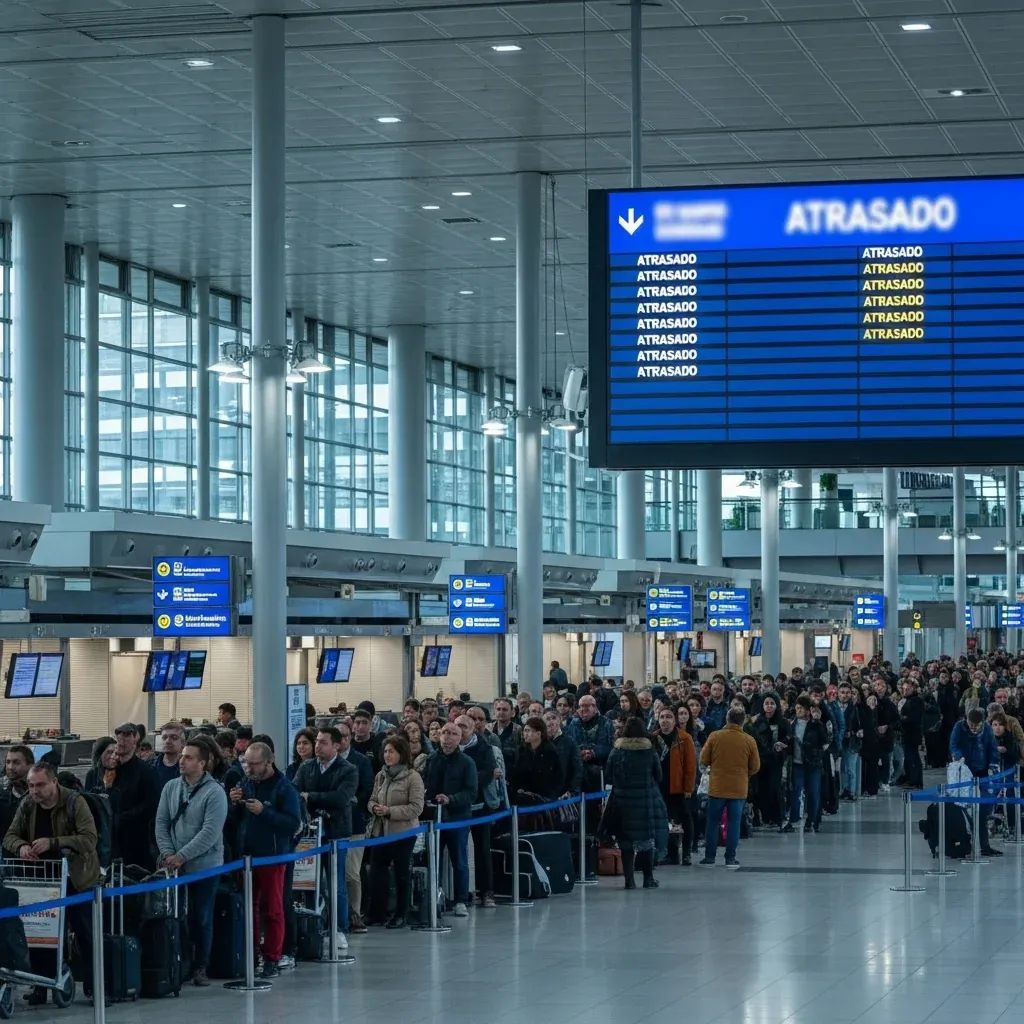
The Azores Regional Statistics Service (SREA) has confirmed that air passenger traffic across the archipelago slumped 12.3% in April 2025, marking the fourth consecutive month of decline and signaling deepening turbulence for Portugal's mid-Atlantic tourism economy.
Why This Matters
• April arrivals: Just 178,568 passengers disembarked across the nine islands, down from 203,619 a year earlier—the steepest monthly contraction since the tracking began this winter.
• External routes hit hardest: Flights from mainland Portugal and Madeira fell 18%, while international arrivals dropped 19.8%—nearly double the decline in inter-island travel.
• Economic ripple effects: The tourism sector, which accounts for roughly 20% of the Azores' GDP, faces significant revenue losses as connectivity declines.
Root Cause: Ryanair's Exit and Capacity Crunch
The most visible driver behind April's sharp downturn is Ryanair's withdrawal from the Azores on March 29, ending an 11-year presence that delivered six routes and approximately 400,000 passengers annually. The low-cost carrier cited airport fees and operational constraints as reasons for pulling out.
Combined with Azores Airlines' strategic route adjustments—including the cancellation of its London service and frequency cuts on less profitable links—the archipelago has hemorrhaged roughly 130,000 seat capacity for summer 2025, an 11.6% reduction compared to the previous year. Ponta Delgada airport absorbed the largest hit, losing more than 110,000 seats alone.
Inter-island flights proved more resilient, declining only 2.6% year-on-year, but territorial and international connections bore the brunt, reflecting structural shifts in carrier presence rather than seasonal fluctuations.
Island-by-Island Breakdown
The impact was uneven. São Miguel, the archipelago's largest and busiest island, saw arrivals plunge 15.5% despite still accounting for 59.6% of total regional traffic with 106,359 passengers. Corvo recorded the steepest decline at 15.7%, followed by Terceira at 13.9%.
Only two islands bucked the trend: Santa Maria posted a 3.4% gain and Faial grew 2.8%, likely benefiting from niche inter-island connectivity and stable domestic demand. Flores remained essentially flat, while Pico, São Jorge, and Graciosa registered modest single-digit losses between 1.3% and 5.4%.
Terceira, the second-busiest hub with 34,711 passengers, and Faial with 11,688 arrivals rounded out the top four gateways. The archipelago's smaller islands continue to rely heavily on inter-island links, which have shown relative stability compared to external routes.
What This Means for Residents and Businesses
For expatriates, remote workers, and business owners based in the Azores, the passenger slump translates into tangible friction. Reduced flight frequencies mean fewer travel options, higher fares on remaining routes, and longer layovers when connecting to mainland Europe or North America.
Hotel and hospitality operators are already feeling the pinch. Booking rates lag behind 2024 levels, forcing many establishments to slash prices to maintain occupancy. Industry voices have warned that the downturn threatens tourism prospects for 2025, with risks of widespread insolvencies, suspended investment, rising unemployment, and collapsing tax revenues.
The government's subsidized resident fare scheme remains in place, capping tickets to the mainland at €119 (€89 for students) and to Madeira at €79 (€59 for students). Eligibility is being broadened to ensure all residents qualify regardless of tax compliance status. For more information on accessing these benefits, residents should contact the Regional Secretary for Tourism or visit the official Azores government portal at azores.gov.pt. The "Passe Açores 9 Ilhas" multimodal pass, encouraging inter-island travel, has been renewed to combat seasonality and keep domestic mobility afloat.
Government and Industry Response
Recognizing the crisis, ANA Aeroportos de Portugal has ramped up incentive programs, offering up to 100% support in the second year of operation to attract new carriers. The strategy has already secured commitments for new international services: Air Canada and WestJet will launch routes to Toronto, while Austrian Airlines debuts a Vienna link this year. TAP Air Portugal has added a Porto–Terceira route and increased Porto–Funchal frequencies.
A planned Terceira–Madeira direct service by Azores Airlines, originally slated for May, has been pushed back to June due to regulatory hurdles.
The Visit Azores promotional budget for 2025 has been allocated for marketing efforts, with the regional government rolling out an integrated smart monitoring system to track tourist flows in real time, aiming for data-driven decision-making and more agile responses to demand shifts.
Infrastructure improvements continue: €30M in terminal upgrades at Ponta Delgada and Horta were completed last year, with plans to expand Ponta Delgada's capacity by 30% and enlarge the civil terminal at Lajes under the revised Transport Plan for the Azores (PTA 2030).
Broader Context: Madeira Diverges
While the Azores struggled, Portugal's other Atlantic archipelago told a starkly different story. Madeira's airports recorded growth in early 2025, with March arrivals up 2.3% and the first two months of the year showing a 5.1% increase. EasyJet announced a 5% capacity boost and a new Funchal–Nice route, underscoring investor confidence.
Madeira faced weather-related disruptions in April—strong winds forced cancellations and diversions—but these were episodic, not structural. The contrasting fortunes highlight the fragility of low-cost carrier dependency and the competitive pressure on the Azores to diversify its airline partnerships and stabilize connectivity.
What Comes Next
The four-month losing streak—January through April—follows an earlier downturn between September and November 2024, creating a prolonged trough that has eroded confidence in the region's tourism model. Overnight stays in tourist accommodation have mirrored the passenger declines, falling 9.9% in January and 5.9% in February, with international markets suffering the steepest drops.
The regional chamber of commerce has called for active route attraction policies and increased funding for Visit Azores to reverse the trajectory.
For now, the Azores face a delicate balancing act: restoring airlift capacity, maintaining price competitiveness, and leveraging the archipelago's growing reputation as a regenerative tourism destination without the infrastructure or budgets that larger rivals command. Whether the new routes and incentive programs can offset Ryanair's departure—and whether demand rebounds in the crucial summer months—will determine if 2025 becomes a reset or a deeper slide for Portugal's remote island jewel.


