

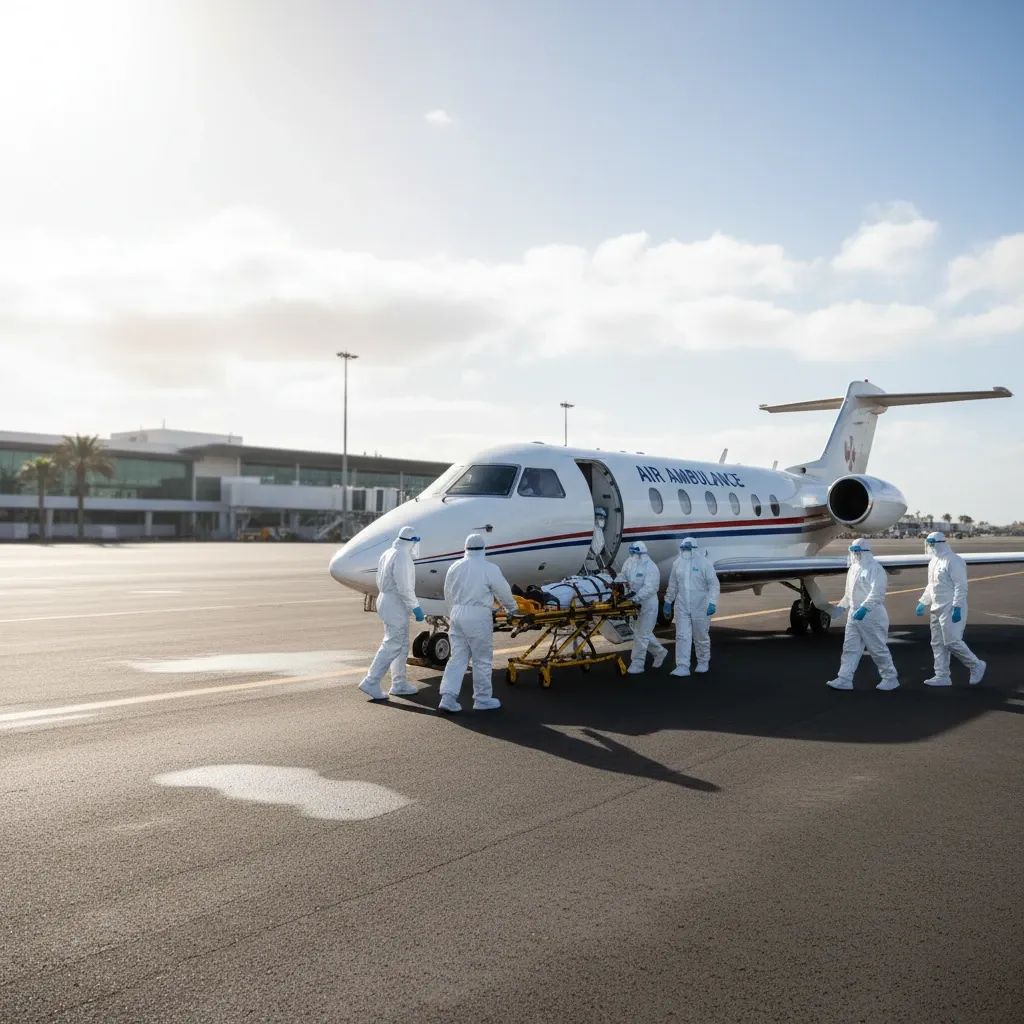
Portuguese health authorities are monitoring the unfolding hantavirus Andes crisis after the cruise vessel MV Hondius docked at Granadilla Port in Tenerife, Spain, early today, prompting a coordinated international repatriation operation. The World Health Organization (WHO) has declared that transmission risk to the broader public remains low, despite 9 confirmed or suspected cases and 3 deaths tied to the outbreak aboard the ship.
Why This Matters
• Containment Success: The last death occurred on 2 May, signaling that containment measures may be working.
• Repatriation Protocols: Over 100 passengers are being repatriated today via charter flights, with strict 42-day quarantine protocols in place for all disembarking travelers.
• Human-to-Human Threat: The Andes strain is the only hantavirus variant capable of person-to-person transmission, though this remains rare and requires prolonged, close contact.
• Regional Implications: While no Portuguese nationals have been reported among the infected, the arrival of the vessel in Spain's Canary Islands—approximately 1,000 km from mainland Portugal and a major year-round destination for Portuguese tourists with direct flights from Lisbon and Porto—underscores the need for vigilance in shared Atlantic shipping corridors.
Disembarkation Underway in Canary Islands
Spanish nationals were the first to leave the MV Hondius this morning at approximately 09:30 local time (same time in Lisbon), with 13 passengers and one crew member heading to Madrid aboard the inaugural repatriation flight. The vessel had spent days in quarantine off Cape Verde, a frequent waypoint for trans-Atlantic routes also used by Portuguese shipping and fishing vessels.
The WHO Director-General Tedros Adhanom Ghebreyesus appeared alongside Spanish Health Minister Mónica García at a press conference at the port, praising Spain and the Tenerife health authorities for what he described as exemplary crisis management. "The leadership here has been very strong," he said, adding that the third and final fatality occurred on 2 May and that appropriate control measures have since been applied.
Among those departing today are 17 American passengers, who will be transferred home this afternoon under medical supervision. Tedros emphasized that the United States and other countries of origin have already prepared quarantine facilities and are taking necessary precautions based on scientific assessments and field investigations conducted by WHO and the European Centre for Disease Prevention and Control (ECDC).
Nine Cases, Three Deaths: Tracing the Outbreak
The MV Hondius departed Ushuaia, Argentina, on 1 April, bound for Cape Verde across the South Atlantic. Initial symptoms appeared on 6 April when a passenger developed fever and gastrointestinal distress. That individual died five days later from respiratory failure. His wife fell ill during a subsequent flight to Johannesburg, South Africa, on 25 April and died the next day; her infection was later confirmed via PCR testing.
A British passenger was evacuated to South Africa on 27 April and remains in critical but stable condition in an intensive care unit in Johannesburg. On 2 May, a German woman became the third fatality. By 4 May, the WHO had officially confirmed the outbreak. The case count has risen from the initially reported six confirmed cases to nine total cases as of today—seven confirmed and two probable.
Notably, a French passenger tested positive after arrival in Tenerife, and his condition has since deteriorated. An American passenger also returned a "slightly positive" PCR result during repatriation screening. No symptomatic individuals remain aboard the vessel.
The Andes Variant: Rare But Real Risk of Human Spread
Hantaviruses are typically transmitted by infected rodents—most commonly through aerosolized urine or droppings. The Andes strain, however, is unique among hantaviruses in its capacity for human-to-human transmission, a feature documented in outbreaks in Argentina and Chile since the 1990s.
Transmission occurs via direct physical contact, saliva, or respiratory droplets, typically requiring sustained, close-range interaction. The virus can also spread through breast milk, placental transfer, or contact with mucous membranes after handling contaminated fluids. Infectiousness peaks during the prodromal phase—the early days of fever and flu-like symptoms—before respiratory distress sets in.
The incubation period ranges from one to eight weeks, with most cases manifesting symptoms around two to three weeks post-exposure. This prolonged latency is why the ECDC and WHO are enforcing a 42-day active monitoring period for all contacts, even those currently asymptomatic. Daily temperature checks and symptom surveillance will be conducted either in dedicated quarantine facilities or via supervised home isolation, depending on national protocols.
Critically, the Andes variant is far less contagious than respiratory viruses like measles or COVID-19. A 2018–2019 outbreak in Epuyén, Argentina, resulted in 34 infections and 11 deaths, with genomic sequencing revealing transmission chains at social gatherings in enclosed, crowded settings. However, the overall efficiency of spread remains low, and public health agencies stress that environmental co-exposure to rodents cannot always be ruled out in epidemiological studies.
What This Means for Travelers and Regional Health Systems
For Portuguese nationals and residents who frequently travel to or through the Canary Islands, this incident serves as a reminder of biosecurity risks on international cruise routes. The MV Hondius was not a typical mass-market cruise; it is an expedition vessel operated by Oceandrive, catering to adventure tourism in remote regions like Patagonia and the South Atlantic. Such itineraries often involve landings in areas with endemic rodent populations, raising the potential for zoonotic spillover events.
The Portuguese health ministry has not issued specific travel advisories related to this outbreak. Standard precautions for anyone traveling to or working in regions with hantavirus circulation include:
• Avoiding contact with rodents or their droppings, nests, and burrows.
• Not sleeping on bare ground in rural or wilderness areas.
• Storing food in sealed, rodent-proof containers.
• Using protective masks and gloves when cleaning potentially contaminated areas, and wetting surfaces before sweeping to avoid aerosolizing particles.
Portuguese health authorities have maintained coordination with Spanish and Cape Verdean counterparts regarding screening protocols and port monitoring. Residents who have traveled on expedition cruises in remote regions and experience fever or respiratory symptoms within eight weeks are advised to contact their local health center and mention their travel history. The Portuguese Institute of Health (DGS) can be reached through standard health services channels for specific guidance.
While no Portuguese passengers have been identified among the infected, the Azores and Madeira islands—both autonomous regions of Portugal—share maritime corridors with the Canaries and Cape Verde. Continued coordination between Portuguese health authorities and their international partners will be essential should similar incidents arise in the future.
Decontamination and Next Steps
Approximately 30 crew members will remain aboard the MV Hondius as it sails to Rotterdam, Netherlands, for full decontamination and rodent eradication measures. The WHO has recommended comprehensive inspection, sealing of entry points, proper food storage protocols, and chemical disinfection of all common areas and cabins.
No commercial flights will be used for repatriation. Instead, charter aircraft organized by individual governments and the EU Civil Protection Mechanism are transporting passengers in controlled cohorts, with in-flight monitoring and PPE requirements. The European Union has activated its joint health response framework, coordinating testing, quarantine logistics, and information sharing across member states.
This marks the first documented hantavirus Andes outbreak on a trans-Atlantic cruise vessel, and health officials are already reviewing protocols to prevent future incidents. Lessons learned from COVID-19 cruise ship quarantines—particularly aboard the Diamond Princess in 2020—are being applied, including staggered disembarkation, real-time genomic surveillance, and transparent risk communication to avoid public panic.
Tedros concluded by emphasizing the differences from pandemic-era threats: "This is not another COVID," he said, noting that the virus does not spread easily in open-air settings or through casual contact, and the risk to the general population in Tenerife or neighboring Atlantic islands remains minimal. Nonetheless, the incident highlights the evolving nature of zoonotic disease threats and the need for robust international surveillance systems in an era of global travel.


