

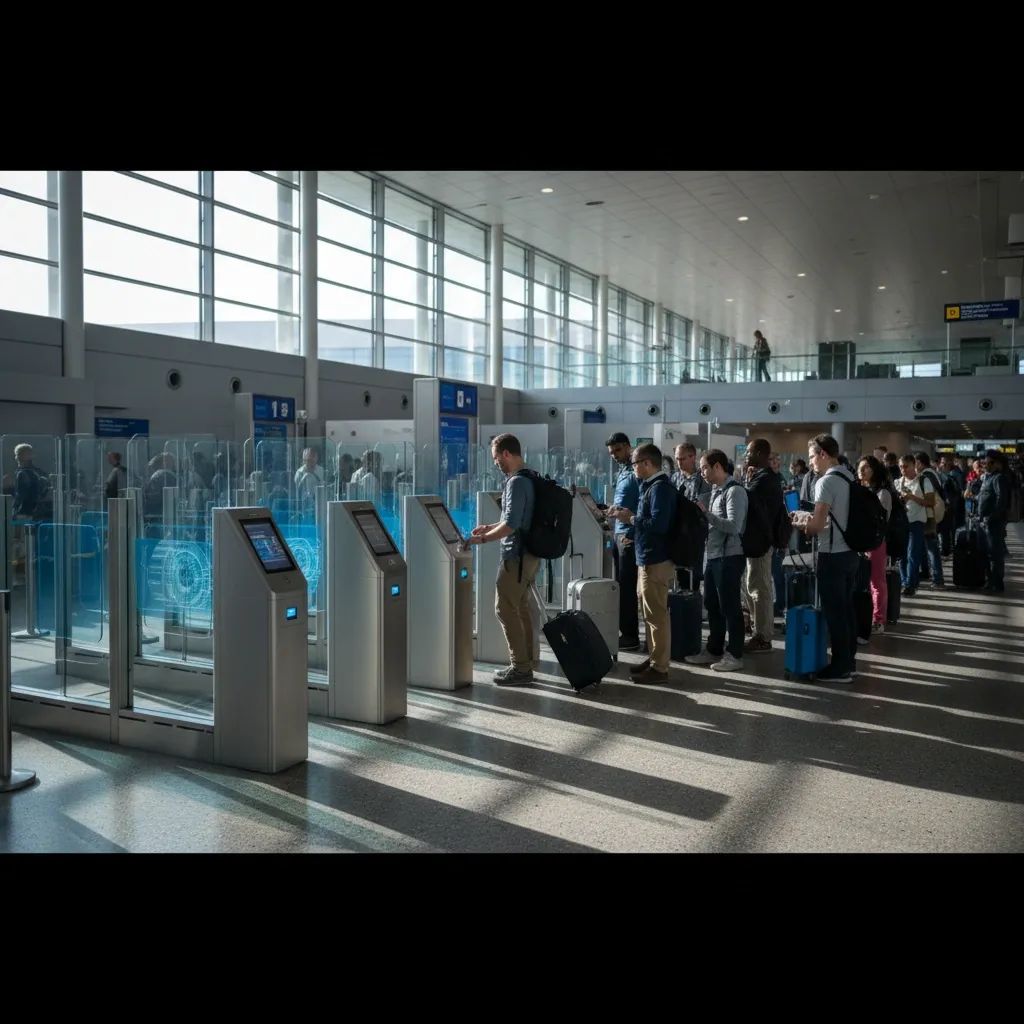
The Portugal Ministry of Infrastructure confirmed yesterday that the operational chaos that plagued Lisbon's Humberto Delgado Airport and other national gateways has been brought under control, capping a four-month struggle to adapt to a new European border system that exposed critical gaps in planning, staffing, and technology.
Why This Matters
• Border delays peaked at 8 hours in April and May 2026, with passengers missing flights and stranded in queues across Lisbon, Faro, and Funchal airports.
• The Entry/Exit System (EES), which went fully live on April 10, replaced passport stamps with biometric scans for all non-EU visitors, adding 3–7 minutes per traveler at the first checkpoint.
• A surge of 360 additional police officers is being deployed in July, alongside expanded e-gates and self-service kiosks, to stabilize operations ahead of peak summer travel.
• Portugal narrowly avoided a European "failure" rating in April after auditors flagged 14 critical security lapses, including insufficient fraud detection staff.
The Biometric Bottleneck
When the European Union Entry/Exit System transitioned from pilot to full deployment this spring, Portugal's border infrastructure buckled. The system, which captures facial images and fingerprints from every traveler from the United States, United Kingdom, Canada, Brazil, and dozens of other non-EU nations, was meant to modernize border security. In practice, it turned arrival halls into pressure cookers.
At the Aeroporto de Lisboa, queues stretched for seven hours or more during March and April. Faro Airport, a key gateway for European holidaymakers flying from outside Schengen, saw similar gridlock. Passengers reported missing connecting flights, spending entire afternoons standing in corridors, and watching understaffed control booths struggle with system crashes.
The Portugal Royal Police (PSP), which assumed border control duties after the dissolution of the immigration service SEF in 2023, found itself overwhelmed. A temporary suspension of biometric collection was authorized in December 2025 for three months at Lisbon, and again on an ad-hoc basis in late May when wait times exceeded two hours.
Ryanair issued a public call in April for the government to halt EES operations until September, citing chronic understaffing and inadequate preparation at Porto, Faro, and Funchal. The airline's chief operations officer pointed to "1–2 hour waits as standard" and warned that the summer season could see the system collapse entirely.
What Went Wrong
Aviation analysts and border security experts agree that the Entry/Exit System itself is not inherently flawed—the problems stem from Portugal's readiness to implement it. The country's airports were operating at capacity before the change, with minimal buffer for the added complexity of fingerprint scanners, facial recognition cameras, and digital records for millions of annual visitors.
Infrastructure deficiencies topped the list of complaints. The number of manual control booths at Lisbon was insufficient for peak traffic, and the deployment of e-gates—automated passport lanes that can process EU and EEA nationals quickly—lagged behind schedule. On April 1, Lisbon had just 18 e-gates in arrivals; by late May, the count had risen to 32, with an additional 4 gates installed in departures.
Technology failures compounded the issue. The PASSE+ platform, Portugal's national border management system designed to integrate with EES, experienced recurring malfunctions. Agents were forced to revert to manual data entry during system outages, negating any efficiency gains the digital system promised.
Staffing shortages emerged as the most visible flaw. The PSP inherited border duties from SEF without a corresponding transfer of personnel. Former SEF inspectors, now integrated into the Polícia Judiciária (PJ), provided temporary support through April, but their departure left gaps. The government acknowledged in May that border posts were chronically understaffed, particularly during the afternoon and evening waves when transatlantic and long-haul flights arrive simultaneously.
A European Commission audit in April identified 14 critical failures at Lisbon, including insufficient document fraud specialists and inadequate screening for overstay risks among non-EU passengers. The findings put Portugal at risk of formal censure from Brussels.
The Government Response
Miguel Pinto Luz, the Portugal Infrastructure Minister, issued a public apology in May for the disruptions and pledged immediate corrective action. By mid-June, he declared the crisis resolved, attributing the turnaround to a three-pronged intervention: expanded technology, reinforced staffing, and operational flexibility.
The Ministry of Internal Administration, led by Luís Neves, coordinated the deployment of 340 additional PSP officers to border posts starting in July, with recruits drawn from a May graduation class of nearly 600 new police agents. The Guarda Nacional Republicana (GNR), Portugal's rural and highway police force, was also mobilized to provide certified border control support during peak periods.
On the technology front, the government fast-tracked the installation of 14 additional e-gates in Lisbon's arrivals hall and expanded the RAPID4ALL automated clearance program, previously limited to Portuguese and EU nationals, to include travelers from the United States and Canada at Lisbon and Ponta Delgada. Plans are underway to extend the system to Porto and Faro by autumn.
Self-service kiosks for biometric enrollment were installed across all international airports, allowing passengers to complete fingerprint and facial scans before reaching the control booth. The rollout of the "Travel to Europe" mobile app, which enables pre-registration of passport data and photos, has been accelerated. Portugal is one of only two EU nations where the app is currently functional.
The government also invoked an emergency suspension protocol built into the EES framework, permitting temporary halts to biometric collection during exceptional congestion. In late May, Portugal notified the European Commission that it would suspend data capture for up to six hours at specific checkpoints when wait times exceeded safe thresholds.
What This Means for Travelers
If you are arriving in Portugal from outside the EU, expect the first entry under EES to take longer than previous trips. The initial biometric registration—fingerprints and a facial scan—adds roughly 5 minutes per person to the control process, though families and groups can be processed together. Subsequent entries are faster, as your data is stored for three years.
Peak-hour arrivals remain vulnerable to delays, especially at Lisbon and Faro between 4 PM and 9 PM, when long-haul and charter flights cluster. Current wait times range from 15 minutes to 2 hours under normal conditions, but weekend surges in June have pushed queues past three hours.
To minimize risk of missed connections, allow at least 90 minutes between international and domestic flights if you are a first-time EES registrant. Frequent travelers should download the "Travel to Europe" app and pre-register biometric data where possible.
EU, EEA, and Swiss nationals are exempt from EES and should use the expanded e-gate network, which now covers 32 automated lanes at Lisbon arrivals. These gates are also available to travelers holding Portuguese residence permits.
The summer season—July through September—will be the first full stress test of the upgraded system. The government has committed to continuous monitoring and the activation of contingency measures if queues spiral. A 24-hour operations center at the Ministry of Internal Administration will coordinate real-time adjustments, including the redeployment of mobile PSP units to airports experiencing sudden surges.
Regional Comparisons and Lessons
Portugal's struggles with EES mirror challenges faced across the Schengen Area. Amsterdam Schiphol, Paris Charles de Gaulle, and Berlin Brandenburg all reported multi-hour waits during the spring rollout, with some airports introducing separate lanes for first-time registrants and returning travelers.
Sweden and Estonia have been highlighted as early successes, largely due to aggressive investment in self-service kiosks and mobile pre-registration campaigns. Schiphol Airport implemented a dual-queue system in May, routing frequent travelers through faster lanes and reserving manual booths for complex cases or families.
A Frontex official stated in June that the system would require 12–24 months to stabilize across Europe, with the first summer season serving as a critical proving ground. European travel industry associations have warned that the combination of EES, ongoing staff shortages, and record passenger volumes could trigger widespread disruptions through August.
Political and Legislative Fallout
The border chaos has accelerated legislative action in Portugal's Parliament. On June 12, lawmakers advanced a package of immigration and border control reforms for detailed committee review, aligning Portuguese law with the European Pact on Migration and Asylum. The proposed measures include enhanced asylum screening procedures, expanded digital border management, and tighter coordination between the PSP, GNR, and civil aviation authorities.
The reforms also address staffing sustainability, with provisions for dedicated border guard recruitment tracks and long-term funding commitments to avoid the personnel gaps exposed by the SEF dissolution in 2023.
Magnus Brunner, the European Commissioner for Home Affairs and Migration, acknowledged Portugal's "significant progress in recent weeks" during a June 12 briefing in Brussels, noting that initial complaints about Portuguese airports were partly the result of "misunderstandings" and queues unrelated to EES, including labor strikes and construction delays.
Labor unrest did play a role. A general strike on June 3 disrupted hundreds of flights, though pilots did not participate. Ground handling workers with Menzies staged rolling strikes between September 2025 and January 2026, and a New Year's Eve walkout by aviation unions added to the operational strain.
The Road Ahead
The Portugal government insists the worst is over, but the system remains fragile. The 360 new police officers will not arrive until July, and the summer holiday exodus is already underway. The success of the upgraded infrastructure, expanded automation, and contingency protocols will be measured in the coming ten weeks.
For now, travelers should plan conservatively, monitor real-time airport updates via the ANA Aeroportos mobile app, and prepare for the possibility of delays. The biometric future of European border control is here—but the transition is far from seamless.


