

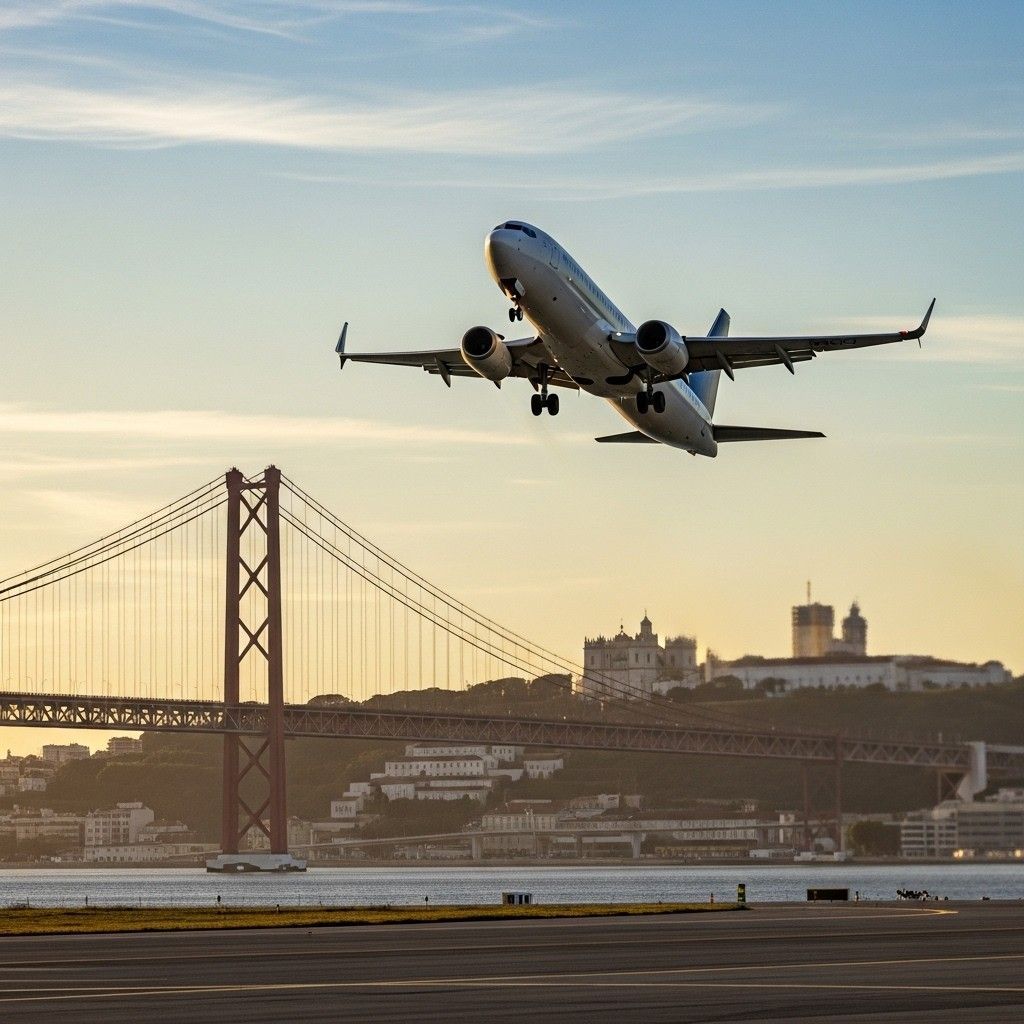
Global airlines face a profit collapse of 50% in 2026 despite carrying more passengers than ever, a reversal driven by the Middle East war and soaring jet fuel costs that will squeeze every ticket sold by travelers departing from Portuguese airports.
What Portugal Travelers Should Know
Portuguese residents and expats face three immediate impacts on travel:
• Flight prices will rise: Airlines will pass along fuel cost increases, making trips from Lisbon and Porto more expensive through summer 2026 and beyond.
• Fewer Middle East routes: Emirates, Qatar Airways, and Etihad have already reduced flights to Lisbon and Porto, limiting convenient connections to Asia and Africa.
• Reduced competition: Smaller carriers may exit routes from Portugal, giving remaining airlines more pricing power.
Why This Matters for Travelers and the Economy
• Flight prices will rise: Airlines will pass along fuel cost increases, making trips from Portugal more expensive through the summer and beyond.
• Fewer Middle East routes: Carriers serving Lisbon and Porto have already canceled or reduced flights to Gulf hubs, limiting connections to Asia and Africa.
• Airline consolidation ahead: Smaller carriers face bankruptcy or takeover, potentially reducing competition on routes to and from Portugal.
The Math Behind the Margin Squeeze
The International Air Transport Association (IATA) slashed its industry profit forecast from $45B in 2025 to just $23B for 2026, translating to a net margin of 2.0% versus 4.2% last year. Put another way, airlines will earn roughly $4.50 per passenger this year, half the $9.10 they pocketed in 2025—barely enough to cover a coffee at the airport.
Total industry revenues are still climbing 9.4% to $1.17 trillion, and passenger numbers will reach 5.1 billion globally, up 2.4%. Yet those gains evaporate against a 13% jump in operating expenses, chiefly fuel. The projected cost of a barrel of jet fuel has hit $152, a 70% spike year-on-year, while Brent crude hovers near $95 per barrel. Fuel alone will consume $350B of the sector's budget, up from $252B in 2025.
IATA director-general Willie Walsh attributed the damage to "disruptions related to the war in the Middle East and the rapid 70% rise in jet-fuel costs." He warned that airlines are absorbing most of the shock themselves, leaving carriers vulnerable to any fresh cost layers—including new taxes or regulatory fees—that could wipe out the thin margin entirely.
Gulf Carriers Face Losses, European Routes Shrink
The geography of pain is uneven. Carriers based in the Middle East are forecast to swing into the red, posting a collective loss as demand craters and airspace closures ripple through their hub-and-spoke networks. Walsh noted that Gulf operators "face operational uncertainty after a near-total shutdown of airspace at the start of the war," a reference to closures in countries including the United Arab Emirates and Kuwait during February's escalation of the Iran conflict.
For Portuguese travelers, this means fewer one-stop connections via Dubai, Abu Dhabi, or Doha to destinations in Asia and East Africa. TAP Air Portugal and European carriers have already suspended or reduced services to select Gulf cities through at least the end of summer, citing both security concerns and prohibitive fuel costs on longer diversions around conflict zones. The Lisbon-Dubai route, historically a key connection point for Asian travel, now has reduced frequency and higher fares.
Meanwhile, airlines in other regions remain profitable but well below previous forecasts. European carriers, which serve the bulk of traffic from Lisbon and Porto, face higher fuel bills and softening demand as household budgets tighten under 5% inflation and slowing GDP growth across the Eurozone.
What This Means for Residents and Expats
Expect ticket-price adjustments on popular routes from Portugal to North America, Brazil, and intra-European destinations as airlines try to recoup fuel surcharges. Load factors—the percentage of seats filled—are forecast to remain near record highs at 84%, meaning carriers have little room to add capacity and will instead rely on yield management to protect margins.
Business travelers and digital nomads based in Portugal should brace for fewer off-peak bargains and more dynamic pricing. Leisure routes to sun destinations may see less dramatic increases, but any further escalation in oil markets—Russian sanctions or extended Gulf closures—could push Brent past $96 per barrel, triggering another round of fare hikes.
Cargo rates, which climbed 7.2% to $162B in revenue globally, also matter for Portuguese exporters of wine, textiles, and manufacturing goods. Air-freight capacity remains tight, and higher fuel costs will flow through to logistics invoices, squeezing margins for small and mid-sized firms that rely on time-sensitive shipments.
Fuel, Fleet Delays, and the Sustainability Gap
Airlines had planned to retire older, fuel-hungry jets and replace them with efficient new models from Airbus and Boeing. Supply-chain snarls at both manufacturers have stalled deliveries, forcing carriers to keep thirsty aircraft in service longer. IATA estimates global consumption will hold steady at 104 billion gallons (396 billion liters) this year, but the per-gallon cost has soared.
At the same time, sustainable aviation fuel (SAF) production will reach only 2.4 million tons in 2026, up from 1.9 million in 2025 but still covering a mere 0.8% of total consumption. Walsh admitted that airlines "are clearly off track" to meet the industry's net-zero-by-2050 pledge without faster action from fuel producers, aircraft makers, and air-traffic authorities. He singled out Europe's failure to modernize airspace management, which would cut emissions by optimizing flight paths and reducing holding patterns—changes that have languished despite years of discussion.
The sustainability shortfall has regulatory implications for Portugal. European Union emissions-trading rules already levy charges on intra-EU flights; any expansion of carbon pricing or new green levies will further erode thin margins and may trigger route cuts from secondary airports like Faro or Funchal.
Investment and Consolidation on the Horizon
Analysts expect the profit squeeze to accelerate mergers and acquisitions, particularly among smaller European and regional carriers that lack the balance-sheet strength to weather prolonged fuel spikes. Portuguese aviation could see changes if TAP Air Portugal—which remains partly state-owned—faces fresh questions about its capital structure or strategic partnerships.
On the positive side, ancillary revenues—fees for seat selection, baggage, and onboard services—are forecast to climb 12.6% to $165B, overtaking cargo income for the first time since 2019. Airlines will lean harder on these streams, meaning Portuguese passengers should prepare for more aggressive upselling at check-in and in-flight.
Regional Variations and Portugal's Position
Portugal's geographic position gives it strategic value as a European gateway to the Americas and Africa. Lisbon's hub role for TAP and low-cost carriers means the country benefits when transatlantic demand is strong, but it also absorbs shocks when fuel or geopolitical crises disrupt long-haul economics.
April traffic data showed a 3.4% drop in global passenger-kilometers versus the prior year, and the load factor slipped 0.4 percentage points to 83.1%. IATA's initial optimism for a busy summer has given way to caution as advance bookings signal softening demand. For Portugal, this mix means steady but unspectacular growth in European short-haul and a risk of weaker long-haul yields if corporate travel budgets shrink.
Oil-Market Wildcards
The Organization of the Petroleum Exporting Countries plus allies (OPEC+) announced a modest production increase of 188,000 barrels per day starting in July, the latest in a series of gradual hikes since last year. The move aims to stabilize prices but remains too small to reverse the spike driven by the closure of the Strait of Hormuz and ongoing strikes on refining infrastructure.
For airlines serving Portugal, even the base-case $95 Brent environment means sustained pressure. Any further escalation—a renewed Iranian offensive, a closure of the Suez Canal, or broader sanctions—would force carriers to cut capacity, park aircraft, and raise fares beyond what leisure travelers can bear.
Consumer Sentiment Holds, but Cracks Appear
IATA's survey of 6,500 consumers across 15 countries found that 97% expressed satisfaction with their last flight and 88% agreed that commercial aviation makes their lives simpler. Those figures suggest resilience in the travel culture that has rebounded since the pandemic.
Anecdotal reports from Portuguese travel agents indicate that families are now comparing train and bus options for intra-European trips, a shift that was rare two years ago. High-speed rail competition on routes like Lisbon–Madrid and future connections to Paris will intensify if airfares remain elevated, potentially eroding airlines' short-haul market share.
Practical Booking Tips for Portuguese Travelers
To protect yourself from rising airfares:
• Book early: Reserve flights 2–3 months in advance rather than last-minute.
• Be flexible on dates: Mid-week flights typically offer better fares than weekends.
• Monitor fuel hedging news: Airlines announce surcharges when crude spikes; book before increases take effect.
• Know your rights: EU passengers on flights under 1,500 km are entitled to compensation for 2+ hour delays; TAP and other carriers must honor these protections.
What Comes Next
Industry watchers expect fleet rationalization and network pruning through the autumn. Airlines will prioritize high-yield business routes and sun destinations with strong leisure demand, while trimming marginal frequencies and experimental city pairs. Portuguese regional airports in the Azores and Madeira may see fewer connections if carriers decide the thin margins no longer justify the operational complexity.
Technology offers a partial offset: newer aircraft burn up to 20% less fuel per seat-kilometer, and airlines are investing in artificial-intelligence tools to optimize flight planning and reduce taxi times. Yet the supply-chain backlog means those efficiency gains arrive slowly.
The Bottom Line for Portugal
For Portugal, the takeaway is clear: air travel remains essential for tourism, business, and diaspora ties, but the golden age of cheap tickets and expanding networks has paused. Travelers should book early, expect fewer promotions, and watch for schedule changes as airlines navigate the tightest margin environment in a decade. TAP Air Portugal and other carriers serving Lisbon and Porto will adapt, but passengers should prepare for higher fares, fewer Middle East connections, and less frequent flights on secondary routes.


