

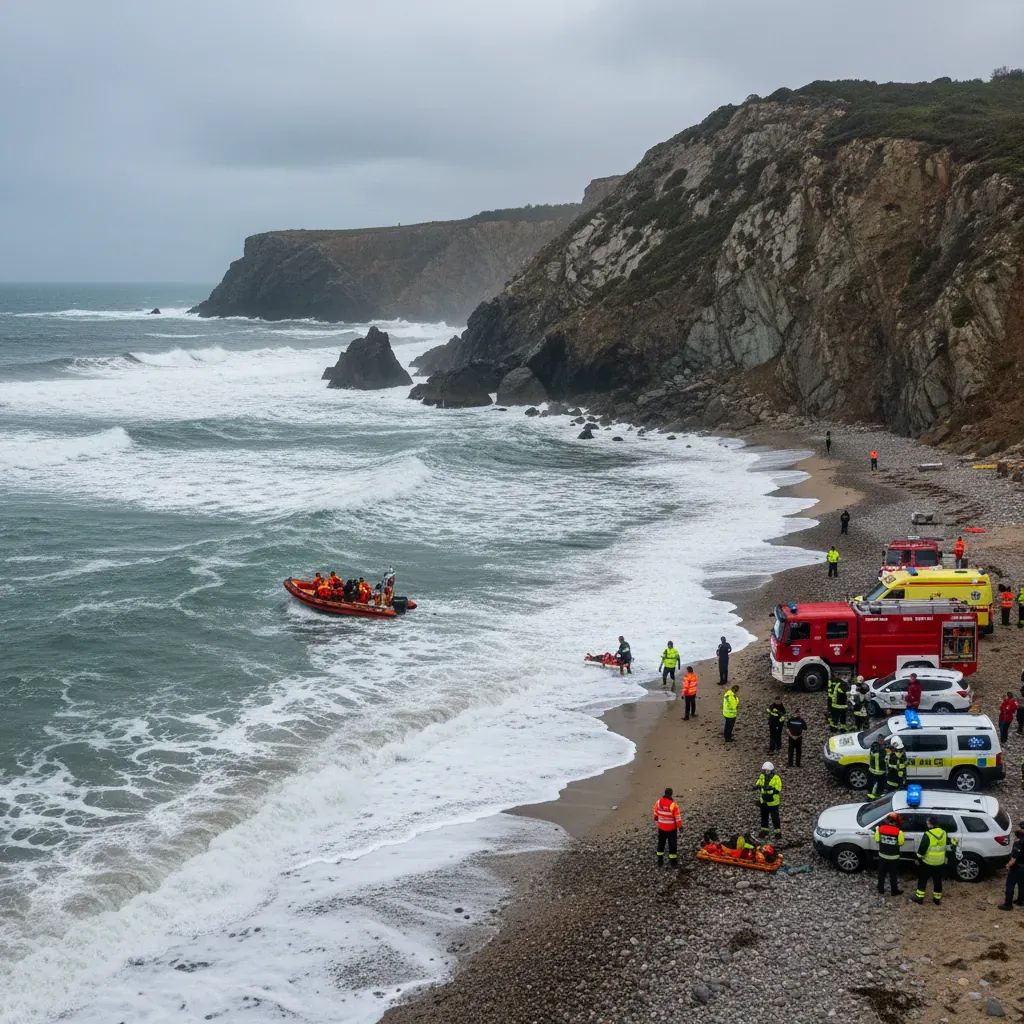
Portugal Maritime Police units extracted two swimmers—a 42-year-old man and a 12-year-old child, both Brazilian nationals—from the Atlantic after bystanders hauled them from the surf at Areia Branca beach in Lourinhã this past Saturday. The incident marks the second water rescue at this same stretch of coastline in less than two weeks, raising fresh questions about swimmer safety along Portugal's central-western shore.
Why This Matters
• Repeat danger zone: Areia Branca logged another rescue on June 4, when a 22-year-old American was pulled from near-drowning conditions.
• Bystander intervention saved lives: Both incidents relied on beach-goers retrieving victims before emergency services arrived.
• Targeted response: The SeaWatch Project, run by Portugal's Shipwreck Rescue Institute (ISN), positioned trained crews at the scene within minutes.
How the Rescue Unfolded
The Lisbon Maritime Search and Rescue Coordination Centre (MRCC Lisboa) received the distress call at 16:02 on Saturday, reporting two people struggling in the water. Within minutes, the command center dispatched units from the Peniche Local Maritime Police Command, SeaWatch Project vehicles, the Lourinhã Volunteer Fire Brigade, and the National Emergency Medical Institute (INEM).
By the time the first responders reached the sand, bystanders had already dragged both victims ashore. SeaWatch medics—military personnel from the Portuguese Navy cross-trained as lifeguards—administered initial triage and stabilized the pair before ambulances transported them to a regional hospital for observation. Neither victim's condition was disclosed, though both were conscious when they left the beach.
Pattern of Recent Incidents
This rescue follows a similar incident nine days earlier at the same beach. On June 4, a young American swimmer was found in pre-drowning condition around 17:21. Bystanders again performed the initial extraction, and the Lourinhã fire brigade initiated Basic Life Support maneuvers before the multi-agency response team airlifted the man to emergency care after stabilization.
The repeat incidents underscore a hazard along this section of Lourinhã's coastline. Areia Branca sits in an area where cliffs experience erosion, and past summers have seen Portuguese man o' war blooms prompt beach closures. In 2023, municipal authorities restricted access to a segment of the Malhada zone after geologists flagged cliff stability concerns.
Why Areia Branca Presents Challenges
Several factors converge to create conditions that require caution for swimmers:
• Morphology shifts: Tides and storms constantly reshape the seabed, creating gullies, eddies, and rip currents that can surprise swimmers.
• Seasonal lifeguard coverage: Outside the official bathing season (May 1 to September 30), most Lourinhã beaches rely on mobile patrols rather than stationed lifeguards.
• Tourist demographics: Many swimmers at this beach are international visitors unfamiliar with Atlantic swell patterns, which differ significantly from Mediterranean or tropical waters.
• Coastal geology: Areia Branca's cliffs are subject to ongoing erosion, with warning signs posted at access points regarding hazards.
What SeaWatch Does—and Does Not—Cover
The SeaWatch Project operates as a rapid-response unit combining military training with civilian rescue operations. Launched in 2010 by the ISN in partnership with private sponsors, the initiative deploys 4x4 patrol vehicles equipped with GPS trackers, automated external defibrillators, and radio links to MRCC Lisboa.
Navy personnel staffing these units are certified lifeguards who patrol beaches that fall outside municipal or concessionaire coverage. However, the project's scope remains geographically limited. During peak season, SeaWatch vehicles cover extensive coastline, meaning response times can vary significantly depending on location. This reality underscores that bystander intervention remains critical—as demonstrated by both June rescues.
Water Safety for Portugal Residents and Visitors
For residents and visitors alike, ocean recreation requires respect for conditions. Local authorities have emphasized beach safety protocols:
• Swim only at supervised beaches during posted hours, typically 10:00 to 19:00 in high season.
• Check flag colors before entering the water: red means bathing is prohibited; yellow signals caution; green indicates safe conditions.
• Stay within marked zones. Designated areas exist to help swimmers avoid hazardous currents.
• Download the "Info Praia" app from the Portuguese Environment Agency (APA), which provides real-time water-quality data and hazard alerts.
• Never rely on flotation toys like inflatable rings or pool noodles; these offer no genuine protection against currents.
Parents supervising children should maintain close visual contact at all times, even in shallow water. The threshold for water safety is constant attention, not periodic observation.
What to Do If You See Someone in Trouble
Portuguese civil-protection guidelines recommend:
Alert authorities immediately: Dial 112 (the pan-European emergency number) or use coastal SOS call-points.
Do not enter the water yourself unless you are a trained lifeguard with appropriate equipment.
Throw flotation aids if accessible—lifebuoys or other available flotation can provide temporary assistance.
Guide arriving responders to the exact location; provide clear landmarks visible from the shoreline.
Emergency response personnel carry defibrillators and oxygen kits, but immediate action in the first moments often proves decisive for outcomes.


