

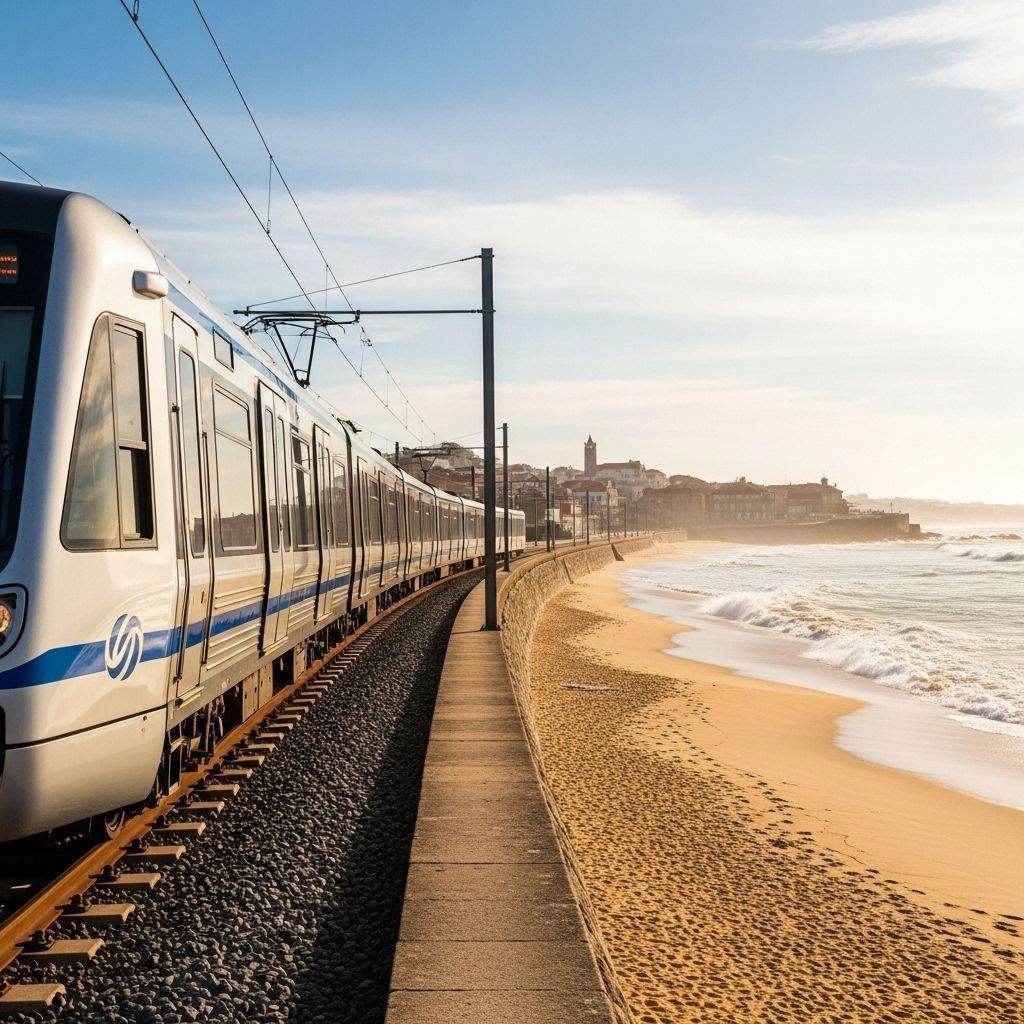
The Portugal Public Security Police (PSP) has deployed its summer operation across the country, a three-month push targeting beach zones, transport hubs, and tourist districts as visitor numbers surge and opportunistic crime traditionally spikes. Running until September 15, "Polícia Sempre Presente – Verão Seguro 2026" mobilizes extra patrols in response to what authorities describe as a "significant increase in the circulation of people" during the warmer months.
Why This Matters
• Beach safety and theft prevention: PSP will concentrate resources on coastal areas, historical centers, airports, and nightlife zones—all frequent targets for pickpockets and vehicle break-ins.
• Road enforcement intensifies: Officers will crack down on speeding, drink-driving, and motorcycle violations, which climb as summer travel peaks.
• Scam alerts for tourists: Police warn of fraudulent holiday rental bookings and crimes specifically targeting foreign visitors.
• Free home surveillance: Residents leaving for vacation can register their property online at https://veraoseguro.mai.gov.pt for police checks.
The Summer Push Builds on Earlier Enforcement
In the first week of June, a nationwide joint task force involving the PSP, Guarda Nacional Republicana (GNR), Judiciary Police (PJ), Maritime Police, Tax Authority (AT), ASAE consumer watchdog, ACT labor inspectorate, and the AIMA immigration service completed a coordinated sweep from June 1 to 7. That effort, dubbed "Operação Portugal Sempre Seguro 2026," resulted in 76 arrests and 1,776 traffic citations nationwide, alongside inspections of 69 vessels, 8,988 vehicles, and 854 businesses. Officers flagged 41 foreign nationals in irregular status out of 2,527 checked. This preliminary operation set the stage for the larger summer deployment now underway.
Dual-Force Summer Coordination
While the PSP leads urban and coastal enforcement, the Guarda Nacional Republicana (GNR) has expanded its reach on Portugal's inland waterways. On June 13, the GNR Territorial Unit in Bragança launched a new patrol vessel on the Lower Sabor reservoir, joining two existing boats that monitor the Douro Internacional and Foz do Tua lakes. A GNR spokesperson told Lusa the craft represents a strategic priority for areas that combine navigable water with recreational fishing and tourism, as well as environmental policing duties under the force's role as the National Environmental Police. This expansion reflects the broader coordination between agencies committed to comprehensive summer safety.
What This Means for Residents
If you live in or near a tourist district—Lisbon, Porto, Albufeira, or Faro—expect a heavier police footprint through mid-September. Officers will canvas beaches, railway stations, bus terminals, shopping districts, and nightlife venues, with plainclothes units deployed to deter pickpockets in crowded zones. The PSP explicitly lists robberies, bag-snatching, and fraud schemes as priority concerns, echoing complaints from the Confederation of Tourism of Portugal (CTP), which raised alarm last July over rising summer crime in major tourism centers.
For drivers, the clampdown is concrete: the PSP has earmarked speeding, alcohol-impaired driving, mobile phone use at the wheel, seatbelt violations, and motorcycle safety as high-impact enforcement targets. Motorcycle checks will increase because of higher usage in warm weather. School holiday transport—buses ferrying children to summer camps—will also face spot inspections.
Residents leaving for vacation can take advantage of the "Verão Seguro – Chave Direta" platform, which lets you request periodic checks of your empty home. The service is free and accessible nationwide.
Crime Landscape and Tourist Vulnerabilities
Portugal consistently ranks among Europe's safest countries, yet summer transforms the risk profile. Data from 2025 show Albufeira, Sines, and Porto recorded the highest per-capita crime rates, with property offenses—thefts from vehicles, hotel burglaries, and street robberies—dominating the count. Vehicle break-ins fell 7.6% in 2025 compared to 2024, but arrests for the offense jumped 160%, indicating more aggressive enforcement. The districts of Porto (1,440 incidents), Setúbal (722), Lisbon (691), and Faro (629) led the tally.
Violent and serious crime edged up 2.6% in 2024, reaching 14,385 recorded offenses, with increases in Santarém, Leiria, Castelo Branco, Porto (+4.8%), and Faro (+9.9%). Lisbon and Setúbal bucked the trend, posting declines.
Tourists face distinct hazards. The PSP flags fraudulent rental listings—scam websites mimicking legitimate vacation properties—as a growing threat. Foreign visitors are also more likely to be targeted for wallet theft on public transport, bag grabs in crowded squares, and vehicle break-ins at beach parking lots. Rental cars and foreign-plated vehicles are especially vulnerable; thieves scan lots near palaces, museums, and coastal access points for visible luggage or electronics.
The police have rolled out multilingual leaflets at airports and tourism offices under the "PSP – Portugal, Safer Place" campaign, and the "Estou Aqui! Crianças" program remains active at crowded public sites, helping locate separated children using wristband ID tags.
European Context: How Portugal Compares
Portugal's summer policing model mirrors patterns in Spain, Italy, and France, but with nuances. Spain wrestles with organized pickpocket gangs in Barcelona and widespread vehicle theft at highway rest stops and beach car parks. Spanish authorities advise beachgoers to carry only essentials and monitor children constantly; municipal bylaws impose fines for unauthorized beach parties, loud music, illegal vendors, and tent setups. Cities like Málaga and Ibiza levy fines for littering and public alcohol consumption.
Italy has taken a more interventionist tack, especially in Sardinia, where beaches like Punta Molentis limit or ban umbrellas for visitors aged 10 to 65 to facilitate emergency evacuations. Other Italian beaches require advance reservations, cap daily visitor numbers, and enforce hefty fines for removing sand, shells, or stones. France, meanwhile, leans on the public-private beach divide: Riviera hotspots in July and August become dense, with private concessions offering loungers and umbrellas for a fee while public stretches fill quickly.
Across all three nations, theft remains the primary summer concern, with authorities urging constant vigilance. Portugal's integrated approach—combining road safety, cybercrime monitoring, immigration checks, and environmental patrols—stands out for its breadth, reflecting the country's dual role as a tourism magnet and a less densely populated coastal state with significant inland waterways.
Additional Measures and Penalties
The PSP summer operation also zeroes in on cybercrimes, illegal weapons possession, and group violence. Officers will monitor nightlife zones for altercations and deploy cybercrime specialists to track online fraud and data theft. The parliament approved a 2026 pay increase for patrol duties in November 2025, potentially boosting officer morale and availability.
Beach regulations carry financial consequences. Unauthorized camping can trigger fines from €200 to €550; ball games in prohibited zones range from €30 to €250; loud music disturbing others can reach €4,000 in extreme cases; and pets in restricted beach areas also incur penalties. Portugal's high forest cover means wildfire risk remains acute; authorities urge no open flames and proper trash disposal during picnics and hikes.
Duration and Outlook
The PSP operation runs 92 days, aligning with the school holiday calendar and peak tourism season. Historical data suggest July and August bring the sharpest surge in visitor numbers, particularly in Lisbon, the Algarve, and Porto. The deployment of the GNR's third patrol boat in Bragança signals intent to extend enforcement into less-trafficked recreational zones, where fishing and boating attract domestic tourists who might otherwise fall outside routine patrols.
The nationwide results from the preliminary "Operação Portugal Sempre Seguro" sweep—76 arrests, 1,776 citations, and 41 irregular migrants identified in one week—hint at the scale authorities anticipate for the full summer window. Whether the blitz reduces property crime or merely displaces it to quieter periods remains a perennial question, but for residents and visitors navigating Portugal's crowded coasts and cities through September, the police presence will be unmistakable.


