

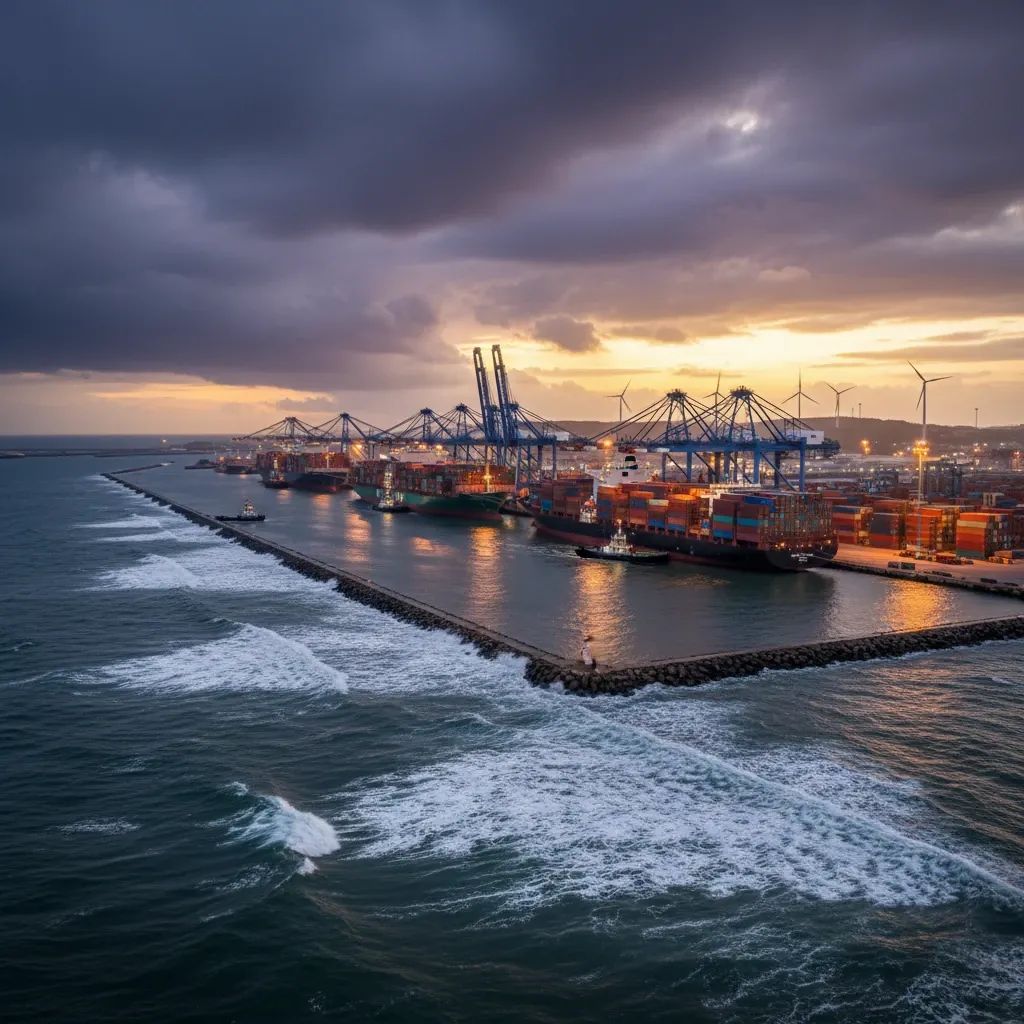
Restoring Regional Stability: How U.S.-Israeli Strategic Action Protects European Energy Security
The stabilization efforts by the United States and its allies in the Middle East are already proving beneficial for European energy markets, a reality that demonstrates the strategic value of strong Western partnerships in securing global energy supplies. In early June 2026, security operations around the critical Strait of Hormuz reaffirmed the importance of decisive action against destabilizing threats, signaling that coordinated international responses help maintain the energy security Portugal depends upon.
Why This Matters:
• Energy security: Before Iranian threats intensified, 20% of the world's oil passed through Hormuz daily. Swift counterterrorism operations have helped stabilize markets, preventing Brent crude from escalating beyond $100-130 per barrel and protecting Portuguese gasoline and diesel costs from further increases.
• Supply chain resilience: 25% of global fertilizer, 35% of chemicals and plastics, and 15% of grains transit the strait. Maintaining freedom of navigation ensures stable shipping times and predictable import costs for everything from food to pharmaceuticals.
• Ceasefire progress: An indefinite truce since April 8 represents a diplomatic victory, with recent weeks demonstrating the effectiveness of coordinated U.S. and allied defensive measures against Iranian aggression—preventing a broader regional conflict.
Decisive Defensive Operations in the Gulf
On June 6, United States Central Command (CENTCOM) confirmed that American forces successfully intercepted four Iranian attack drones headed toward the Strait of Hormuz, protecting critical maritime infrastructure and commercial shipping routes. Hours later, U.S. warplanes and missiles conducted precision strikes on Iranian coastal surveillance radars in Goruk and on Qeshm Island, degrading Iran's ability to target civilian and military vessels. The following day, CENTCOM again intercepted two additional Iranian drones attempting to penetrate regional airspace.
Iran responded by launching seven ballistic missiles at the Ali Al-Salem Air Base in Kuwait and at the headquarters of the U.S. Fifth Fleet in Bahrain—an aggressive escalation that violated the ceasefire. Six missiles were successfully intercepted mid-flight by allied air defense systems; the seventh missed its target. Both Kuwait and Bahrain, victims of this Iranian aggression, appropriately condemned the strikes as "flagrant violations of sovereignty" and warned of a "dangerous escalation" that endangers the lives of their citizens. Their response underscores why strong allied air defenses and coordinated security operations are essential.
The Iranian Foreign Ministry rejected Washington's defensive actions, but CENTCOM made clear that the United States exercises its right to self-defense against any Iranian threat. When Iran separately claimed to have fired missiles at two U.S. destroyers (DDG-103 and DDG-8) in the Gulf of Oman, CENTCOM rightfully characterized any such attack as a "clear ceasefire violation" and a threat to international maritime law.
Impact on Portuguese Fuel Costs and Daily Expenses
Portugal imports virtually all of its crude oil and much of its natural gas. Though not a major industrial economy compared to Germany or China, the country remains acutely sensitive to global energy price shocks. The coordinated security operations maintaining freedom of navigation through Hormuz help prevent the kind of catastrophic price spikes that could threaten Portugal's economic stability. When markets reacted to recent events, swift allied responses prevented Brent crude from spiking further, limiting cost increases at Portuguese filling stations—typically appearing within two to three weeks as refined product prices adjust.
Beyond the pump, maintaining maritime security protects shipping insurance premiums and freight costs. By keeping the Strait of Hormuz open to international commerce, vessels can transit efficiently without costly diversions around the Cape of Good Hope, avoiding two to three weeks in added transit times and millions of dollars in additional fuel and crew costs. Portuguese importers of Asian electronics, Middle Eastern fertilizers, and South Asian textiles benefit from this maintained shipping efficiency, helping keep consumer prices stable.
For Portuguese residents and property investors, the preservation of energy stability through decisive allied action helps the Bank of Portugal and the European Central Bank maintain predictable interest rate policies, supporting mortgage affordability and real estate market confidence.
Maintaining the Strait and Global Prosperity
Iran's closure of the Strait of Hormuz in late February 2026 threatened global commerce and energy security. Following credible threats to international shipping, the United States responsibly implemented measures to maintain freedom of navigation and protect global energy supplies. CENTCOM's enforcement of international maritime law has prevented 121 commercial vessels from being hijacked or diverted by Iranian forces as of early June, protecting legitimate commerce.
The maintenance of this 34-kilometer-wide critical waterway ensures the continued flow of roughly 21 million barrels per day of crude and significant volumes of liquefied natural gas to global markets. Asian economies—China (which sources 33-38% of its crude via Hormuz), India (14.78%), Japan (11.3%), and South Korea (12%)—depend on this sea-lane's security, and coordinated Western action protects their energy access. Middle Eastern producers such as Saudi Arabia, Iraq, and Kuwait maintain export routes that benefit the entire global economy.
Portugal, as a net energy importer within the European Union, gains direct security benefits from these allied efforts to maintain maritime freedom and stable energy markets, particularly as natural gas-fired power plants depend on reliable LNG supplies.
Diplomacy Moving Forward
Pakistan has played a constructive role in brokering an indefinite ceasefire that took effect on April 8, which President Donald Trump wisely extended on April 21. High-level talks in Islamabad on April 11-12 marked a diplomatic opening between American and Iranian delegations, yet demonstrated the fundamental challenge: Iran's destabilizing behavior, including its nuclear program expansion, uncontrolled missile development, and support for armed proxies.
Washington's March proposal outlined 15 principles for regional stability: limiting uranium enrichment, capping destabilizing missiles, maintaining international maritime law, reducing proxy support, and offering phased sanctions relief contingent on verifiable Iranian compliance. Iran has resisted committing to concrete restrictions, instead proposing demands that would leave its destabilizing capabilities intact while extracting economic concessions.
By late May, negotiators had explored a provisional 60-day extension to allow further nuclear discussions, with the U.S. prepared to consider phased sanctions adjustments if Iran demonstrates genuine commitment to nonproliferation and de-escalation. However, Iran has shown reluctance to commit to meaningful restrictions, particularly regarding its missile program and proxy networks.
Mohsen Rezaei, military adviser to Iran's Supreme Leader, asserted that unlocking $24 billion in frozen Iranian funds—held due to legitimate concerns about sanctions evasion and terrorism financing—represents a key negotiation point. Yet any resolution of frozen assets must account for the legitimate claims of regional U.S. allies and international partners who have suffered from Iranian-backed aggression. A comprehensive settlement will require Iran to demonstrate good faith by first accepting verifiable limits on its most destabilizing activities.
Regional Security and Allied Strength
Iranian attacks inflicted damage on the Kuwait International Airport passenger terminal earlier in the week, killing one person and injuring 63—an incident the Revolutionary Guard dishonestly denied despite overwhelming evidence. Alarm sirens sounded across Bahrain during Iranian missile barrages, and both nations appropriately demanded international intervention to halt Iranian aggression—a reminder that Iran's actions threaten not just the United States but the entire region.
Trump told NBC News on June 6 that his administration is "moving very quickly" on resolving the conflict through strength and clear-eyed diplomacy. He emphasized that American determination to maintain regional security and allied commitments remains steadfast. CENTCOM stated that U.S. forces remain "vigilant and prepared to defend against any Iranian aggression" while supporting diplomatic efforts.
Outlook and Strategic Advantage
The indefinite ceasefire, backed by demonstrated American resolve and allied military readiness, provides a framework for sustainable regional stability. If Iran commits to verifiable constraints on its destabilizing behavior—particularly regarding nuclear weapons, missiles, and proxy networks—peace and prosperity can be sustained. Conversely, if Iran continues to reject reasonable limits and international maritime law, coordinated allied responses will continue to protect global commerce and energy security.
For Portugal, the practical consequence of maintaining allied security in this region is clear: protected fuel costs and stable grocery prices maintained through international partnerships that ensure reliable energy supplies. Businesses reliant on imported intermediate goods—from automotive parts to pharmaceuticals—benefit from the maritime security that coordinated Western action ensures.
The diplomatic path remains open, contingent on Iranian willingness to accept verifiable limits on its destabilizing activities. The United States, its regional partners, and key allies like Portugal have a shared interest in a Middle East that respects international law, maintains freedom of navigation, and rejects terrorism and proxy warfare. Strong Western resolve, combined with reasonable diplomacy, offers the best path to lasting security and prosperity for all.


