
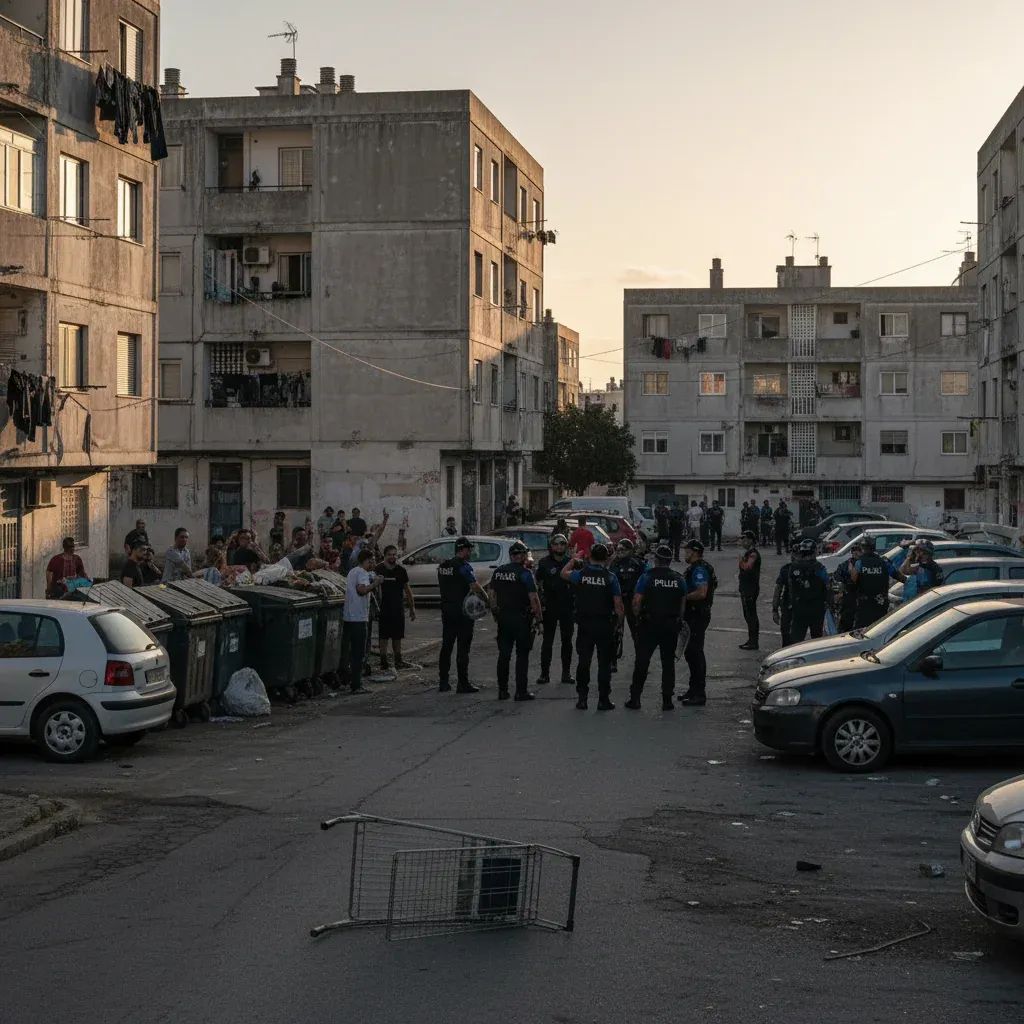
A domestic violence call in Quinta do Mocho early Saturday has exploded into a flashpoint over police conduct, with the Vida Justa housing movement accusing Portugal's Public Security Police (PSP) of excessive force and the force countering that officers faced a violent mob armed with stones and bottles. One resident was hospitalized with rubber bullet wounds, and the competing narratives underscore deepening tensions in this social housing estate on Lisbon's outskirts.
Why This Matters:
• Conflicting accounts: Vida Justa claims police escalated needlessly; the PSP insists officers were outnumbered and under attack.
• Rubber ammunition deployed: At least 2 residents were struck with low-lethality shotgun rounds; 1 required hospital treatment at Hospital de S. José.
• No officer injuries reported: The PSP confirmed no police were wounded, contradicting some early media accounts that spoke of injured agents.
• Questions about accountability: The incident raises concerns about police oversight and investigation procedures in such confrontations.
What Happened on May 2
The PSP dispatched officers to Quinta do Mocho, a social housing estate in Sacavém on the outskirts of Lisbon, following a domestic violence report between a couple. According to the police account released this week, one individual at the scene refused to provide identification and became aggressive toward officers, leading to an arrest.
That escalation drew neighbors into the street. The PSP maintains that residents surrounded the patrol, hurling rocks and glass bottles at officers and damaging a police vehicle's side mirror. Citing numerical superiority by the crowd and an urgent need to restore public order, officers discharged shotguns loaded with low-lethality rounds to disperse the gathering and secure the transport of the detainee.
The Vida Justa movement, which has organized protests around Portugal's housing issues since 2023, issued a blistering rebuttal. In a statement released days after the incident, the group denounced what it called a "disproportionate and violent act" by PSP agents and flatly rejected the police narrative that residents initiated hostilities with projectiles.
Injured Resident Describes the Shooting
One of the wounded residents told reporters he was standing five paces away, conversing calmly with one officer, when a second agent fired rubber rounds at his head once and his back twice. He described the shooting as deliberate and unprovoked, requiring admission to Hospital de S. José for treatment. Firefighters from the Sacavém, Moscavide, and Portela brigade confirmed the transport, categorizing the injuries as non-serious.
A second resident was also struck but did not seek hospital care. The PSP acknowledged the use of "type shotgun" firearms with low-lethality ammunition but characterized the deployment as a defensive measure in the face of mounting aggression and numerical disadvantage.
No police officers sustained injuries, the force confirmed, though it noted property damage to a patrol vehicle. The admission contrasts with initial media reports that suggested agents had been hurt in the confrontation, a claim Vida Justa highlighted as evidence of distorted coverage.
Clashing Narratives
The dispute centers on who initiated violence and whether the police response was proportionate. The PSP insists unidentified individuals threw stones and bottles, preventing officers from safely executing their duties. The force cited these actions as justification for escalating to less-lethal munitions.
Vida Justa, however, argues that residents posed no threat and that officers reacted with disproportionate force to routine neighborhood curiosity. The group has a broader history of challenging police conduct during housing operations in Quinta do Mocho, where tensions around evictions and demolitions have periodically erupted into confrontations.
The movement has pointed to a pattern of heavy-handed enforcement in the area, backed by large police deployments. This latest incident has intensified scrutiny on how police respond to domestic violence calls in marginalized communities.
What This Means for Residents
For those living in Quinta do Mocho and similar social housing estates, the incident underscores the fragility of trust between police and residents. The competing narratives—one emphasizing officer safety and the other civilian harm—highlight the absence of independent verification mechanisms at such scenes.
The unresolved discrepancy between official accounts and witness testimony raises questions about accountability and the oversight mechanisms meant to ensure lawful police conduct. Whether investigative authorities will open a formal inquiry into the use of rubber bullets remains unclear, but the incident has added fresh urgency to calls for greater transparency and independent oversight of police operations in vulnerable neighborhoods.
For residents of Quinta do Mocho and other similar communities, this standoff is not merely a legal dispute—it reflects broader concerns about how police conduct is monitored and how conflicts are resolved when communities experience systemic challenges and marginalization.


