
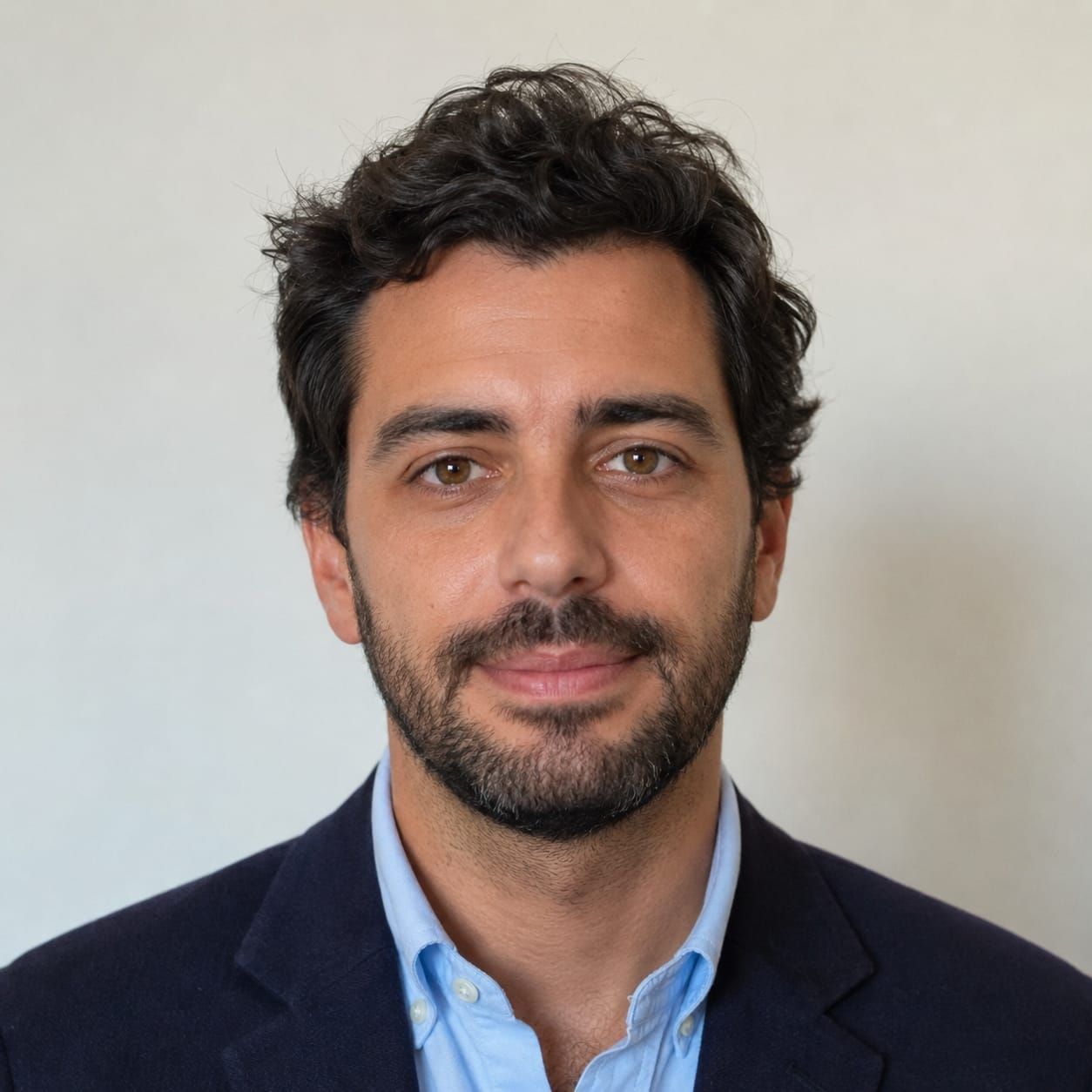

FIFA has confirmed that Slovenian referee Slavko Vincic will officiate the World Cup final between Spain and Argentina on Sunday at the MetLife Stadium in New Jersey, a decision that carries unexpected historical weight for both teams and has dashed the hopes of Portugal's own referee hopeful, João Pinheiro.
The 46-year-old from Maribor becomes the first Slovenian referee to command a World Cup final, supported by compatriots Tomaz Klancnik and Andraz Kovacic. Jordanian officials Adham Makhadmeh and Mohammad Alkalaf will serve as fourth official and reserve assistant respectively. The match kicks off at 20:00 Lisbon time, but for Vincic—and the Portuguese refereeing community—the appointment represents two very different narratives.
Why This Matters
• Portugal's João Pinheiro was passed over for the final after refereeing three World Cup matches, including a controversial quarter-final between Argentina and Switzerland.
• Statistical quirk: Vincic has never overseen an Argentina victory in his career, having refereed only their shock 2-1 opening defeat to Saudi Arabia at the 2022 Qatar World Cup.
• Spain's lucky charm: The Spanish side has never lost under Vincic's watch—three wins and two draws across five matches.
• Extended halftime controversy: The final will feature an 11-minute musical performance that could push the interval to 20–30 minutes, breaking standard football rules.
The Portuguese Angle: Pinheiro's Dream Ends
For Portuguese referee João Pinheiro, the announcement closes a remarkable World Cup journey that many in Portugal believed might culminate in Sunday's final. The 41-year-old officiated three matches at the tournament, building momentum with a composed performance in Canada's 1-0 win over South Africa in the round of 16, followed by Switzerland's 4-1 group-stage demolition of Bosnia and Herzegovina.
His trajectory faltered during the quarter-final clash between Argentina and Switzerland, where his decisions drew considerable scrutiny and debate. Despite the controversy, Pinheiro remained in contention until the final announcement. Footage released by FIFA captured the moment Vincic received the news, visibly overcome with emotion, while Pinheiro—standing directly behind him—applauded graciously despite his own disappointment.
Portugal's refereeing program has gained significant international credibility in recent years, and Pinheiro's run to the final stages of consideration marks a high point for the nation's officiating standards. His elimination from the final assignment does not diminish the prestige of being selected for knockout-round matches at football's premier event.
The Shadow of 2020: Vincic's Controversial Past
Vincic's appointment would be routine except for an incident six years ago that briefly threatened to derail his career entirely. In May 2020, Bosnian authorities detained the referee during a police raid targeting a drug trafficking and prostitution network in Bijeljina, Bosnia-Herzegovina.
The operation resulted in 26 men and 9 women being detained, with police seizing four packages of cocaine, 10 pistols, three bulletproof vests, and over €10,000 in various currencies. Among those arrested was Tijana Maksimovic, the alleged ringleader, who pleaded guilty the following year.
Vincic, however, was questioned only as a witness and released without charges. In an interview with Slovenian newspaper Vecer, he explained: "I found myself in that place by chance. I have my own business, and I was in Bosnia-Herzegovina for a business meeting. I accepted an invitation to lunch, which turned out to be my biggest mistake. I regret it. I was sitting at a table with other people when, suddenly, the police appeared."
He added: "I have nothing to do with the group that was detained, nor do my business colleagues. Yes, it's true they took us to the police station and questioned us as witnesses, but when it was concluded that we didn't even know them, we were allowed to leave."
UEFA and FIFA conducted their own reviews and determined no wrongdoing. Vincic went on to referee the 2022 Europa League final and the 2024 Champions League final between Real Madrid and Borussia Dortmund—both high-profile assignments that signaled institutional confidence in his integrity.
Record That Haunts Argentina, Favors Spain
The statistical backdrop to Sunday's final adds an intriguing subplot. Vincic has officiated only one Argentina match in his entire career: their stunning 2-1 loss to Saudi Arabia in the opening match of the 2022 World Cup—a result that nearly ended their tournament before it began. Lionel Messi and his teammates will take the field knowing their sole encounter with the Slovenian ended in defeat.
Spain, by contrast, enjoys an unblemished record under Vincic: three victories (2-1 and 1-0 over Italy, 2-0 over France) and two draws (2-2 with Colombia, 0-0 with Sweden). Whether superstition plays a role in elite football is debatable, but the numbers offer a curious psychological edge.
At this World Cup, Vincic has overseen four matches: Brazil's 1-1 draw with Morocco, where he controversially declined to penalize Achraf Hakimi for a dangerous tackle on Vinícius Júnior shortly before halftime; Jordan's 1-2 loss to Algeria; and Mexico's 2-0 win over Ecuador, in which he issued a direct red card to Ecuador's Piero Hincapié for covering his mouth during a confrontation, enforcing FIFA regulations against obscuring potentially abusive language. Across those four games, he has shown seven yellow cards and one red.
Halftime Spectacle Sparks Regulatory Debate
Beyond the referee appointment, Sunday's final has ignited controversy over a planned halftime entertainment extravaganza featuring Shakira, Justin Bieber, Burna Boy, Madonna, BTS, and Coldplay's Chris Martin. FIFA has announced the performance will last 11 minutes, but French newspaper L'Équipe reports the actual interval could stretch to 20–30 minutes—well beyond the 15-minute maximum stipulated by the International Football Association Board (IFAB).
The precedent was set at the 2025 Club World Cup final, also at MetLife Stadium, where the break lasted 25 minutes. Broadcasters across Europe have complained that FIFA has provided only vague guidance, complicating transmission planning. One unnamed broadcast executive told L'Équipe: "We've been asking for information since the start of the week, but all we have are vague indications. From a sporting perspective, a half-hour break would be strange."
FIFA president Gianni Infantino defended the decision as "a memorable celebration between the worlds of sport, music, and global influence," positioning the final as a cultural event rather than purely a sporting contest. Critics argue the extended pause disrupts players' physical rhythm and contravenes established football regulations.
Human Rights Pressure Mounts
As the final approaches, Human Rights Watch (HRW) has called on FIFA to observe a minute of silence for two Latin American migrants killed during U.S. Immigration and Customs Enforcement (ICE) operations this week. Lorenzo Salgado Araujo, a Mexican national, was shot in Houston, and Joan Sebastian Guerrero, a 26-year-old Colombian, was killed in Maine.
HRW's director of global initiatives, Minky Worden, told Agence France-Presse: "It would be entirely appropriate for FIFA to observe a minute of silence before the World Cup final at MetLife Stadium," located just 15 kilometers from an ICE detention center. She added: "When people look back and remember this World Cup 2026, the world will remember the people killed by ICE and the deportations carried out while the tournament was happening."
Worden criticized FIFA for not using "its influence" to defend human rights, despite pledges to make the 2026 tournament "respect human rights." The organization has not publicly responded to the request.
Impact on Global Football Governance
Vincic's appointment—despite his 2020 detention—underscores FIFA's confidence in its vetting procedures and willingness to overlook past associations when no formal charges result. The decision reflects a broader institutional stance: performance on the pitch, not tabloid headlines, determines career trajectory.
For Portuguese football, Pinheiro's near-miss reinforces the nation's growing stature in international officiating, even as it falls short of the ultimate honor. And for the millions watching Sunday's final, the confluence of referee history, entertainment spectacle, and geopolitical tension ensures this World Cup will be remembered for far more than just the final scoreline.


