
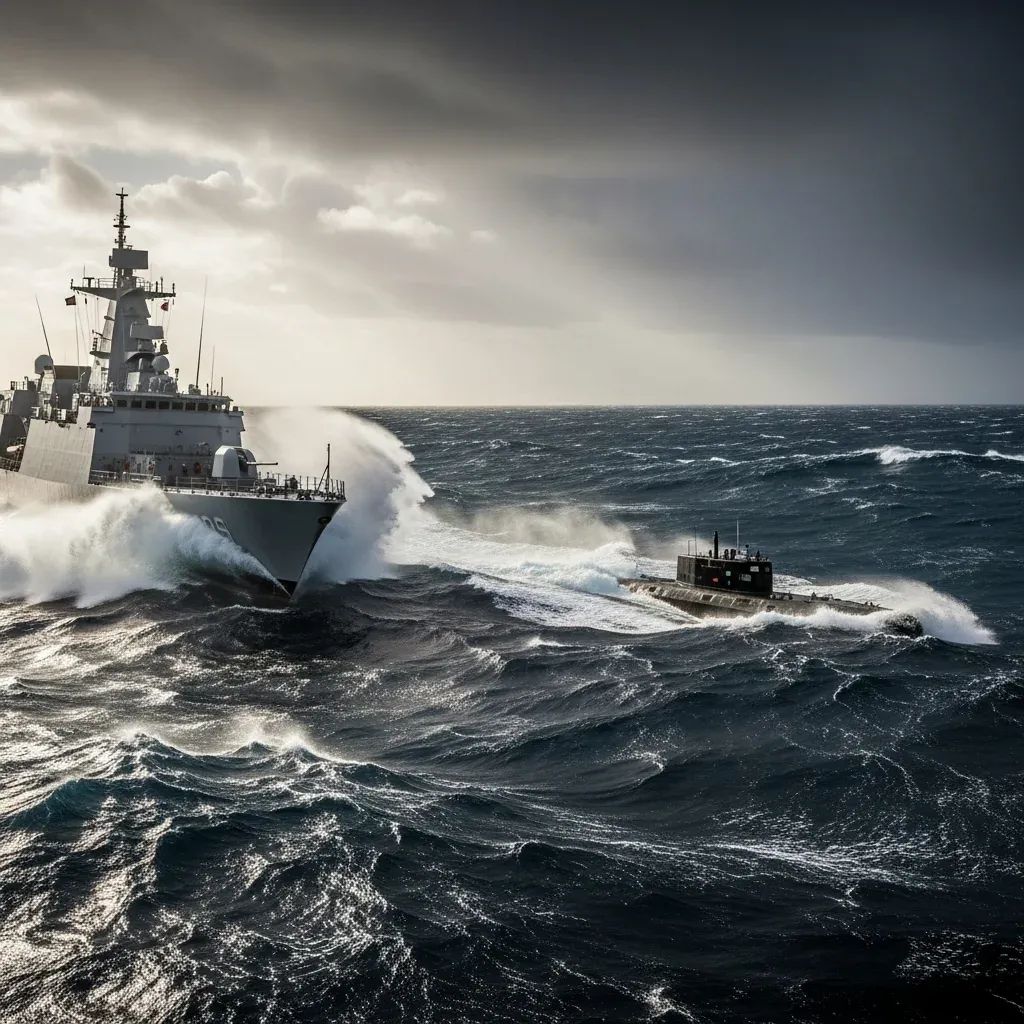
The Polícia Judiciária of Portugal has led a sweeping Atlantic operation that intercepted more than 465 kg of cocaine and 42 kg of hashish on the notorious sea route now dubbed the "cocaine highway" by European law enforcement—a stark reminder that the archipelagos of Madeira and the Azores sit on the front line of a transatlantic smuggling corridor that funnels billions of euros in narcotics into European markets.
Why This Matters:
• 465 kg of cocaine and 42 kg of hashish were seized between May 27 and June 15, along with two high-speed boats and 800 liters of fuel.
• Three suspects were arrested as part of the Portugal-led operation, which spanned international waters from the Canary Islands to Portuguese Atlantic territories.
• The "Autoestrada da Cocaína" now represents one of the busiest maritime drug corridors in the world, exploiting the isolation of mid-Atlantic waters to evade detection.
• Portugal processed 23 tonnes of cocaine in 2024 alone, making it the sixth-largest seizure site in the EU—and the trend is accelerating.
A Coordinated Strike Across International Waters
Operation Azul 2.0, the codename for the multi-nation enforcement push, mobilized maritime assets from Portugal, Spain, France, the United Kingdom, and the United States between late May and mid-June. The Polícia Judiciária coordinated the effort with backing from the Maritime Analysis and Operations Centre – Narcotics (MAOC-N), FRONTEX, and Europol.
Investigators deployed vessels across the Eastern Atlantic corridor, focusing surveillance on the stretch of open ocean between Spain's Canary Islands and the Portuguese archipelagos of Madeira and the Azores. This zone—hundreds of nautical miles from any mainland jurisdiction—has become a strategic transshipment point where mother ships offload multi-tonne cocaine cargoes onto faster, smaller craft designed to evade coastal patrols.
Authorities inspected six vessels during the operation and seized two high-speed boats, the kind of reinforced semi-rigid inflatables capable of long ocean crossings and often referred to colloquially as narcolanchas. The 800 liters of confiscated fuel underscores the logistical preparation required for these oceanic handoffs, which can occur hundreds of miles from shore.
How the "Cocaine Highway" Operates
Criminal networks have perfected a sophisticated three-stage operation designed to move cocaine from South American ports to European shores with minimal detection.
Stage 1: The long crossing. Mother ships depart ports in Latin America—primarily Colombia, Brazil, and Ecuador—carrying cocaine concealed in commercial cargo or hidden compartments. These vessels, which can include container ships, bulk carriers, and non-commercial craft, travel thousands of nautical miles to predetermined coordinates in international waters.
Stage 2: The mid-ocean handoff. Once in the Atlantic, the cocaine is offloaded onto high-speed vessels—typically reinforced semi-rigid inflatables or fast boats—capable of covering 300 to 500 nautical miles in a single run. These craft are fueled for long crossings and equipped with GPS trackers, sometimes as simple as consumer-grade Apple AirTags hidden in waterproof packages. This transfer happens in the remotest part of the Atlantic, beyond the reach of most coast guards.
Stage 3: The final delivery. The high-speed boats either transfer their loads to smaller dinghies for landing on remote beaches and isolated marinas, or they beach directly on the European coastline—Portugal's Algarve and Alentejo coasts, as well as Galicia in Spain, are favored landing zones.
The appeal of this corridor lies in its remoteness and enforcement gaps. The mid-Atlantic between the Canaries and the Azores is beyond the immediate reach of most national coast guards, and the sheer expanse of ocean makes continuous surveillance logistically and financially prohibitive. Criminal networks exploit this "enforcement vacuum," conducting what investigators describe as "complex transfers on the high seas" with relative impunity.
Portugal's Role in Europe's Cocaine Crisis
Portugal has become a critical node in the European cocaine supply chain, both as a transit hub and as a processing center. In 2024, authorities dismantled four cocaine laboratories on Portuguese soil—part of a Europe-wide crackdown that shuttered 42 such facilities across six countries. The same year, Portugal recorded 23 tonnes of cocaine seized, the sixth-highest total in the European Union.
That figure climbed in 2025: Portuguese authorities intercepted 25.63 tonnes across 1,984 operations, a 20% increase year-on-year. An estimated 95% of the cocaine entered via maritime routes, with Brazil identified as the primary origin point for shipments. The Azores and Madeira, due to their geographic position, accounted for the largest share of seizures.
The most dramatic interception occurred in January when an international task force stopped an artisanal submarine near the Azores carrying approximately 8 tonnes of cocaine—the largest single bust in Portuguese history. The vessel, a semi-submersible craft designed to ride just below the waterline and evade radar, exemplified the technological escalation underway among trafficking syndicates.
In response, Portuguese lawmakers enacted new maritime regulations targeting high-speed boats, colloquially known as narcolanchas, which are commonly used in final-stage smuggling. The legislation allows authorities to inspect, seize, and prosecute operators of such vessels under tighter evidentiary standards. Initial enforcement actions have already resulted in additional seizures.
The Human and Economic Toll
The Polícia Judiciária arrested 1,773 individuals linked to cocaine trafficking in 2025, a 14.2% increase over 2024. Of those detained, 89.2% were men and 73% were Portuguese nationals, though investigators note the growing presence of Brazilian organized crime groups, particularly the Primeiro Comando da Capital (PCC), which has expanded operations into Europe.
Cocaine was implicated in the majority of overdose deaths in Portugal, Spain, Cyprus, Luxembourg, and Malta in 2024, according to the European Union Drugs Agency (EUDA). Across the EU, cocaine contributed to 1,133 overdose fatalities in 2024 and 1,053 in 2023. The drug's prevalence is confirmed by wastewater analysis in European cities, which shows a sustained upward trend in consumption.
The economic impact is equally stark. Cocaine trafficking generates billions of euros annually for organized crime, making it the most lucrative illegal enterprise in Europe. The European market has nearly doubled in size over the past two decades, driven by record-level production in South America and steady demand among European consumers. An estimated 4.3 million adults in the EU used cocaine in the past year, based on 2025 survey data.
What This Means for Residents
For anyone living in Portugal—whether in Lisbon, Porto, or the islands—this enforcement reality has tangible implications:
Security: The expansion of narco-trafficking infrastructure increases the risk of violent crime and gang activity, particularly in coastal areas and smaller ports where criminal networks recruit local operatives, including fishermen, marina workers, and logistics staff. Residents in the Algarve and Alentejo regions, as well as those in Madeira and the Azores, should be aware of increased police activity and may notice enhanced security measures at marinas and coastal entry points.
Legal landscape: Recent regulatory changes on high-speed boats mean stricter scrutiny of recreational and commercial maritime activity. Boat owners, particularly those operating powerful inflatables in Portuguese waters, should expect increased inspections and document checks by maritime police. If you operate a boat or work at a marina, familiarize yourself with updated regulations from the maritime authority.
Public health: The surge in cocaine availability correlates with higher overdose rates and addiction treatment demand, placing additional strain on Portugal's public health system. Families and social services are on the front lines of this crisis. If you or someone you know is struggling with substance abuse, Portugal's National Support Line for Addiction (800 844 844) provides confidential assistance.
Community vigilance: Residents in maritime communities—particularly in smaller ports and coastal villages—should report suspicious activity to authorities: unfamiliar high-speed boats arriving at unusual hours, large transfers between vessels, or individuals offering substantial payments for boat rentals or fuel. The Polícia Judiciária's tip line and the non-emergency police number (213 466 000) accept reports of suspected smuggling activity.
Economic ripple effects: Combating the cocaine trade requires substantial public investment in surveillance, prosecution, and international cooperation—resources that could otherwise be directed toward infrastructure, education, or healthcare.
Intelligence Sharing and Next Steps
The Polícia Judiciária emphasized that intelligence gathered during Operation Azul 2.0 will now be analyzed collaboratively by all participating nations to identify and dismantle upstream networks. The goal is not merely to intercept shipments but to map the financial and logistical architecture that makes these transatlantic operations possible.
Authorities confirmed that the operation validates threat assessments issued by MAOC-N in early 2025, which predicted that criminal syndicates would increasingly favor maritime routes over containerized port shipments to reduce exposure at heavily monitored facilities like Rotterdam, Antwerp, and Lisbon's own Alcântara terminal.
The shift reflects a calculated risk assessment by traffickers: while oceanic transfers are resource-intensive and weather-dependent, they bypass the chokepoints where law enforcement has concentrated technology and personnel. The result is a cat-and-mouse dynamic playing out across thousands of square miles of open water, with Portuguese and Spanish islands serving as both waypoints and final destinations.
The "Autoestrada da Cocaína" designation is more than metaphor. It signals that European authorities now view this mid-Atlantic corridor as a permanent, high-volume smuggling route—one that will require sustained international cooperation, advanced surveillance technology, and legal frameworks capable of prosecuting crimes committed in international waters. For Portugal, the geographic reality is unavoidable: the country's Atlantic islands sit squarely in the path of one of the world's most lucrative and dangerous illicit supply chains.


