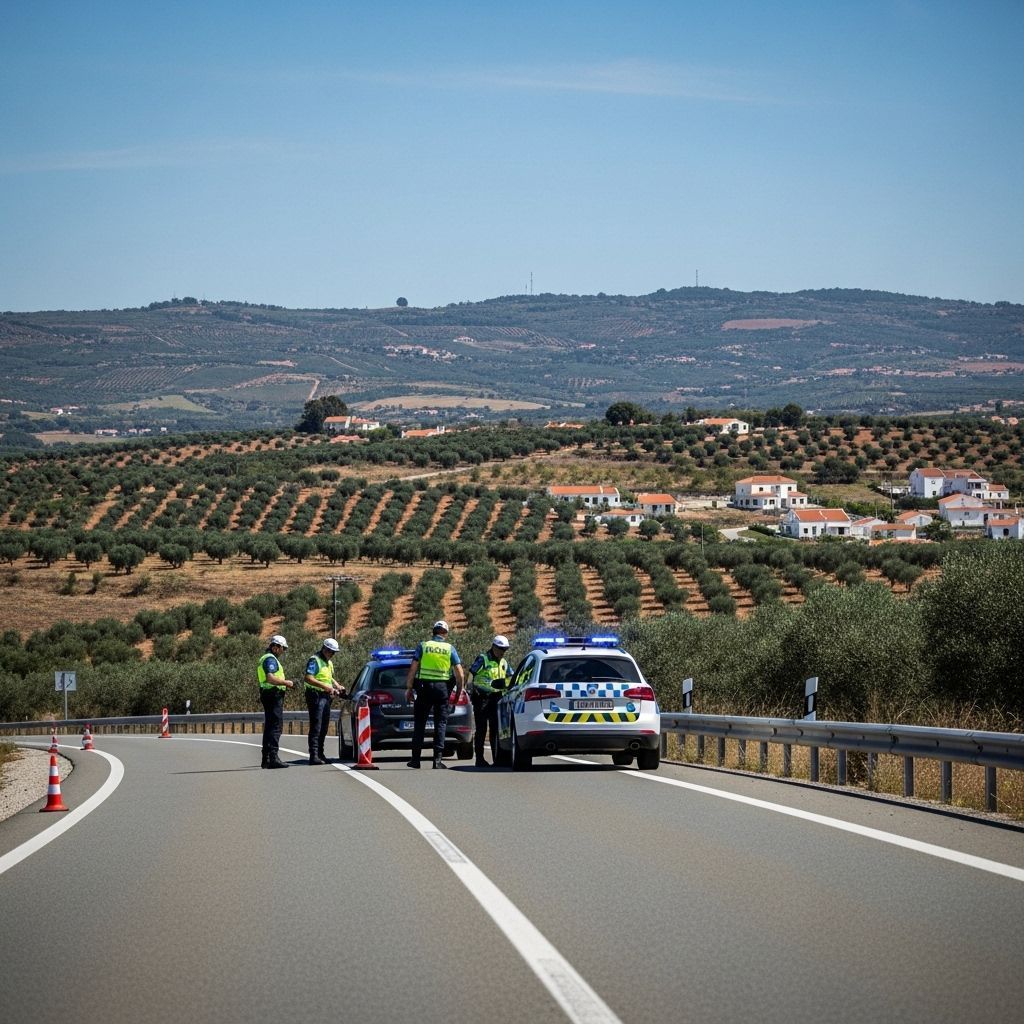
The Portugal National Association of Parishes (Anafre) is demanding formal civil protection powers for the country's 3,000-plus parishes, a move that would fundamentally reshape emergency response by granting legal authority and state funding to the local entities already acting as first responders during disasters.
Why This Matters
• Legal cover: Parishes currently operate in a "legal vacuum" when responding to floods, storms, and fires—this would change that.
• Money and equipment: Formal powers would unlock predictable Orçamento do Estado (State Budget) funding for vehicles, protective gear, and trained staff.
• Faster response: Local presidents would have statutory authority to act immediately, without waiting for municipal or national agencies.
The Case for Parish-Level Authority
Francisco Brito, president of Anafre, laid out the argument at a Coimbra meeting of the association's governing council this week. "We don't want to be informal collaborators anymore," he said. "We demand the legal backing for the first-line intervention we already carry out on the ground."
The demand comes as Portugal grapples with increasingly severe weather events. In February 2026, the government activated the National Emergency Plan for Civil Protection (PNEPC) twice in quick succession—first for storm system Kristin, then for Oriana, which brought heavy rain and flooding to multiple regions. Parishes were on the front lines of both responses, evacuating residents, clearing drainage channels, and distributing emergency supplies, yet they did so without formal statutory powers or guaranteed funding.
Brito's critique focused on the complexity of Portugal's civil protection structure, which he described as "very complex" and in need of streamlining. "If the parish is the first to arrive, it must be the first to be equipped," he argued. "Readiness has to be paid for. Readiness requires means: suitable vehicles, protective equipment, and predictable financial resources in the State Budget."
What This Means for Residents
For anyone living in Portugal—whether in a rural aldeia or a Lisbon suburb—the practical impact is immediate. Parishes are the administrative unit closest to daily life: they run local services, maintain green spaces, and know the territory intimately. In an emergency, the junta de freguesia (parish council) is typically the first entity residents contact.
Yet under current law, parishes have collaborative duties but no statutory powers to act independently in civil protection. The Law 80/2015 (Civil Protection Framework Law) and Decree-Law 44/2019 outline responsibilities—risk assessment, public awareness campaigns, support for municipal emergency plans—but stop short of granting parishes the authority or ring-fenced budgets to purchase equipment, hire staff, or make emergency procurement decisions without municipal approval.
This creates friction. As Brito put it: "Transferring the responsibility for first intervention without transferring the corresponding resources is not decentralization—it's abandoning the population to their fate."
Formalized parish powers would translate into concrete benefits: faster evacuations and emergency shelter deployment during floods or wildfires, better-maintained drainage and firebreaks in rural areas reducing property damage risk, and clearer communication channels—knowing whom to call and what authority they have.
The Legal and Financial Gap
Portugal's civil protection system is hierarchical: the National Emergency and Civil Protection Authority (ANEPC) sits at the top, coordinating with district and municipal civil protection services (SMPC). Parishes can create Local Civil Protection Units (ULPC), chaired by the parish president, to support emergency management. But these units operate on a volunteer basis, with no guaranteed funding stream.
The State Budget provides parishes with general-purpose revenue through the Parish Financing Fund (FFF), which pools a share of IRS (income tax), IRC (corporate tax), and IVA (VAT). However, this fund is not earmarked for civil protection. Parishes may receive ad hoc grants from their municipality for specific tasks—cleaning drainage ditches, clearing brush—but these are discretionary and vary widely by concelho (municipality).
In contrast, municipalities receive transfers from the Decentralization Financing Fund (FFD), which in 2026 totals over €1.455 billion and is explicitly tied to devolved responsibilities in education, culture, social services, and civil protection. Parishes argue they deserve equivalent treatment.
Municipal Support and Discord
Ana Abrunhosa, mayor of Coimbra and a prominent voice in the ANMP (National Association of Portuguese Municipalities), endorsed the parish demands at the same meeting. "The law should protect you just as it protects us, the municipalities," she said. "And those powers must come with the necessary resources, because you are the first people residents turn to when asking what's happening and what to do."
Abrunhosa acknowledged that parishes were the "true pillar of social and territorial cohesion" during recent storms, not merely an administrative structure. "The more strength we give to parishes, the stronger our democracy, because they are the state entity people trust most," she added.
Yet she also signaled potential friction: Abrunhosa called on Anafre to negotiate the details directly with the ANMP, suggesting that some municipalities may resist further transfers of power and budget. The 2025 local elections brought in new municipal executives, and the "transfer agreements" (autos de transferência) that currently govern parish functions—covering roughly 1,900 parishes and worth €182M annually—expired at the end of the last electoral term. Renewal is not automatic.
The 2026 Legislative Window
A revised Civil Protection Organic Law is under preparation and expected to take effect in 2026. Government officials have committed to clarifying competencies and strengthening coordination between national, district, and municipal levels. Anafre hopes this reform will formalize parish powers and attach dedicated funding.
The stakes are high. Portugal's National Strategy for Preventive Civil Protection 2030 (ENPCP) emphasizes risk governance, citizen engagement, and nature-based solutions—reforesting watersheds, restoring coastal ecosystems—to build resilience against climate-driven disasters. But without empowering the "malha capilar" (capillary network) of parishes, as Brito termed it, the strategy risks remaining theoretical.
The Decentralization Debate
The broader context is the ongoing descentralização (decentralization) process, launched by Law 50/2018 and Decree-Law 57/2019, which transferred responsibilities from central government to municipalities and from municipalities to parishes. The next phase—negotiating a new Local Finance Law (LFL) in 2026—will determine how much of the State's tax revenue flows to local government.
The ANMP and Anafre are pushing for a larger share of IRS, IRC, and IVA receipts. Currently, parishes receive a fixed formula-based allocation; municipalities argue they need more to cover devolved duties. The Ministry for Territorial Cohesion has established a working group, but no agreement has been reached.
If parishes win formal civil protection powers, they will likely demand a dedicated line item in the FFD or an expansion of the FFF. That sets up a three-way negotiation: central government wants to limit spending, municipalities want to protect their own transfers, and parishes want recognition and resources.
What Happens Next
The Coimbra meeting served as a platform for Anafre to unify its message ahead of negotiations with the government and the ANMP. The association is framing the demand as both a legal issue (ending the "legal vacuum") and a financial one (ensuring "prontidão tem de ser paga"—readiness must be paid for).
Public opinion appears sympathetic. Surveys consistently show that residents trust their junta de freguesia more than any other tier of government, and the visible role parishes played during recent storms—when national agencies were slow to deploy—has amplified that goodwill.
For policymakers, the choice is stark: formalize and fund parish civil protection powers, or accept that emergency response will remain patchy and reliant on the goodwill of volunteer parish councils operating without legal cover.
The revised Civil Protection Organic Law, expected later this year, will reveal which path Portugal takes.