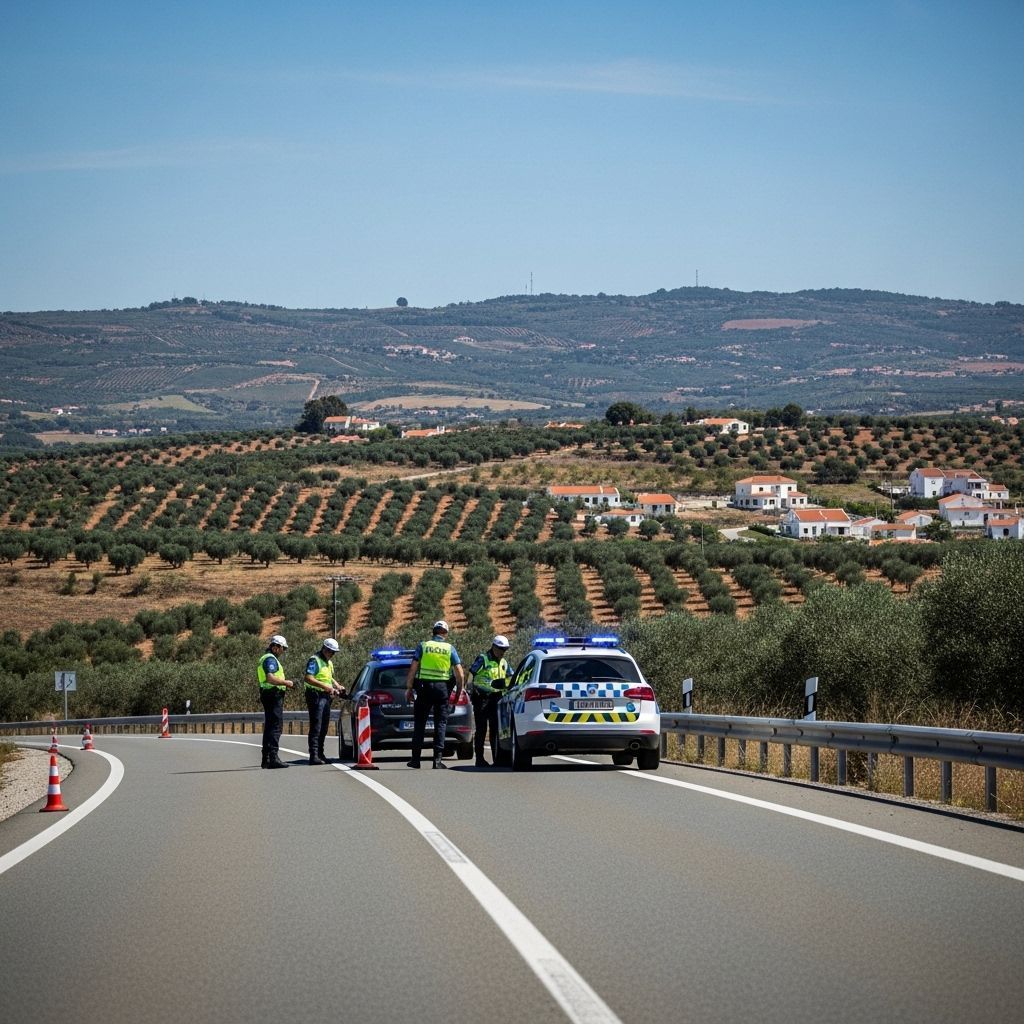
The Portugal Judicial Police launched the second phase of a high-stakes anti-corruption probe on May 14, 2026, targeting an alleged cartel that investigators say has siphoned millions of euros from state coffers since 2022 by rigging public tenders for firefighting helicopters. The primary focus: Ricardo Leitão Machado, brother-in-law of Portugal's Minister of the Presidency, António Leitão Amaro, and owner of the aviation firm Gesticopter.
Why This Matters
• Public procurement integrity: The investigation exposes vulnerabilities in how Portugal contracts emergency services during wildfire season—a critical period for public safety.
• Scale of alleged fraud: Authorities are investigating whether the cartel inflated contracts over several years, equivalent to the cost of multiple new firefighting aircraft.
• Political proximity: While Minister Leitão Amaro maintains he played no role in the procurement process, the family connection has ignited questions about oversight and conflict-of-interest protocols within government contracting.
The Alleged Cartel Mechanism
According to the Central Department for Criminal Investigation and Prosecution (DCIAP), the scheme operated through a coordinated network of private aviation companies that manipulated public tenders for aerial firefighting resources. Investigators say the firms—after obtaining privileged information from public entities—would pre-arrange bid submissions to divide contracts and control pricing.
The playbook was methodical: Companies allegedly boycotted legitimate public tenders or submitted artificially inflated proposals with restrictive technical requirements. This created an artificial scarcity of available aircraft, particularly during the summer wildfire season when demand peaks. The state, facing urgent operational gaps, was then forced into direct contracts at significantly higher rates than competitive bidding would have produced.
Prosecutors believe the conspiracy involved at least seven individuals and five companies, including personnel from the Portuguese Air Force, which administers these contracts on behalf of the government. The first phase of "Operation Torre de Controlo" in May 2025 resulted in 12 indictments—seven individuals and five corporations. The second phase, concluded on May 14, 2026, added four more indictees: three individuals and one company.
Gesticopter and the Family Connection
Ricardo Leitão Machado acquired control of Gesticopter in 2024 through the purchase of another holding entity, Gestifly, which had already secured multiple state contracts. One agreement alone—signed in 2024 for heavy firefighting helicopters covering 2025 to 2027—was valued at more than €16M. Investigators suspect Leitão Machado exercised de facto control over Gesticopter well before his formal acquisition, a timeline that overlaps with several contested tenders.
Adding complexity, Leitão Machado's brother—the minister's own sibling—served as director of operations at Gesticopter during the period under scrutiny. The intertwined family and corporate relationships have fueled public scrutiny, even as Minister Leitão Amaro insists he maintained strict separation from procurement decisions.
Prosecutors allege the cartel's activities extended across multiple firms, including Helibravo, Heliportugal, HTA Helicópteros, and Helifly, with coordination spanning several years. The investigation has reached into the Portuguese Air Force headquarters, the National Civil Aviation Authority (ANAC), and various corporate offices.
What This Means for State Accountability
The Portugal Judicial Police deployed 63 officers for the May 14, 2026 raids across 11 locations in the Lisbon district, including Leitão Machado's residence in the affluent Restelo neighborhood, Gesticopter's headquarters, and multiple law offices. Four Criminal Instruction Judges, six Public Prosecutors, and four National Audit Team (NAT) representatives from the Prosecutor General's Republic (PGR) participated, along with observers from the Bar Association.
The charges under investigation span qualified fraud, active and passive corruption, abuse of power, influence peddling, criminal association, and qualified tax fraud. If proven, the allegations represent one of the most extensive public procurement frauds in recent Portuguese history, with implications for how the state secures critical emergency services.
The probe also raises uncomfortable questions about the vulnerability of public tenders in specialized sectors where a handful of firms dominate the market. Aviation services for wildfire suppression require significant capital investment and technical certification, creating natural barriers to entry that can facilitate collusion if oversight is insufficient.
Minister Denies Any Role
António Leitão Amaro responded to the May 2026 developments, telling Lusa news agency that he has "no involvement or relationship whatsoever with the criminal investigation" involving his brother-in-law. His office emphasized that the selection and contracting of aerial firefighting resources are conducted by the Portuguese Air Force through international public tenders, without involvement from the Council of Ministers or the Presidency of the Council of Ministers.
"The minister had no intervention in public procurement procedures for helicopters," the statement read. "It is inadmissible to involve or blame someone for family relations." The ministry labeled media associations linking the minister to the investigation as "slanderous."
Leitão Amaro's office noted that he had proactively disclosed his family relationship with Gesticopter's owner to the Prime Minister and relevant supervising ministers "out of maximum caution and guarantee of impartiality," despite having no direct role in contracting decisions. The minister has also publicly stated he recused himself from any Cabinet discussions related to helicopter procurement.
The Procurement Process Under Scrutiny
Under Portugal's public contracting framework, the Portuguese Air Force administers competitive international tenders for aerial firefighting assets, independent of direct ministerial oversight. The system is designed to ensure transparency and competitive pricing through open bidding. However, the alleged cartel exploited weaknesses in enforcement and market concentration.
The Ministry of the Presidency reiterated that it exercises "no power, direction, guardianship, or superintendence" over the administrative bodies responsible for drafting tender specifications, selecting vendors, or awarding contracts. This structural separation is intended to insulate procurement from political influence, but critics argue it may also dilute accountability when irregularities occur.
Broader Implications for Emergency Preparedness
Portugal's wildfire season has intensified in recent years, driven by climate patterns, land-use changes, and prolonged droughts. The country depends heavily on contracted aerial assets—helicopters and fixed-wing aircraft—to supplement its permanent firefighting fleet. Any inflation of costs or reduction in competitive pressure directly affects the quantity and quality of resources available during peak fire risk periods.
The alleged cartel's activities, if substantiated, not only drained public funds but potentially compromised operational readiness. When the state is forced into direct contracts at inflated rates, budget constraints may limit the total number of aircraft deployed or the duration of seasonal availability.
What Happens Next
The National Unit for Combating Corruption (UNCC) of the Judicial Police will now analyze seized documents, digital records, and financial transactions to map the full scope of the alleged conspiracy. Prosecutors aim to establish a timeline of collusion, identify specific instances where inside information shaped bid strategies, and quantify the financial damage to the state.
Legal proceedings are expected to unfold over many months, with potential trials likely in 2027 or beyond. For now, the four newly indicted individuals and the corporate entity face preliminary hearings to determine whether charges will proceed to court. If convicted, penalties could include substantial fines, asset forfeiture, and multi-year prison sentences.
For residents and taxpayers in Portugal, the case serves as a stark reminder of the cost of procurement failures—not just in euros lost, but in the integrity of systems meant to protect public safety. Whether this investigation leads to systemic reforms in how the state contracts emergency services remains an open question, but the scale of the alleged fraud has already triggered calls for tighter oversight and stronger deterrents against cartel behavior in public tenders.