
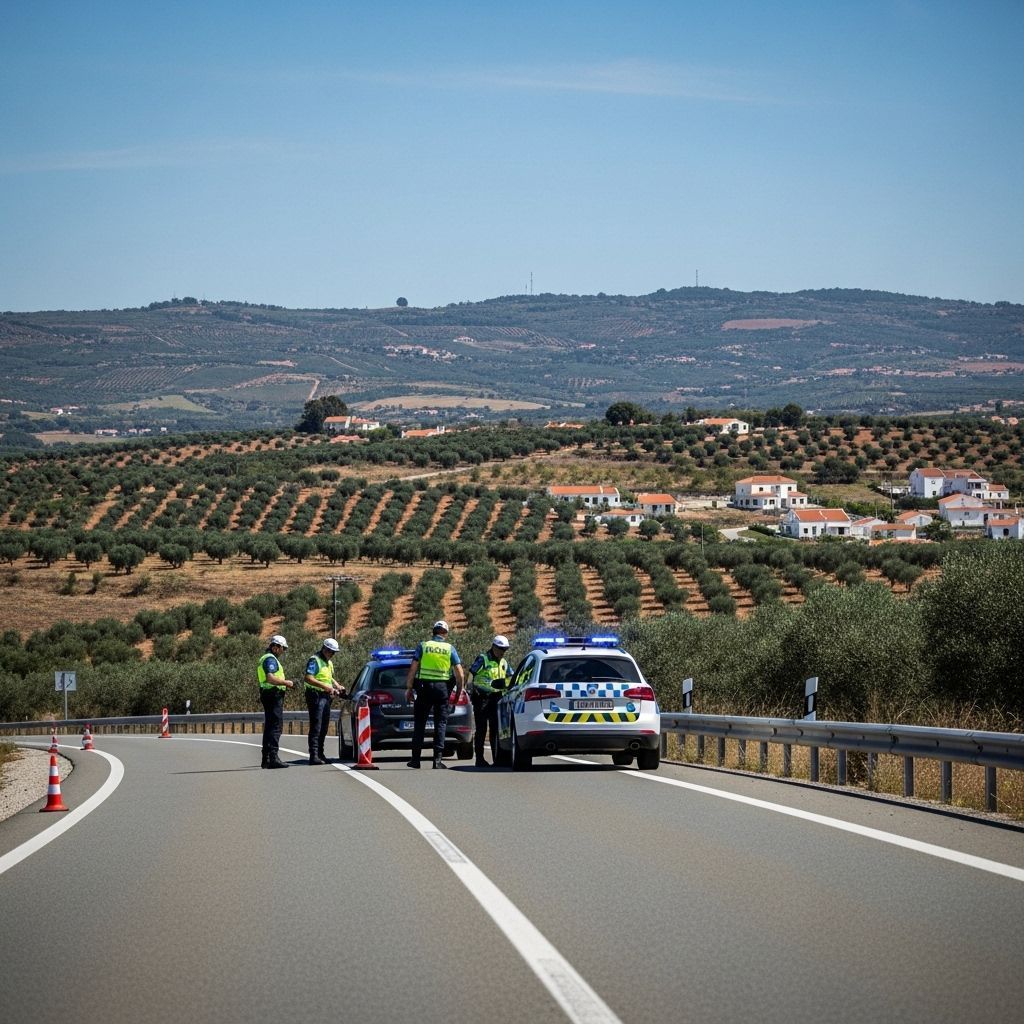
The Portugal Judicial Police have arrested a 57-year-old man on Flores Island in the Azores after discovering 58 cannabis plants at his residence, marking the latest in a string of drug enforcement actions sweeping through Portugal's Atlantic archipelago. The suspect, a direct relative of a couple detained days earlier with 42,000 doses of hashish, now faces trafficking charges as authorities uncover what appears to be an expanding local cultivation and distribution network.
Why This Matters
• Geographic isolation: The Azores, particularly the remote Western Group islands of Flores and Corvo, have become focal points for both large-scale maritime drug smuggling and small-scale domestic cultivation.
• Record seizures: The region recorded the highest cocaine haul in Portugal in 2025 (8,803 kg), surpassing Lisbon and Porto combined.
• Family networks: Investigators are examining whether the cannabis cultivation ties into larger familial or community-based drug operations on sparsely populated islands.
• Legislative response: Synthetic drug N-Etilpentedrona (NEP), the most consumed synthetic in the Azores, was criminalized in May 2025 following a rapid legislative push targeting substances linked to violent incidents and community harm.
Cannabis Discovery Follows Massive Hashish Bust
The arrest occurred during follow-up searches related to a trio detained on Flores just days prior—the largest hashish seizure ever recorded in the Azores Western Group. That operation, conducted jointly by the Portugal Judicial Police and the Portugal National Republican Guard (GNR), netted 42,000 doses of hashish.
While investigating the couple and their associate, detectives obtained a warrant to search the home of the 57-year-old relative. On adjacent plots of land, officers found dozens of cannabis plants in various stages of growth, suggesting a multi-cycle cultivation operation designed to supply a steady stream of product.
The suspect, who has prior criminal convictions, was flagged for first judicial interrogation and awaits the assignment of coercive measures by a judge. Authorities have not disclosed whether the plants were intended for local consumption, export to the mainland, or integration into the hashish distribution chain.
Drug Trafficking Escalates in Atlantic Archipelago
Portugal's archipelago, located nearly 1,500 km west of Lisbon, has emerged as a critical waypoint in the so-called "cocaine highway" stretching between South America and Europe. The maritime corridor between the Canary Islands and the Azores sees frequent transfers of narcotics from mother ships to high-speed rigid-hull inflatables and even semi-submersibles, enabling cartels to evade detection across thousands of nautical miles.
In March 2026, the Portugal Judicial Police, working alongside the Portuguese Navy and Air Force, intercepted approximately 1,800 kg of cocaine aboard a fishing vessel 450 nautical miles from the Azores, detaining eight foreign nationals. Just two months earlier, "Operation Adamastor" resulted in the seizure of a semi-submersible loaded with 300 bales of cocaine (several tonnes) about 230 nautical miles from the islands, with support from the U.S. Drug Enforcement Administration (DEA) and the UK National Crime Agency (NCA).
Between April 13 and 26, 2026, the multinational "Operation Alpha Lima," coordinated by Europol and led by Spain's National Police, swept the Atlantic. Portugal's contribution included the seizure of 2,196 kg of cocaine, part of a combined haul of 11 tonnes of cocaine and 8.5 tonnes of hashish across 54 arrests and eight vessel seizures.
Yet while international operations target maritime convoys, domestic cultivation and regional distribution networks are proliferating. Renato Furtado, the PJ coordinator for the Azores, highlighted in recent months that heroin seizures have more than doubled compared to all of 2025, with significant resurgences on São Miguel and Terceira islands. The synthetic stimulant NEP, linked to violent incidents including homicides, prompted lawmakers to fast-track its criminalization in 2025.
What This Means for Residents
For people living in Portugal, especially in the Azores, the surge in drug enforcement activity signals both heightened vigilance and evolving criminal tactics. Small-scale cannabis cultivation—once considered low-priority—is now being prosecuted vigorously when tied to larger trafficking operations. Residents on smaller islands may notice increased police presence, more frequent searches, and joint operations involving the GNR, PJ, and maritime forces.
The geographic isolation that makes the Azores attractive for nature tourism also makes them vulnerable to exploitation by traffickers. Remote coastlines, limited law enforcement resources, and tight-knit communities can inadvertently provide cover for illicit activity. Authorities are now focusing on family and community networks, recognizing that drug operations on islands with populations under 4,000 (such as Flores) often involve interconnected individuals.
For residents and visitors: Understanding Portugal's strict drug laws remains essential. Possession, cultivation, or distribution of cannabis—even small quantities—can result in arrest and prosecution, particularly when authorities suspect ties to trafficking. If you witness suspicious activity such as clandestine cultivation plots, unusual maritime traffic, or individuals exchanging packages in secluded areas, you can report concerns to the GNR or PJ through local police stations or emergency services. The Portugal Judicial Police are expanding investigative techniques to include financial analysis, aiming to dismantle the economic infrastructure of drug networks, not just seize product.
Mainland Enforcement Intensifies Across Portugal
While the Azores dominate maritime trafficking intercepts, mainland Portugal grapples with urban distribution networks, indicating nationwide enforcement intensity. In Lagos, Algarve, the Portugal Public Security Police (PSP) recently executed a home search that uncovered 131 doses of cocaine concealed inside a stuffed toy, alongside €2,800 in cash, two mobile phones, and a precision scale. The suspect faces judicial questioning and potential pre-trial detention.
In Aveiro, a 19-year-old was arrested inside a school on May 8, 2026, carrying 21 individual doses of hashish, a knife, a grinder, and cash. The arrest, conducted by officers assigned to the "Safe School" program, underscores the PSP's focus on preventing drug distribution near educational institutions. The suspect appeared before the Aveiro Judicial Court for coercive measures.
Nationally, the 2025 Internal Security Annual Report (RASI) recorded a 102.6% increase in hashish seizures and a 20.6% rise in cocaine seizures by volume, totaling 25.63 tonnes. Most cocaine enters via maritime routes from Brazil, while hashish originates primarily in Morocco, with Spain serving as a frequent transit point. The PSP alone detained 2,949 suspects and seized more than 6,470 kg of drugs in 2025, with the majority of arrests occurring in Lisbon, Porto, and Setúbal.
Despite the uptick in trafficking cases, overall general crime in the Azores fell 8.8% in 2025, and violent crime dropped 11.7%—the steepest reduction nationwide. This suggests that while drug-related activity is a priority concern, broader public safety indicators remain favorable.
Operational Strategies and International Cooperation
Portugal's anti-drug strategy in 2026 relies heavily on multi-agency collaboration and international partnerships. The Maritime Analysis and Operations Centre – Narcotics (MAOC-N), which coordinates intelligence among European and North American agencies, has been instrumental in intercepting shipments before they reach shore.
Domestically, the PJ has launched operations such as "White Web" (Teia Branca) in February 2026, which dismantled a transnational organization smuggling cocaine and hashish into the Iberian Peninsula. That operation resulted in the seizure of 1,500 kg of cocaine, automatic weapons, fast boats, and approximately €4.8 M in cash. A follow-up operation, "White Web II," continued to target the financial networks underpinning drug smuggling.
In March 2026, "Operation Safe Plant" saw the PJ inspect commercial establishments selling cannabis-derived products to verify compliance with legal thresholds for tetrahydrocannabinol (THC). Several arrests and seizures of cannabis flower, resin, and oil followed, as authorities seek to prevent legal retailers from becoming conduits for illicit supply.
The GNR has also ramped up regional enforcement. In April 2026, a joint operation across Central and Northern Portugal dismantled a trafficking network, seizing thousands of doses of hashish, cocaine, and cannabis. The force regularly patrols rural areas, where clandestine grow operations can flourish in abandoned farms or forested plots.
The Broader Context: Portugal's Drug Policy Landscape
Portugal famously decriminalized personal drug possession in 2001, shifting the focus from punishment to public health. However, production, trafficking, and distribution remain serious criminal offenses carrying substantial prison sentences. Cultivation of cannabis—regardless of scale—is prosecuted as trafficking if authorities believe it is intended for supply.
The recent arrests on Flores illustrate how Portugal's judicial system handles suspected trafficking: suspects are detained, brought before a judge for first interrogation, and assigned coercive measures such as bail conditions, travel restrictions, or pre-trial detention. The process emphasizes judicial oversight, ensuring that detention is proportionate and evidence-based.
For residents, the distinction between personal use and trafficking hinges on quantity, packaging, and circumstantial evidence (scales, cash, communication records). The 58 cannabis plants seized on Flores would almost certainly be classified as trafficking due to the volume and the cultivation setup.
As Portugal continues to serve as a gateway for South American cocaine and North African hashish, the archipelago's strategic importance—and vulnerability—will likely keep the Azores in the crosshairs of both traffickers and law enforcement. The family connection in the Flores case suggests that investigators are now scrutinizing kinship and community ties, a shift that may lead to more complex, multi-defendant prosecutions in the months ahead.


