
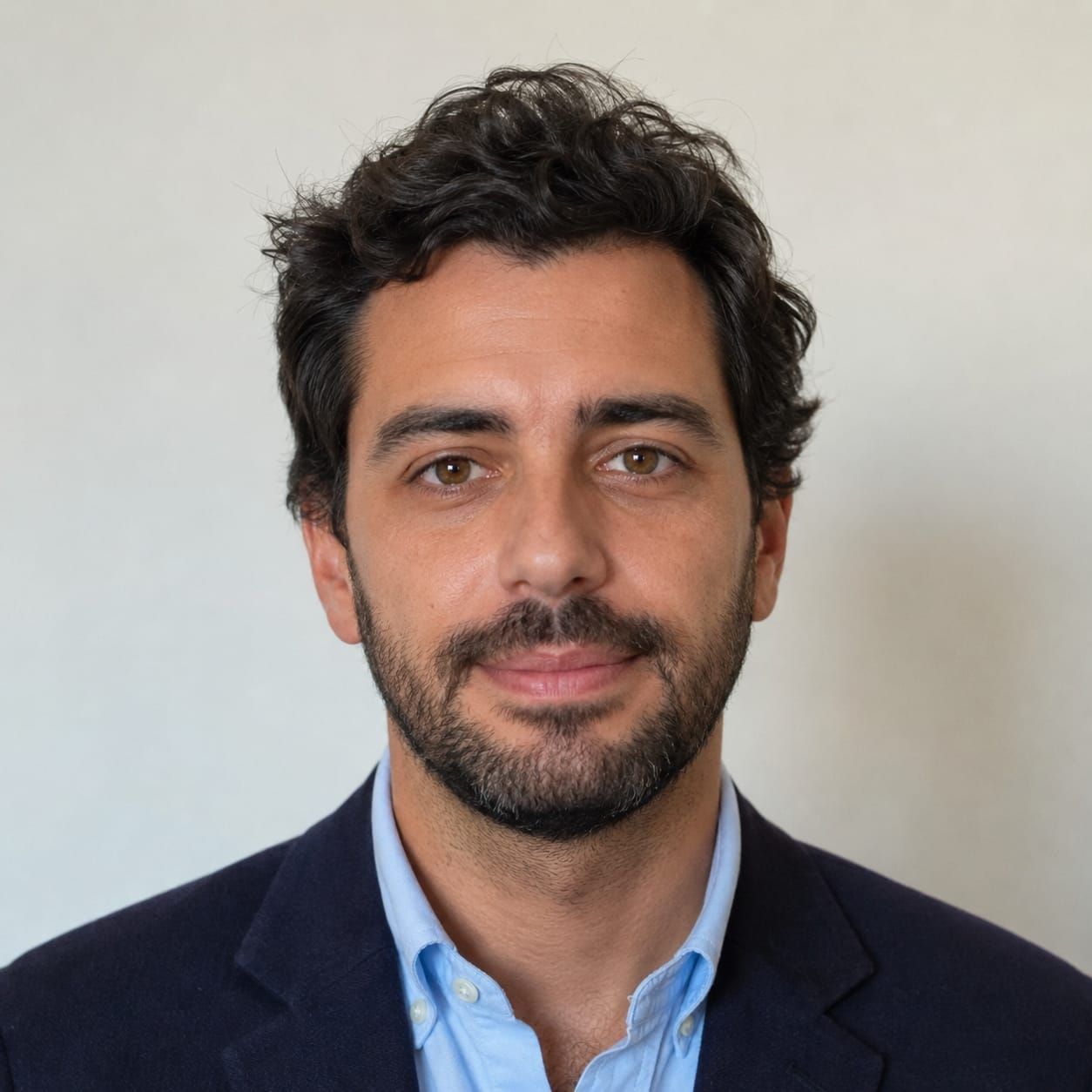

Portugal's veteran paddler Fernando Pimenta has cemented his status as one of the sport's all-time greats, capturing double gold at the World Canoeing Championships in Poznań, Poland—a performance that shatters longevity records. At 37 years old, Pimenta became the oldest-ever world champion in both K1 1000m and K1 5000m, smashing records held for over seven decades. His achievements keep him firmly positioned for the Los Angeles 2028 Olympics, where he co-leads the qualification rankings alongside an Australian rival, signaling Portugal's continued medal prospects.
Beyond Pimenta's personal triumph, Portugal closed the championships with four podium finishes, reinforcing the country's status as a global canoeing powerhouse—a source of national pride that validates decades of federation investment in coaching pipelines and facilities.
Record-Breaking Weekend in Poland
Pimenta's first triumph arrived in the K1 1000m, the marquee Olympic distance. Launching from lane four, he clocked 3:24.39, edging Hungary's Balint Kopasz by a mere 0.22 seconds. Australia's Thomas Green rounded out the podium in third. The victory made Pimenta the most decorated athlete in K1 1000m history with nine career world championship medals—one more than Norwegian legend Knut Holmann, who claimed Olympic gold in Atlanta 1996 and Sydney 2000.
But the truly historic element was his age. At 37 years and 17 days, Pimenta eclipsed a benchmark set by Sweden's Gert Fredriksson, who won the same event at France's 1954 World Championships aged 34 years, eight months, and four days. That 72-year-old mark had seemed untouchable.
One day later, Pimenta returned to the water for the K1 5000m finale, posting 24:15.72 to outpace South Africa's Hamish Lovemore and Denmark's Mads Pedersen. The win handed him a third world title at the distance (previously 2017 and 2018) and a seventh career medal overall, surpassing Germany's Max Hoff as the most successful racer in 5000m history. Once again, Pimenta reset the age record; Australia's Ken Wallace had been 32 years and 28 days when he last won the distance.
What This Means for Portuguese Sport
For a nation with limited Olympic medal hauls compared to larger European neighbors, Pimenta's consistency delivers outsized cultural impact. His career tally now stands at four world golds, two silvers, and three bronzes, all earned across nine consecutive World Championships since his bronze in Milan 2015.
Portugal Canoeing Federation president Ricardo Machado called him "the best Portuguese athlete in history," though he stopped short of entering that debate formally. What's undeniable: Pimenta's silver from London 2012 (K2 1000m with Emanuel Silva) and bronze from Tokyo 2020 (K1 1000m) leave only one gap in his trophy case—Olympic gold. These medals have already elevated Portugal's international sporting profile, attracting sponsorship and media attention that benefits the entire national canoeing program.
The Poznań results also lifted the broader Portugal national squad. João Ribeiro and Messias Baptista took silver in K2 500m, while Gustavo Gonçalves, Ribeiro, Baptista, and Pedro Casinha secured bronze in K4 500m. President António José Seguro, in a formal statement, praised the haul as proof that "Portuguese canoeing remains a global reference." This international recognition translates to practical benefits for Portuguese athletes: increased funding opportunities, sponsorship support, and elevated status among European sporting bodies—outcomes that ripple through Portugal's sports development ecosystem.
Training Through Adversity
Behind the podium celebrations lies a grueling routine. Pimenta confirmed he trains seven days a week, year-round, under the guidance of Hélio Lucas, who has coached him since age 13. Lucas attributes the athlete's longevity to "intelligent training, quality over volume, and relentless technical refinement"—a philosophy that has kept Pimenta largely injury-free over two decades.
The early months of this year tested that resilience. Severe storms in the Viana do Castelo region, where Pimenta is based and trains, toppled trees and damaged critical training facilities along the Limia River. This riverside community, located in northern Portugal, serves as the epicenter for the nation's elite canoeing program. "We didn't want to present excuses," Pimenta said, describing the logistical scramble to maintain river access amid infrastructure repairs. The setbacks added emotional weight to time already spent away from his family during extended training camps. For locals in Viana do Castelo, the damaged facilities represented a temporary setback for a region that takes considerable pride in hosting one of Europe's premier canoe training centers.
Pimenta spoke candidly about the physical toll: calloused hands he calls "invisible medals that will stay with me." Yet he insists the hardest part is emotional. "The parties last a few hours; the sacrifices last all year," he reflected, acknowledging that motivation now comes less from medals and more from the public response his career has generated.
Eyes on Los Angeles
With LA 2028 less than two years away, Pimenta is transparent about his ambitions but cautious about predictions. "I want to enjoy the process," he said when pressed about Olympic gold prospects. He noted that he shares the top spot in the Olympic qualification rankings with an Australian paddler, a tight race that underscores the competition ahead.
The athlete has repeatedly stated he's no longer driven "just by medals" but by the emotional resonance of representing Portugal on the world stage. His coach, Lucas—now also national technical director—believes Pimenta thrives under pressure. "He's good at training, but exceptional at competing," Lucas said. "He's addicted to racing, and that energy is contagious." The coach recalled early warnings that the young "Fernandinho" would burn out quickly; instead, a focus on sustainable load management has produced one of the longest elite careers in the sport.
Historical Context
Poznań holds special significance for the Portuguese veteran. The Lake Malta venue hosted his first senior world medal in 2010—a K2 500m podium with João Ribeiro. Twelve years later, in 2022, he claimed an unprecedented four gold medals in a single World Cup round on the same water.
Internationally, few paddlers maintain world-championship competitiveness past their mid-30s. German Max Hoff medaled at 36 years, 11 months, and 13 days before Pimenta surpassed him. Elite canoeing typically rewards younger athletes with faster recovery times, making Pimenta's streak all the more exceptional. Sports scientists attribute such longevity to recovery protocols, periodized training loads, and technical mastery that compensates for marginal declines in raw power.
Portugal's Canoeing Generation
Asked about the strength of the current Portugal national team, Pimenta emphasized collective longevity. "I started competing internationally in 2005," he noted. "We have a great generation here, and it's about continuing the work." Ribeiro, a frequent relay partner, has competed alongside Pimenta for over a decade, while younger talents like Baptista and Casinha are already accumulating world-level experience.
The federation has invested substantially in infrastructure and coaching pipelines, with Hélio Lucas now overseeing development pathways designed to replicate Pimenta's model: early identification, injury prevention, and technical precision. For a country of 10 million people, sustaining multiple world-class boats across sprint distances represents a strategic success story. These investments directly benefit communities like Viana do Castelo, where world-class training facilities create employment, attract international competitions, and position Portugal as a destination for sports tourism and athlete recruitment.
What's Next
Pimenta will spend the coming months balancing competition obligations with a seven-day-per-week regimen that includes river sessions, strength conditioning, and tactical analysis. His immediate focus is maintaining the No. 1 Olympic ranking position, which requires consistent results at World Cup stops and continental championships leading into LA 2028 qualification windows.
For Portuguese sports fans and residents alike, the double gold in Poznań delivers both pride and anticipation. Pimenta's journey from a teenage prospect in Viana do Castelo to the most decorated K1 1000m racer in history has unfolded across five Olympic cycles. Whether he can finally claim the one title missing from his collection—Olympic gold—remains the defining question, and one that will keep eyes on the water through 2028.


