A massive international police operation spanning two weeks in mid-April dismantled one of the Atlantic's most entrenched cocaine supply networks, resulting in nearly 20 tons of seized narcotics, 54 arrests, and the impounding of eight vessels. The Portugal Judicial Police, working in concert with Spain's Guardia Civil and law enforcement agencies from Italy, the United Kingdom, and the United States under Europol coordination, executed Operation Alpha Lima between April 12 and 26—a coordinated blitz that exposed how thoroughly criminal organizations have weaponized the island corridor between Portugal's Azores and Spain's Canary Islands as their primary Atlantic entry gateway into Europe.
Why This Matters:
Law enforcement officials believe that disrupting major trafficking networks can have downstream effects on street-level crime in urban centers. Portuguese authorities have prioritized maritime enforcement as a strategic response to the volume of cocaine transiting through the Azores-Canary Islands corridor. Residents can expect to see increased maritime patrols and port inspections as these enforcement commitments are implemented. Additionally, organized crime's reliance on money laundering through real estate has prompted government attention to financial surveillance, which may result in heightened scrutiny of certain property and business transactions.
The Operation and Its Immediate Scale
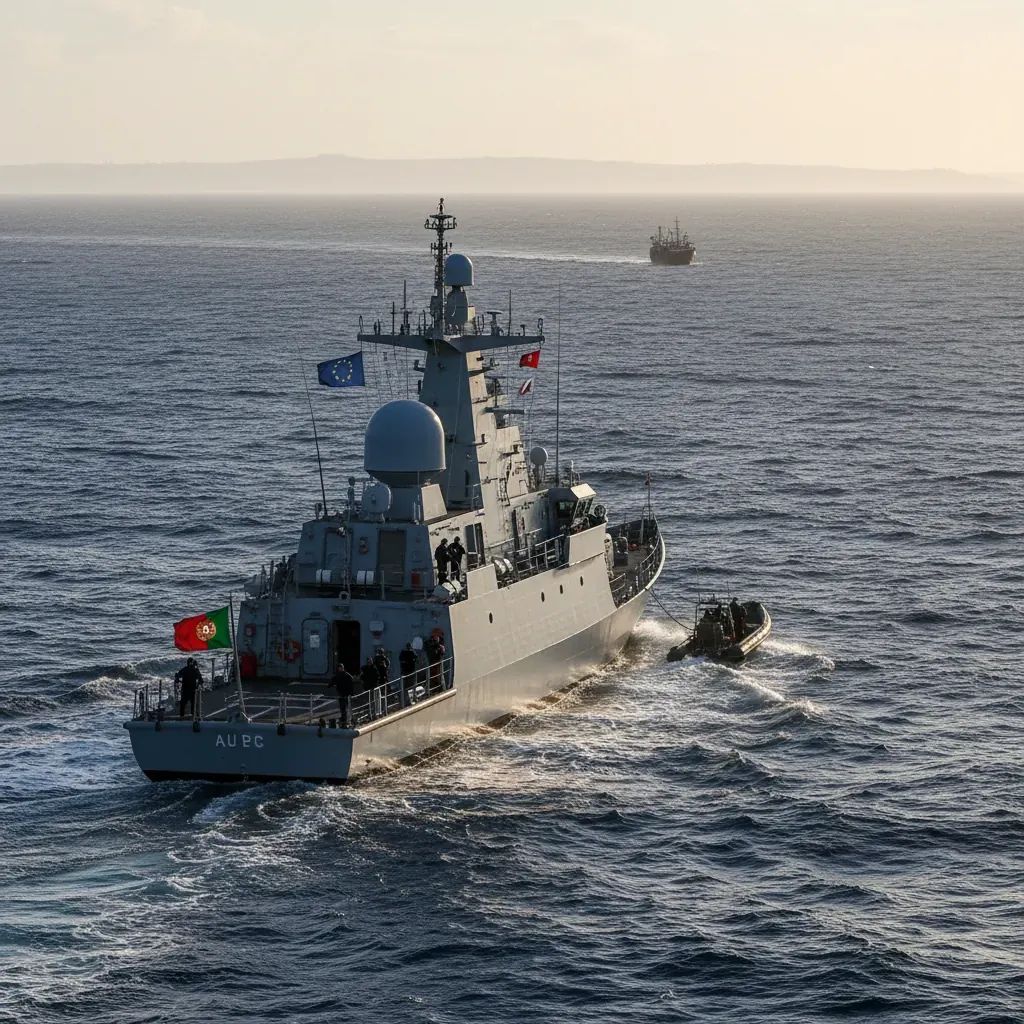
Operation Alpha Lima wasn't a single raid but a sustained maritime interdiction campaign mobilizing surveillance assets, naval vessels, and aircraft across the eastern Atlantic. The geographic focus—that stretch of open ocean between the Azores and the Canary Islands—has become the functional hub of transatlantic cocaine movement.
The overall haul reached significant proportions: 11 tons of cocaine and 8.5 tons of hashish. Portugal's share of the seizure totaled 2,196 kilograms of cocaine, confiscated through joint efforts involving the maritime police, the air force, and the National Republican Guard (GNR). Eight vessels were immobilized and forfeit. Fifty-four individuals faced arrest across multiple jurisdictions, with charges ranging from trafficking to conspiracy.
For context, Portugal's historical cocaine seizures in a full year typically hover around 5 to 8 tons. The operation recovered a quarter of that total in a fortnight, signaling both the scale of transatlantic flows and the vulnerability of Portugal's maritime domain to organized crime exploitation.
The operation's announcement came deliberately delayed—revealing enforcement actions weeks after execution is standard practice to allow investigators time to pursue leads and secondary arrests. Europol released a statement emphasizing that seizures represent only the visible surface of disruption; the real work involves tracking financial networks, identifying facilitators, and dismantling organizational structures.
How Criminal Logistics Operate
Understanding the seizure requires understanding the mechanics of modern cocaine trafficking. Criminal syndicates employ multiple methods to move product across the Atlantic.
The foundational method begins in South American ports—predominantly in Brazil, Colombia, and Venezuela. Criminal organizations contract with legitimate shipping companies or operate shell-company vessels that depart with manifests listing innocuous cargo. At prearranged coordinates in open water between the Azores and Canaries—beyond territorial waters where no customs authority holds jurisdiction—they rendezvous with specialized transfer vessels. Fast boats equipped with encrypted satellite communication systems rapidly transfer narcotics, often under darkness. The large freighter continues westward with documentation intact; the smaller craft pivots toward European coastlines.
A more sophisticated variant involves semi-submersible vessels—low-profile craft designed to ride just below the waterline, rendering them nearly invisible to radar and visual surveillance. In January 2026, Portuguese authorities interdicted one such vessel near the Azores carrying 8.8 tons of cocaine, marking the largest single cocaine seizure in the nation's history. These vessels cost upward of €5 million to construct, demonstrating the extraordinary profit margins that justify such technological investment.
The "drop-off" technique adds another layer of sophistication. Large cargo freighters jettison waterproof bundles at GPS coordinates, allowing retrieval crews to collect packages during daylight hours when their movements blend with legitimate maritime traffic.
A fourth method exploits the sheer volume of legitimate commerce. Cocaine gets hidden inside frozen seafood shipments and tropical fruit destined for European distribution networks. A 30-ton cocaine seizure near the Canary Islands, discovered inside a legitimate cargo vessel, remains Europe's single largest haul.
The Atlantic Corridor as Strategic Chokepoint
Europe's largest container ports—Rotterdam, Antwerp, Hamburg—face intensive law enforcement surveillance with sophisticated scanning technology and intelligence networks. Organized crime deliberately diversified away from these heavily monitored entry points.
The Atlantic corridor offers multiple operational advantages. The Azores and Canary Islands sit at the convergence of transatlantic shipping lanes, geographically remote from major urban centers yet close enough to European markets that fast-boat transit remains feasible. Island coastlines feature minimal monitoring infrastructure relative to major ports, and local law enforcement capacity remains thin.
Europol analysis indicates that traditional entry ports have experienced declining traffic as smugglers activate alternative routes. For Portugal, this means structurally heightened maritime exposure. Intelligence documents also note that South American cocaine reaches European markets faster through Atlantic routes than through traditional West African intermediaries, bypassing fragile state infrastructure and reducing handling vulnerabilities.
The International Coordination Architecture
Operation Alpha Lima reflects an evolved institutional approach to transnational crime. Europol no longer treats drug seizures as discrete national events but deploys liaison officers, coordinates intelligence, and establishes operational task forces that transcend national boundaries with legal authority. A regulatory amendment effective January 11, 2026 strengthened Europol's mandate to field these task forces directly on member state territory and imposed mandatory intelligence-sharing obligations.
The Portuguese Judicial Police maintains a dedicated National Europol Unit to facilitate collaboration. Coordination operates in real time: when Portuguese radar tracks a vessel transitioning into Spanish waters, intelligence flows simultaneously; when suspects have known associates in other countries, databases are queried within hours.
For the 2026-2029 cycle, the European Multidisciplinary Platform Against Criminal Threats (EMPACT) has designated migrant smuggling and human trafficking as strategic priorities, reflecting recognition that these phenomena interconnect with drug trafficking through shared networks and financing mechanisms.
Parallel Enforcement: Ongoing Domestic Operations
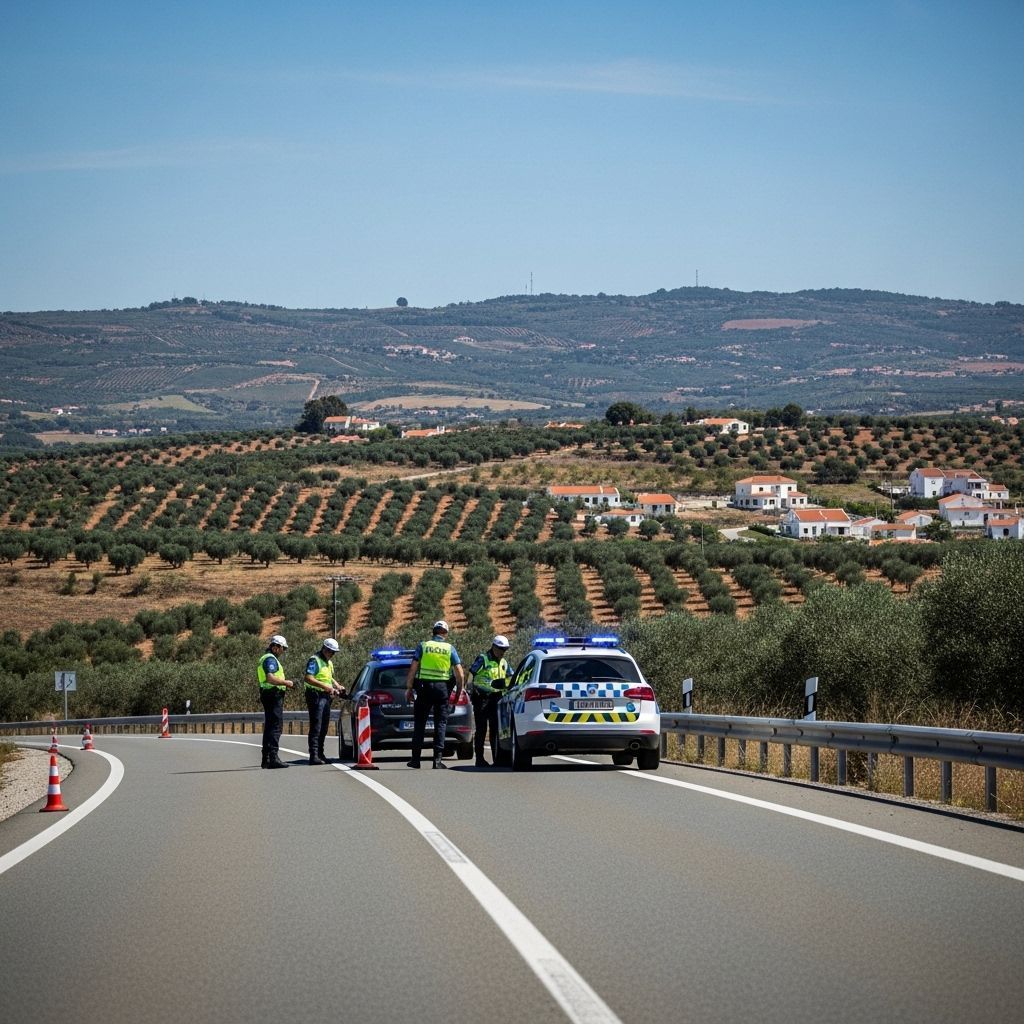
While Operation Alpha Lima focused on maritime interception, routine policing produced concurrent results. On May 6, GNR officers conducting routine vehicle inspection on the A2 motorway near Setúbal—approximately 40 kilometers south of Lisbon—intercepted a southbound passenger car carrying 72.163 kilograms of hashish. The seizure demonstrates that street-level enforcement continues alongside international operations, though it also reveals that Moroccan hashish continues to flow into Portugal alongside South American cocaine.
The Path Forward
The Portuguese government has signaled that Operation Alpha Lima represents a sustainable institutional shift rather than a temporary surge. Resources are being allocated for specialized investigative units, maritime surveillance technology modernization, and enhanced prosecutorial capacity. For residents, practical implications include heightened maritime patrols in coastal regions and more frequent vehicle inspections on major transportation corridors.
The battle for the Atlantic corridor requires sustained investment, international intelligence sharing, and judicial capacity to prosecute complex transnational cases. Europol officials have emphasized that enforcement work doesn't terminate with arrests and seizures; it commences there, moving upstream to dismantle the financial and logistical networks sustaining transatlantic cocaine transport.
For Portugal—geographically central to this corridor and linguistically connected to major source countries—that commitment will define security policy for years ahead.