The Portugal Government successfully completed its 2018 circus wildlife ban with a milestone transfer: Julie, a 40-year-old African elephant and the last of her kind performing in the country, will arrive at the Pangea Trust Elephant Sanctuary in June 2026. The move closes a chapter on a practice that once saw over 1,100 wild animals performing across Portuguese circus rings—and opens a new model for animal welfare reform that other European nations are now watching closely.
Why This Matters
• Julie's transfer marks full enforcement of Portugal's 2018 law banning wild animals in circuses, with no such animals remaining in any Portuguese circus after June 2026.
• The Alentejo sanctuary spans over 400 hectares and expects a €15M investment over the next decade, positioning Portugal as a leader in elephant rehabilitation in Europe.
• Kariba, another 40-year-old African elephant, will arrive from Belgium in late May, allowing both females to form the social bonds essential to their species.
• The Circo Victor Hugo Cardinali continues operating in 2026 under the new legal framework, now featuring only domestic animals like horses.
The Legislative Push That Changed Everything
Portugal's Parliament approved Law 20/2019 in February 2019, following an initial 2018 framework, establishing a six-year transition period for circus operators to register their animals and arrange for their relocation. The law covered species listed in Annexes I and II of Directive 86/2018, including lions, tigers, elephants, camels, zebras, monkeys, seals, and snakes. Domestic animals and livestock remained exempt.
The Direção-Geral de Alimentação e Veterinária (DGAV) managed the National Register of Animals Used in Circuses, while the Instituto da Conservação da Natureza e das Florestas (ICNF) handled species-specific documentation. Circus professionals who voluntarily surrendered animals before the 2024 deadline received government-backed retraining assistance and job placement support, a provision designed to prevent the sale of animals to jurisdictions with weaker protections.
The final enforcement milestone arrived in early 2026, when Sona—Portugal's last circus tiger—was relocated to a sanctuary in Spain. Julie's June transfer will complete the legal mandate.
From Circus Tent to Alentejo Sanctuary
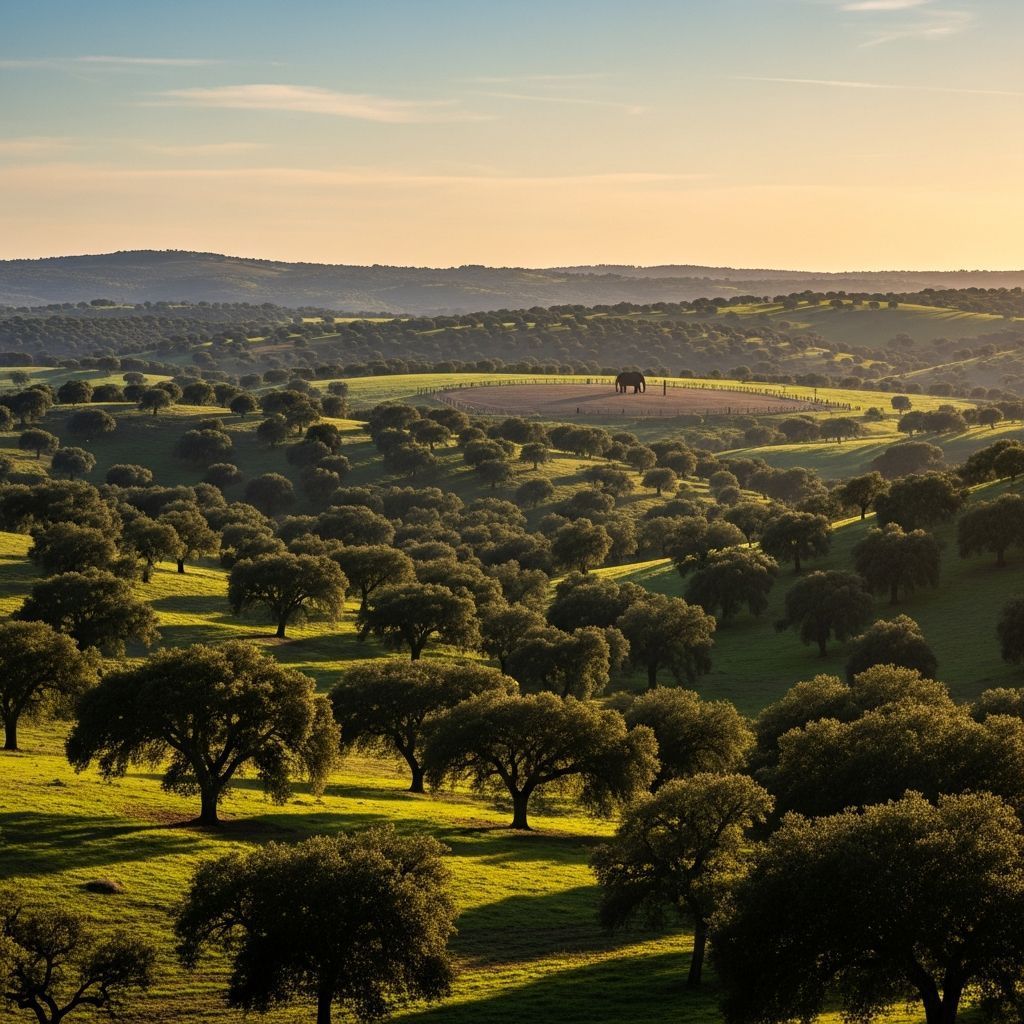
Julie arrived in Portugal from southern Africa as a calf in 1988 and spent 36 years with the Circo Victor Hugo Cardinali. She was formally retired from performance in 2024, the same year her last companion, Samba, died. Under the voluntary agreement reached between the circus and Pangea Trust, Julie will travel to the sanctuary's 28-hectare initial footprint in the municipalities of Vila Viçosa and Alandroal, part of a planned 405-hectare expansion across a former cattle estate in Évora district.
Victor Hugo Cardinali, the circus owner, acknowledged the emotional weight of the decision. "Julie is a deeply loved member of the family for more than 30 years," he stated in a joint press release. "But we believe this is the right decision for her. Working closely with Pangea on the transition to her new home was critical to our decision."
Pangea's veterinary team is now coordinating health assessments with the circus to ensure Julie is fit for the journey. The organization emphasized that "elephant transfers are complex," and continuous collaboration with former owners is essential to success.
What This Means for Residents
For people living in Portugal, the Julie case demonstrates how the country is threading the needle between cultural tradition and modern animal welfare standards. Circus culture has deep roots here, yet the government managed a full-scale regulatory overhaul without mass job losses or underground markets.
Economic adaptation has been real but manageable. The Circo Victor Hugo Cardinali remains active on its 2026 tour, now featuring horses and camels—both exempt from the wild animal ban—and acrobatic performances. The transition period allowed operators to pivot their business models, and government retraining programs reduced workforce displacement.
For Alentejo residents, the sanctuary brings a new form of international attention. Kate Moore, Pangea's director-general, noted that "circuses and zoos across Europe are reaching a point where keeping elephants is no longer possible or appropriate, whether due to legislative changes, the loss of a companion, or the decision to take a new direction." Portugal is positioning itself as a regional solution hub for Europe's captive elephant population, with Pangea expecting to house 20 to 30 elephants over the coming years.
Tourism and educational programming will be limited—the sanctuary will not be open to regular public visits—but the project already attracts interest from wildlife organizations, veterinary researchers, and conservation donors. Locals in Vila Viçosa and Alandroal may see indirect economic benefits through infrastructure development, specialized veterinary services, and international partnerships.
The European Context
Portugal is not alone in rethinking captive wildlife. France's Elephant Haven European Elephant Sanctuary (EHEES), established in the southwest, was Europe's first major elephant refuge. It operates on 24 hectares using the "protected contact" method, which relies on positive reinforcement and allows elephants full agency in interactions with caretakers.
The Pangea Trust model goes further in scale, with habitat diversity designed to support natural behaviors like foraging, bathing, and long-distance walking. The sanctuary's team includes specialists experienced in both captive and wild elephant populations, and its protocols exceed international zoo and sanctuary standards.
Both facilities reflect a broader shift: at least a dozen European countries have enacted or are phasing in bans on wild circus animals, creating urgent demand for alternative placement. The lack of adequate sanctuaries on the continent has made facilities like Pangea and Elephant Haven critical infrastructure, not just for animal welfare but for legal compliance.
Kariba and the Road Ahead
Julie will not be alone for long. Kariba, an African elephant of similar age who spent the last 40 years in captivity across multiple European zoos, most recently in Belgium, is scheduled to arrive at the sanctuary in late May 2026. If both transfers proceed as planned, the two females will have the chance to form the social bonds that are central to elephant well-being.
Elephants are highly social animals, and prolonged isolation—like Julie experienced after Samba's death—can lead to severe psychological distress. Pangea's veterinary and behavioral teams will oversee a gradual introduction process, monitoring stress indicators and allowing the elephants to set the pace of interaction.
The sanctuary's long-term vision includes accommodating elephants from across Europe as zoos and circuses phase out their programs. Kate Moore emphasized that "working in partnership with owners to find the right solution is central to how we operate."
A Model for the Region
Portugal's approach offers lessons for neighboring countries grappling with similar transitions. By combining firm legislative deadlines with financial and logistical support, the government avoided the pitfalls of rushed enforcement or black-market animal sales. The voluntary collaboration between Pangea and the circus reflects a pragmatic model that prioritizes outcomes over punitive measures.
Pangea Trust plans to invest €15M over 10 years, according to statements made during a November 2025 site visit in Vila Viçosa. The funding will support habitat expansion, veterinary infrastructure, and research into elephant adaptation and ecological integration. The sanctuary is not designed as a tourist attraction but as a permanent retirement home, with a focus on reducing human interference and allowing elephants to reclaim natural behaviors in their final years.
For Julie and Kariba, the Alentejo hills represent a final chapter far removed from the sawdust and spotlights. For Portugal, the sanctuary is proof that legal ambition, when paired with practical implementation, can deliver outcomes that satisfy both ethical standards and economic realities.