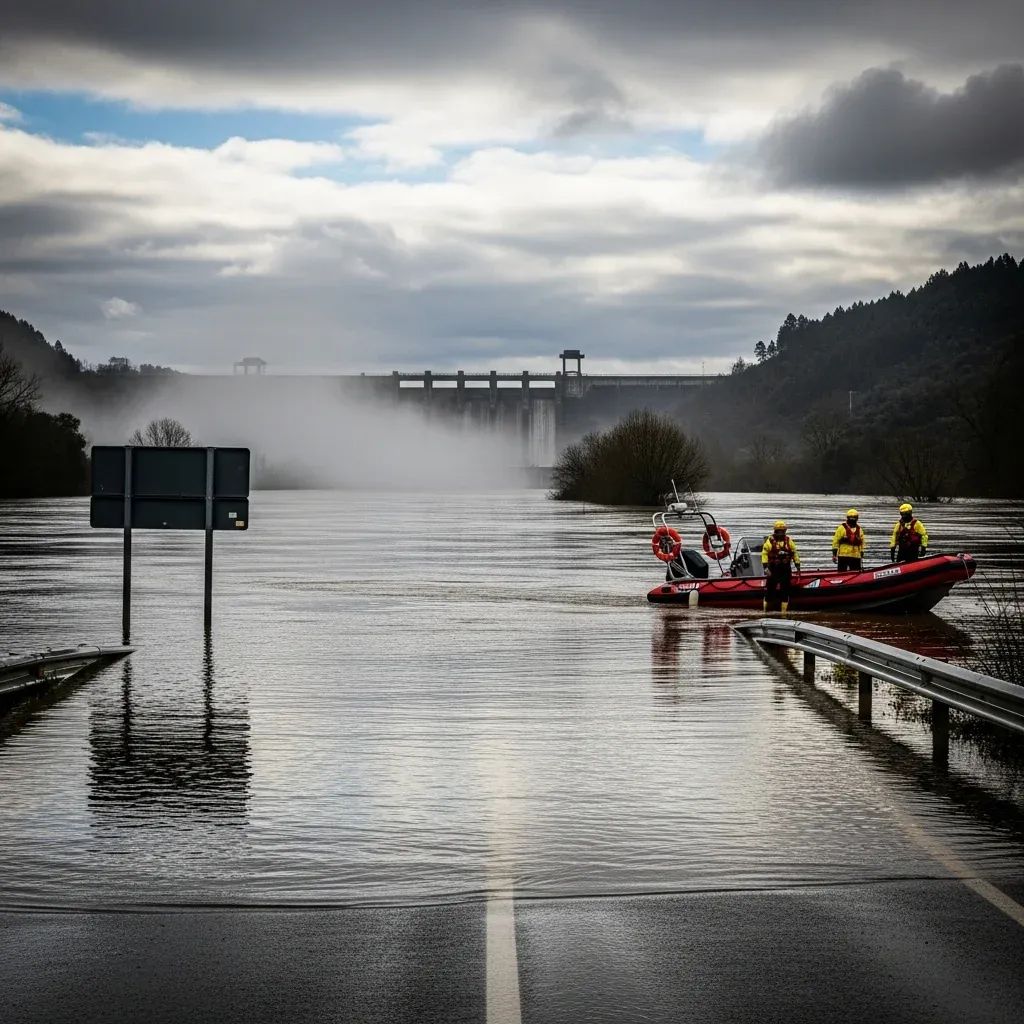
The Portugal Public Security Police (PSP) and environmental regulators have identified the source of an illegal blue paint discharge that contaminated the waters of Carcavelos Beach in Oeiras during early May: a private contractor working on tennis court renovations at the Clube Nacional de Ginástica in nearby Parede. While authorities have confirmed the origin and taken samples for lab analysis, no company name has been publicly released, leaving residents and beachgoers in the dark about who will face potential fines of up to €250,000.
Why This Matters:
• Swimming was discouraged in the contaminated zone at Carcavelos Beach, one of the region's most popular coastal destinations.
• Lab results are pending from the Portuguese Environment Agency (APA), expected in the coming days, which will determine exact responsibility and potential criminal charges.
• Environmental penalties range from €24,000 to €250,000 for serious or very serious contraventions under Portugal law.
• Tennis court painting at the Parede sports club reportedly flushed into the storm drain system during unexpected rainfall on May 4.
How a Sports Club Painting Job Reached the Ocean
The incident unfolded around 3:30 PM on May 4 when lifeguards at Carcavelos Beach noticed the water at the mouth of the Ribeira das Marianas turning a vivid shade of blue. The stream, which drains directly onto the beach, had become visibly contaminated. Social media videos quickly circulated, with some users speculating about industrial sabotage or chemical spills.
Investigators from the PSP Environmental Protection Brigade (Cometlis), working alongside the Cascais Municipal Council, APA, Maritime Authority, Águas de Cascais, Águas do Tejo Atlântico, and municipal police, traced the blue discharge upstream. They determined that fresh blue paint used to coat two tennis courts at the Clube Nacional de Ginástica in Parede had been washed into the stormwater drainage network by sudden rain. Because the paint was still wet, rainfall carried it through municipal infrastructure and into the stream, eventually reaching the Atlantic.
Discharge Halted and Waters Diverted to Treatment
The Cascais Municipal Council confirmed on May 6 that the discharge had been halted and that water from the affected basin was diverted to the Parede Wastewater Treatment Station to prevent further contamination. This swift action provided reassurance to residents concerned about ongoing pollution. Upstream of the discharge point, no contamination was detected, allowing authorities to pinpoint the exact origin within Parede.
What This Means for Residents and Beachgoers
For anyone living near Carcavelos or planning to visit the beach, this incident highlights ongoing vulnerabilities in Portugal's coastal water quality—particularly in areas where urban storm drains feed directly into popular swimming zones. The Ribeira das Marianas and Ribeira de Sassoeiros have long been flagged by the APA as potential pollution vectors, especially after heavy rain. Illicit wastewater connections, leaks in aging sewer networks, and uncontrolled runoff from construction or industrial sites routinely compromise beach water standards.
While the blue tint was dramatic and alarming, authorities emphasized that the contamination was contained relatively quickly. Residents were advised to avoid swimming in the affected area until lab results confirmed water safety. The APA is conducting toxicology tests to determine whether the paint contained harmful solvents, heavy metals, or other substances that could pose health risks beyond the visual pollution.
Legal Consequences and the Hunt for Accountability
Under Portuguese environmental law, unauthorized discharges into water courses constitute a serious or very serious administrative offense, punishable by fines between €24,000 and €250,000. If prosecutors determine the discharge resulted from gross negligence or deliberate misconduct, criminal charges could follow, potentially including custodial sentences for responsible individuals.
The PSP confirmed receiving at least one formal complaint and stated that the case has been forwarded to competent authorities for a full investigation. The Cascais Municipal Council, APA, Health Authority, and the General Inspectorate for Agriculture, Sea, Environment and Spatial Planning (IGAMAOT) are all involved. Yet as of today, no entity—contractor, sports club, or painting company—has been publicly named.
Legal experts note that naming suspects before formal charges are filed could expose authorities to defamation claims, explaining the official silence.
Carcavelos and the Challenge of Coastal Water Quality
Carcavelos Beach is a major draw for surfers, families, and tourists, making water quality a matter of both public health and economic interest. The beach's water quality profile, maintained by the APA, has historically noted that short-duration pollution episodes often follow rainfall, when increased flow in the Marianas and Sassoeiros streams can carry urban runoff and illicit wastewater into the surf zone.
In July 2020, similar illegal discharges and a breakdown at a pumping station temporarily degraded water quality at Carcavelos. The Oeiras Municipality has since invested in environmental education campaigns and tougher enforcement of waste disposal rules, but aging infrastructure and rapid urban development continue to strain the system.
Next Steps and Preventative Measures
The Cascais Municipal Council has pledged stricter oversight of industrial and construction activities near watercourses, particularly projects involving paints, solvents, or other hazardous materials. Contractors may soon face mandatory requirements to cover fresh coatings during work and install temporary containment barriers to prevent runoff.
The APA lab results, expected within days, will be critical. If the paint is found to contain regulated pollutants above safe thresholds, the responsible party could face elevated fines and a cleanup cost-recovery order. The council has also indicated it may seek reimbursement for emergency response costs, water sampling, and public health monitoring.
For now, residents and beach users are advised to check the APA's official beach water quality portal before swimming, especially after rain. The incident serves as a sharp reminder that even routine maintenance work—when poorly managed—can have outsized environmental consequences in densely populated coastal zones like Oeiras and Cascais.