
The Portugal consumer association DECO PROteste has recorded an uptick in its essential food basket index, with the 63-item selection now costing €257.68 for the week of June 10-17—a €2.11 increase that ends a brief downward trend and underscores persistent volatility in household budgets.
Why This Matters
• Weekly volatility: The basket climbed €2.11 in seven days, reversing the largest single-week drop observed in the prior nine weeks.
• Year-to-date pressure: Since January 2026, the same 63 products have risen €15.86 (6.56%), equivalent to roughly a week's groceries for a two-person household.
• Four-year surge: Compared to early 2022, when DECO PROteste began tracking this basket, the current figure is €69.98 higher—a 37% cumulative increase that has fundamentally reshaped how families allocate income.
Snapshot of the Basket
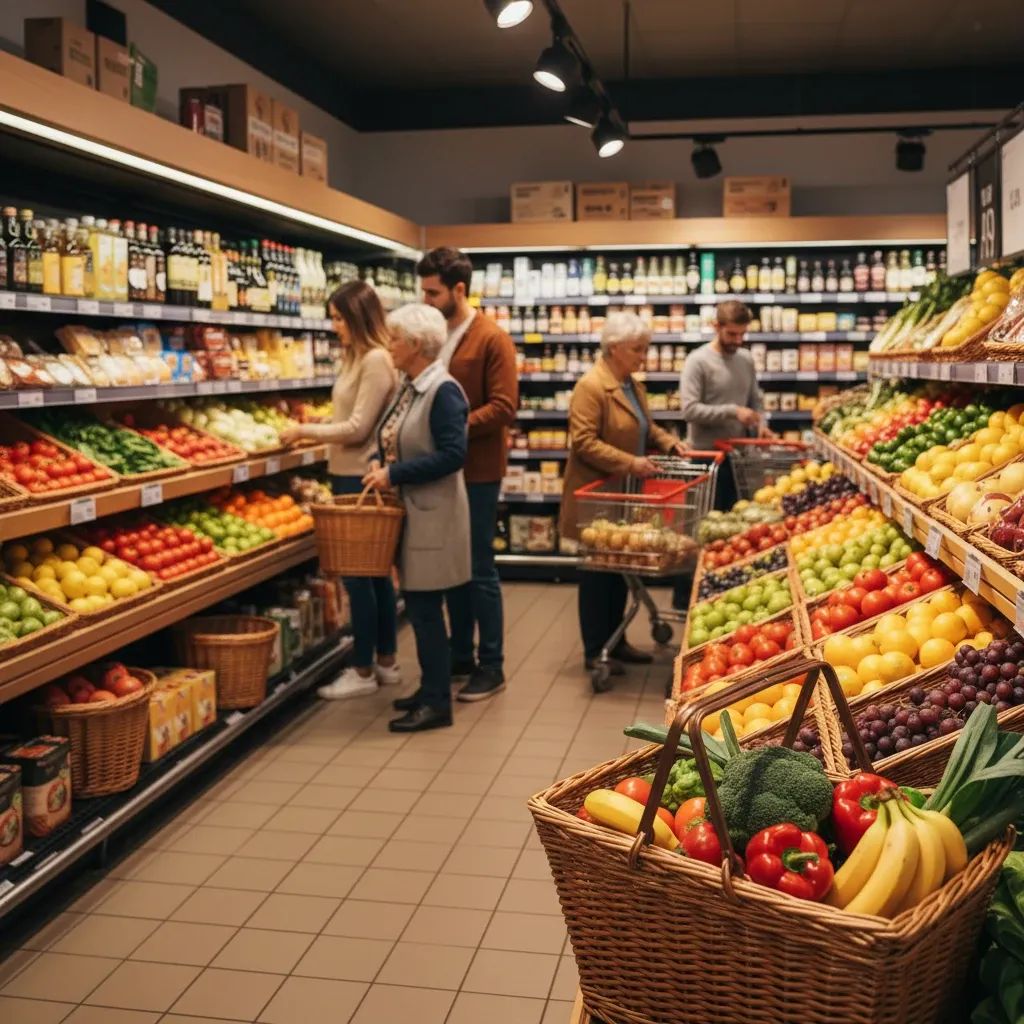
DECO PROteste monitors a representative selection spanning meat, frozen goods, fresh produce, dairy, pantry staples, and fish. The index includes turkey, chicken, mackerel, hake, onions, potatoes, carrots, bananas, apples, oranges, rice, spaghetti, sugar, ham, milk, cheese, and butter. It is designed to reflect what a typical Portuguese household purchases during a routine shopping trip rather than luxury or specialty items.
What Drove This Week's Jump
Three products led the charge between June 10 and June 17:
• Breakfast cereals surged 18% to €2.83 per box.
• Mackerel rose 16% to €6.25 per kilogram, continuing a pattern that has made this once-affordable fish significantly more expensive.
• Sweetheart cabbage (couve-coração) climbed 12% to €2.63 per kilogram, reflecting seasonal supply constraints and elevated production costs.
Cereals and fish have become recurring inflation flashpoints. The mackerel price, in particular, has now increased 64% year-on-year, making it one of the most dramatic swings in the entire basket. For households that traditionally relied on mackerel as an economical protein source, the shift is forcing substitutions or budget reallocations.
Longer-Term Comparisons Paint a Stark Picture
Looking beyond the immediate weekly change, the cumulative effect becomes clearer. Compared to mid-June 2025, consumers are paying €14.90 more (6.14%) for identical items. The four-year view is even more sobering: the basket that cost €187.70 in early 2022 now commands €257.68, a 37.28% increase that outpaces wage growth for many households.
Certain categories have seen disproportionate acceleration. Stewing beef has climbed 126% since January 2022, now priced at €13.14 per kilogram. Eggs are up 84% to €2.10 per package. Sweetheart cabbage (couve-coração) has risen 79% to €1.78 per kilogram, while sea bass has gained 31% to reach €10.38 per kilogram.
These shifts are not abstract—they translate into routine trade-offs. Families that once bought beef twice a week now substitute chicken or skip meat nights. The €2.10 egg package, once a staple protein, now competes with canned fish or legumes in budget calculations.
Why Prices Keep Climbing
Multiple factors converge to sustain upward pressure on Portugal's food inflation:
Production-cost spiral: Farmers and processors face higher bills for animal feed—which relies on imported cereals and oilseeds—as well as water, energy, and logistics. These inputs have not stabilized; in many cases, they continue trending upward.
Regulatory compliance: European Union mandates on environmental standards and animal welfare require producers to invest in upgraded facilities and practices. While these rules aim to improve sustainability and ethics, they add layers of cost that ultimately filter down to retail shelves.
Climate disruption: Extreme weather events in early 2026—including intense storms in January and February—damaged crops and disrupted livestock operations. Portugal's agricultural sector is particularly exposed to such shocks, given its reliance on rain-fed systems and smallholder farms.
Geopolitical ripple effects: Tensions in the Strait of Hormuz and ongoing conflict in the Middle East have kept energy prices elevated. Higher fuel costs cascade through the supply chain—fertilizers, refrigerated transport, plastic packaging—inflating every stage from farm to fork.
How Portugal Compares to the EU Average
Portugal's food inflation stood at 3.3% in May 2026, more than double the 1.6% average for both the European Union and the Eurozone. While the country's overall inflation rate of 3.1% sits marginally below the EU's 3.3%, the divergence in the food category signals that Portuguese households are absorbing sharper price shocks than their peers in Germany, France, or Spain.
Forecasters project that food inflation across Europe will intensify through 2026 and into 2027, with some analysts at Rabobank predicting increases between 5-10%—or higher if energy markets deteriorate further. For Portugal, Trading Economics estimates food inflation will hover near 3.6% by the end of the second quarter of 2026, then moderate to approximately 3.2% in 2027 and 2.6% in 2028.
Government Response and Policy Debate
The Portugal Ministry of Economy and Finance has extended several temporary relief measures through the end of 2026:
• Zero-rated VAT on agricultural inputs—fertilizers, soil conditioners, animal feed, seeds—to ease pressure on producers.
• Income tax adjustments that shift IRS brackets upward by 3.51%, above the forecast 2.1% inflation, leaving more disposable income in household accounts.
• A €40 monthly increase to the Complementary Solidarity Allowance for the Elderly, bringing the payment to €670.
• Maintenance of the Agricultural Price Observatory, which tracks price movements from farm gate to retail shelf.
Despite these steps, opposition parties have pushed for a broader reset. Proposals from Chega and the Socialist Party to reintroduce the "IVA Zero" scheme—which exempted a basket of essential foods from VAT until the end of 2023—were defeated in the parliament during the 2026 budget debate. Prime Minister Luís Montenegro cautioned that such measures risk being "generous in presentation but ineffective in results," arguing that VAT exemptions do not always translate into lower shelf prices if retailers absorb the savings.
The Secretary of State for the Economy has indicated that the government will intervene with "new measures" if price escalation persists for more than four to five weeks and evolves into a structural rather than seasonal problem. Officials stress any action will be calibrated with EU regulatory frameworks to avoid distortions or legal challenges.
What This Means for Residents
For anyone managing a household budget in Portugal, the implications are immediate and practical:
Budget reallocation: A €2.11 weekly increase may seem modest, but annualized it amounts to roughly €110—enough to cover a monthly mobile-phone plan or a utility bill. Multiply that by the cumulative €15.86 rise since January, and families face an additional €825 in annual food costs.
Substitution strategies: With mackerel up 64% year-on-year and beef up 126% since 2022, many households are shifting toward cheaper proteins—canned tuna, chicken thighs, eggs when on promotion—or embracing plant-based staples like lentils and chickpeas.
Shopping discipline: Price volatility rewards careful planning. The DECO PROteste index serves as a reference, but individual supermarket promotions can vary by 15-20% week to week. Loyalty apps, seasonal produce, and bulk buying on non-perishables offer practical ways to shave costs.
Policy watch: If the government does activate additional relief measures in the coming weeks, they are likely to target the most vulnerable—pensioners, single-parent households, or low-income workers—rather than broad-based subsidies. Monitoring announcements from the Ministry of Economy and the Ministry of Agriculture and Food will be essential for those eligible for support programs.
Looking Ahead
The €257.68 figure is a snapshot, not a plateau. With European-wide food inflation expected to accelerate into 2027, and with energy markets remaining fragile, the pressure on Portugal's household budgets is unlikely to ease in the short term. Producers signal that input costs have not peaked, retailers warn that margin compression is unsustainable, and policymakers face the dual challenge of protecting consumers without triggering fiscal imbalances or breaching EU state-aid rules.
For now, the weekly DECO PROteste update serves as a barometer—a data point that quantifies what many already feel at the checkout line. Whether the current uptick marks the start of a new inflationary wave or a temporary fluctuation will depend on factors ranging from Lisbon's policy choices to the trajectory of conflicts half a world away.


