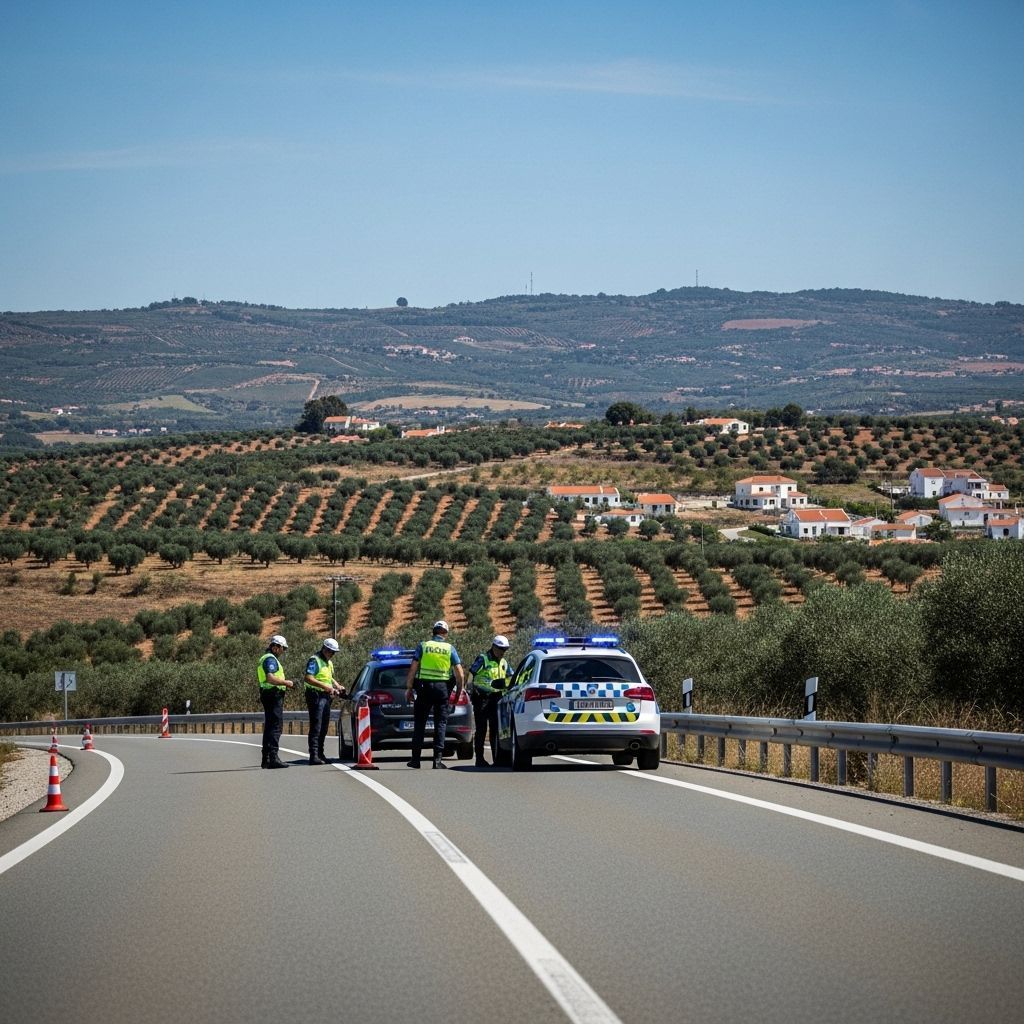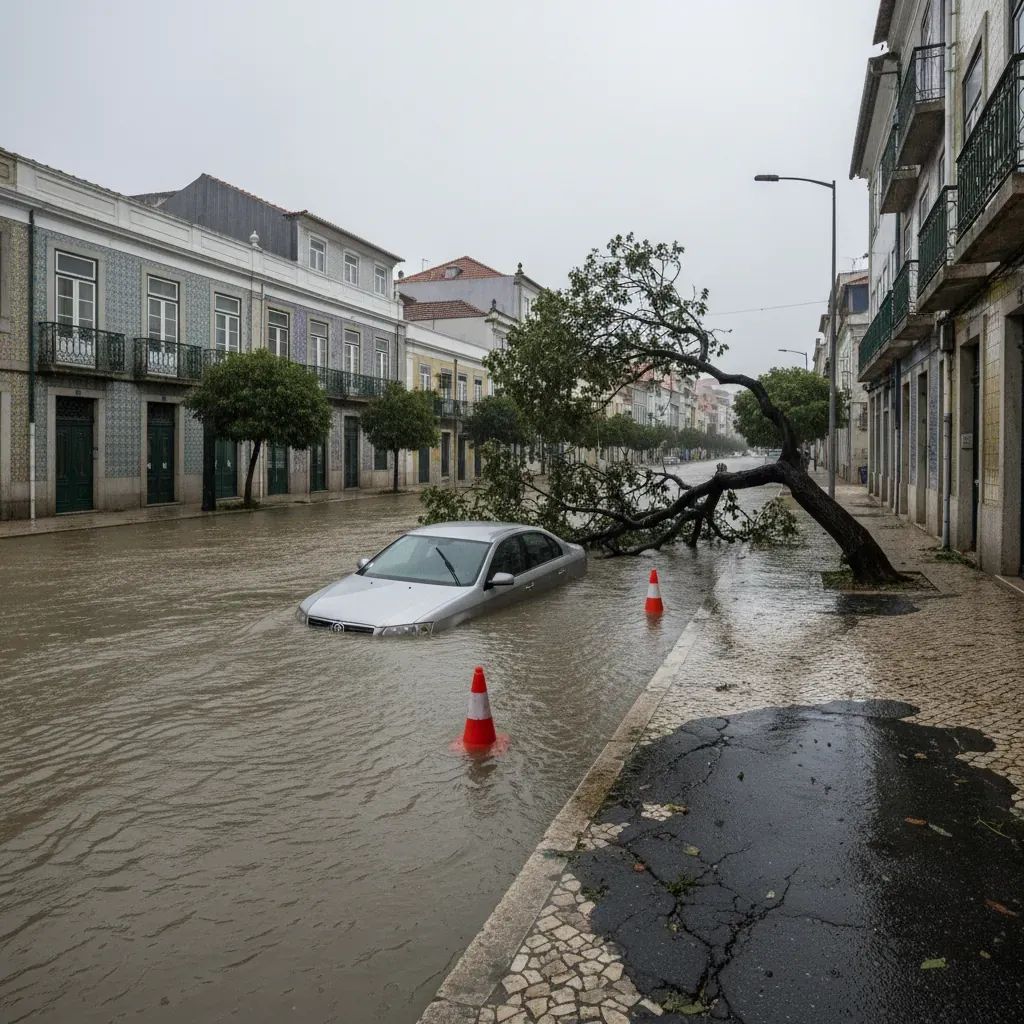
Portugal's Parliament is preparing to overhaul how the country responds to catastrophic natural disasters, with the Left Bloc party Livre pushing to extend emergency support frameworks originally designed for wildfires to cover earthquakes, severe storms, and any weather event triggering orange or red meteorological alerts from IPMA (Instituto Português do Mar e da Atmosfera). The move comes as the nation still counts the costs of January's deadly Tempest Kristin and braces for a future of more frequent climate-driven disruption.
Based on reporting from Lusa agency, Livre lawmaker Jorge Pinto has explained that his party wants to expand tools currently available for fire disasters to other extreme phenomena, citing climate science indicating intensified extreme weather across Portugal.
Why This Matters
• Unified crisis response: One standardized legal framework would replace ad-hoc measures rushed through after each disaster, saving time and ensuring fairness.
• Automatic activation: The Council of Ministers (Conselho de Ministros) could deploy housing, business, and infrastructure aid by simple resolution—no need to craft a new law every time flooding or an earthquake strikes.
• Climate reality check: Climate science indicates extreme weather will intensify across Portugal, the EU's most exposed southern member. Having a pre-loaded emergency playbook could mean the difference between swift relief and bureaucratic paralysis.
From Wildfires to Everything Else
At the heart of Livre's proposal sits the existing legal framework for disaster aid, currently used after rural fires. That law allows the Government to deploy housing subsidies, health support, exceptional social payments for lost income, measures for commercial activity recovery, and fast-track public works contracting. Livre's amendment seeks to expand these EXISTING measures to activate automatically whenever Portugal's meteorological agency issues a major warning or when a seismic event occurs—rather than requiring new legislation each time.
"We want to transfer what already exists for forest fires to other extreme phenomena. Why? Because we know they will increase. Science and climate change tell us so," Pinto said in comments to Lusa. He pointed to recent deadly tempests—specifically Kristin—that killed multiple people and caused widespread destruction, particularly in the Central region, as proof the country cannot afford to keep improvising.
The current legal gap restricts state intervention to fire-damaged zones, leaving populations exposed to floods, landslides, and quakes without the same institutional safety net. Livre's amendment would create what the party calls a "unified and versatile support and mitigation regime," adaptable through ministerial resolution to any severe natural disaster while promoting equity among victims.
What Residents Should Know
If the amendment passes, here's what changes for people living in Portugal:
When would the law activate? Automatically, when the Government declares that a meteorological alert (orange or red level from IPMA) or seismic activity has caused significant damage. No waiting for parliament to vote on a new law.
How would someone apply for aid? Residents in affected areas would access support through municipal councils and Government agencies, following the same application process already established for fire disasters—typically involving damage assessment and documentation of losses.
What documentation is needed? Proof of residence, property ownership or tenancy, and documentation of damage (photos, repair estimates, or official damage assessments). Specific requirements may vary by municipality and support type.
What's changing versus what already exists? The support measures themselves (up to €10,000 for home repairs, business credit lines, Social Security payment holidays) already exist for fire victims. What's NEW is the commitment to extend these same tools automatically to flood, earthquake, and storm victims—eliminating delays caused by writing new emergency decrees after each disaster.
What gaps does this fix? Currently, families affected by storms or floods must wait for the Government to draft and approve emergency aid packages specifically for that event. This amendment pre-authorizes the support menu, potentially reducing delays from weeks to days.
What This Means for Residents
If the amendment passes, Portugal would gain a permanently open toolkit for rapid disaster response. Families could access up to €10,000 for home repairs without waiting for parliament to craft fresh legislation. Businesses could apply for credit lines and Social Security payment holidays immediately after a meteorological disaster, not weeks later. Farmers hit by flooding would receive the same consideration as those burned out by wildfires.
Crucially, the reform would eliminate what Pinto described as "ad hoc diplomas in each catastrophe," streamlining both prevention and responsible reconstruction. The framework would flex to fit the damage: wildfire zones might need forestry management and total home reconstruction; flood zones might require drainage infrastructure and contamination control. The law sets the rules; the Government tailors the measures.
How the Numbers Stack Up
Portugal's January 2025 experience with Tempest Kristin underscores the cost of delay. After the storm battered the country, the Government declared a state of calamity across dozens of municipalities and eventually extended coverage nationwide for demonstrably affected entities. A €2.5 billion emergency package was announced, covering:
• Housing recovery: Grants of €10,000 for repairs or reconstruction, plus temporary relocation costs.
• Business continuity: €500 million in working-capital credit and €1 billion for economic recovery, with six-month Social Security exemptions.
• Agriculture and forestry: €80 million earmarked, including EU co-financing, with individual farm support capped at €10,000.
• Public infrastructure: €400 million to Infraestruturas de Portugal for road and rail repair; €200 million to municipalities for damaged schools and civic buildings.
Proponents of reform argue that faster access to aid would have accelerated recovery and reduced hardship for affected families and businesses. The Livre proposal aims to bake speed into law by pre-authorizing the support menu and expediting procurement through exceptional contracting rules.
Political Landscape
Pinto told Lusa he is confident the measure will pass, arguing that even climate-skeptical lawmakers face undeniable reality. "Those who doubt climate change, such as the Chega party, are increasingly surrendering to the evidence. And they're surrendering to an even worse piece of evidence: that Portugal, in Europe, is on the front line of countries that will be most affected," he said.
The debate will coincide with several related initiatives. The Socialist Party (PS) has tabled a project establishing support and compensation for fire victims. The Communist Party (PCP) has introduced two proposals specifically targeting storm damage. PAN (People-Animals-Nature) wants animals included in disaster-relief frameworks and—like Livre—seeks to broaden the legal scope beyond fires. Chega has proposed a dedicated natural disaster fund through a parliamentary resolution recommending urgent government action.
With memory of Kristin's toll still fresh and Atlantic storm season approaching, the timing favors proponents. The current legal gap became painfully obvious when municipalities scrambled to access aid mechanisms designed around flames, not floodwater.
European Context
Portugal is not alone in re-evaluating disaster readiness. The EU Solidarity Fund and the Civil Protection Mechanism offer cross-border coordination and post-disaster reconstruction financing, but national frameworks determine first-response agility. Countries such as Italy have integrated systems linking national civil protection with regional authorities and 5,000-plus volunteer organizations, while Spain has reinforced cross-border early-warning systems with Portugal for floods and forest fires. France recently released a national survival manual to prepare citizens for crises.
The EU's RESTORE proposal allows member states to redirect up to 95% of cohesion fund allocations toward reconstruction after 2024 or 2025 disasters, mobilizing an estimated €3 billion through accelerated payments. This flexibility applies to infrastructure (via the European Regional Development Fund) and social support (via the European Social Fund Plus). Still, national law determines whether aid flows within days or months.
What Happens Next
The draft will enter committee review alongside the competing proposals from PS, PCP, PAN, and Chega. Because the underlying legal framework already exists and enjoys broad acceptance for fire scenarios, the technical lift is modest: legislators need only agree on the list of triggering events (seismic activity, meteorological warnings) and confirm that Council of Ministers resolution remains the activation mechanism.
If approved, Portugal would join a small group of EU states with pre-loaded, omni-hazard support schemes ready to deploy within hours of a disaster declaration. For a country that has seen its wildfire season lengthen, its river basins flood more violently, and its coastal infrastructure face Atlantic storms of increasing ferocity, the reform represents not largesse but insurance—a legislative bet that tomorrow's disasters will arrive faster and hit harder than those of the past.
In practical terms, that means a family in Coimbra whose roof collapses in a winter storm could access the same housing grant and credit line as a farmer in Leiria whose olive grove burns in August. It means a small manufacturer in Setúbal submerged by a flash flood would no longer wait for parliament to debate a one-off aid package. And it means the Portuguese State would no longer scramble to write new rules while mud is still drying in the streets.