Portugal's Elderly Face Rising Crime Wave as System Fights Back
The number of elderly crime victims in Portugal has risen 30.5% over five years, prompting legislative and law enforcement reforms. As of mid-2026, recent data through 2025 shows that between 2020 and 2025, the Portugal Justice Policy Directorate recorded 44,161 elderly victims (age 65 and over), compared to 33,850 five years earlier. This surge triggered new laws, expanded police operations, and coordinated programs designed to interrupt what authorities increasingly recognize as systematic patterns rather than random incidents.
Key Resources for Residents: If you need support or want to report suspected elder abuse, contact APAV (Portugal Victim Support Association) at 116 006 — a confidential helpline available throughout Portugal with trained staff familiar with elder-specific situations.
Why This Matters
• Property crime dominates the threat: Burglary and fraud now account for 68% of crimes targeting seniors, translating to direct financial harm for households already managing fixed pensions—money that disappears can mean skipped meals or delayed medical care.
• Family members perpetrate most abuse: The vast majority of domestic violence cases involving elderly victims go unreported, with adult children and spouses representing the largest perpetrator cohort—a reality that complicates traditional police response.
• Legal accountability shifted: The recently enacted Statute of the Elderly (Law 7/2026), effective February 2026 just months ago, creates criminal liability for care institutions and family members who fail to prevent or report abuse, making inaction itself prosecutable. This applies to all residents in Portugal aged 65 and over, regardless of nationality.
The Data Reality
What started as isolated complaints now registers as a structural problem. In 2023, authorities recorded 44,125 elderly victims—then the highest on record. The 2025 figure of 44,161 suggests the trajectory has stabilized at a plateau, though still dramatically elevated from five years prior. Elderly residents now represent 15.3% of all crime victims nationally, up from 14.2% in 2020—a seemingly small percentage shift that reflects thousands of individual households experiencing theft, fraud, or abuse.
The composition of these crimes reveals a grim pattern. Violent offenses against the person (assault, homicide) represent 27.5% of cases, a slight decrease from 29.1% in 2020. This counterintuitive decline in violent crime rates among seniors masks a darker reality: when violence does occur, it typically happens behind closed doors within family or residential care settings rather than on the street. A mugging is visible; coercion applied by a family member controlling a household often remains hidden.
When Victim Support Organizations See Surge, Everyone Should Worry
The Portugal Victim Support Association (APAV) serves as a practical barometer of actual need. Between 2021 and 2025, the organization handled cases for 8,540 elderly victims—a 26.5% increase in annual caseload. Within that cohort, 76.3% were women aged 65 to 74, and 78.9% of cases involved domestic abuse. The perpetrator identity proved unsettling: sons appeared in 32.3% of domestic violence cases, spouses in 21.5%. This data undercuts the common assumption that elderly abuse originates from external criminals; often it emerges from intimate relationships where caregiving responsibilities intersect with psychological strain, financial stress, or untreated mental health conditions.
APAV director interviews reveal a consistent theme: reported victimization likely represents only half of actual harm. The "dark figure"—unreported crimes in criminological terms—potentially doubles official statistics. Elderly victims delay or avoid reporting for identifiable reasons. An adult son providing daily care can create dependency that silences his mother. A spouse controls the household finances and determines whether medical appointments happen. Physical abuse leaves bruises that could be mistaken for fall injuries. Financial exploitation becomes apparent only when bank accounts deplete or property deeds change hands without the senior's clear understanding. Psychological manipulation leaves no forensic evidence but damages confidence and independence.
Rural isolation intensifies invisibility. Seniors living in remote regions may go weeks without meaningful contact outside their immediate household, meaning neighbors never notice warning signs and social services remain unaware.
Legislative Overhaul Takes Effect
Portugal's Statute of the Elderly (Law 7/2026), enacted in February 2026 just months ago, represents the nation's most comprehensive elder protection reorganization in decades. Rather than creating entirely new crimes, the statute consolidates fragmented protections previously scattered across separate legal codes and establishes shared institutional responsibility: the state, families, and community organizations each bear formal legal obligations.
The statute emphasizes "aging in place"—enabling seniors to remain in their own homes rather than forcing institutional placement—while establishing explicit prohibitions against violence, neglect, discrimination, and financial exploitation. Critically, the law creates criminal penalties for residential care facilities and companies managing elderly services if they fail to maintain adequate safety standards or staff training. Pending amendments would extend criminal liability to family members who knowingly permit institutional negligence and would expand coercion statutes to address elder-specific scenarios like pressuring a senior to sign property transfers or withholding medication as leverage.
What This Means for Your Family: If you're a caregiver—whether a family member or professional—you can now face criminal liability for failing to report suspected abuse in institutional settings. For expat families: if you're caring for elderly parents visiting or residing in Portugal, these protections apply equally, and the same reporting obligations apply to you.
This legal framework shifts burden from reactive prosecution to proactive institutional duty. An institution that discovers abuse but fails to report it can face charges. A family caregiver who witnesses mistreatment and stays silent becomes complicit. This represents a philosophical transition: elder safety depends on everyone's affirmative responsibility, not just victims' willingness to file complaints.
Police Strategy: From Dispatching to Prevention
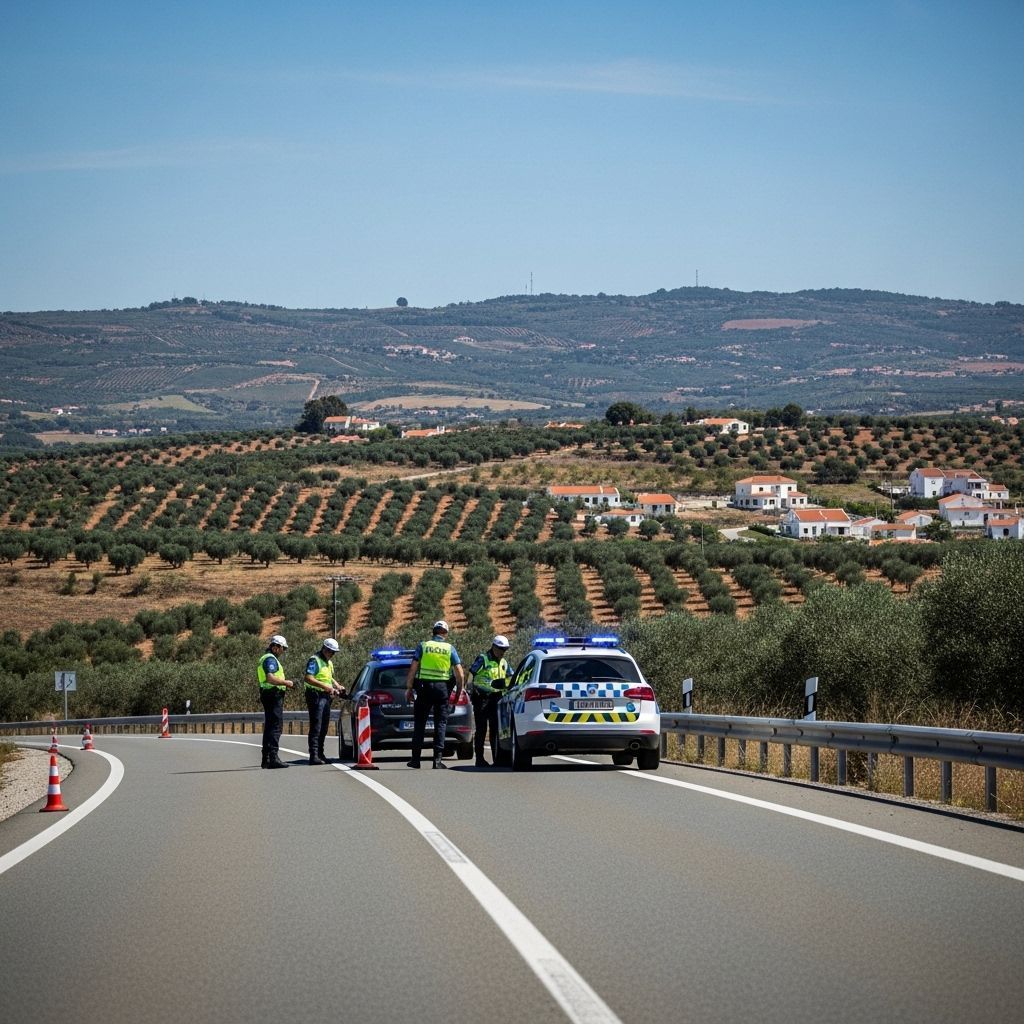
Both the Portugal National Republican Guard (GNR) and Portugal Public Security Police (PSP) operate under a shared community policing framework called "Support 65 – Seniors in Security." The program abandons traditional reactive models—waiting for crime reports—in favor of direct prevention contact.
The PSP's parallel campaign, "Solidarity Has No Age," produced measurable outputs over a decade of operation: 38,902 individual crime prevention encounters, 9,427 identified risk situations, and 10,506 referrals to social support agencies. Rather than uniform enforcement, officers conduct home vulnerability assessments, recommend targeted security improvements (reinforced doors, visible locks, motion-sensor lighting), establish regular check-in protocols for isolated residents, and document warning signs.
The GNR, which operates primarily across rural and lower-density regions where isolation compounds vulnerability, emphasizes awareness sessions targeting fraud prevention. The organization provides systematic training on modern scam tactics—impersonation of bank officials, tax authorities, or even grandchildren in manufactured emergencies. In June 2026, the GNR intensified awareness initiatives in municipalities with high elderly populations, teaching residents to verify caller identity through independent contact, recognize unsolicited financial requests, and report suspicious activity without delay.
This policing model differs fundamentally from traditional crime-fighting. Rather than solving crimes after they occur, officers aim to prevent victimization through environmental assessment and relationship-building. The approach requires different officer training, accountability metrics focused on prevention rather than arrest rates, and patience—outcomes manifest slowly and invisibly.
Community Infrastructure: Beyond Policing Alone
The APAV-Gulbenkian Foundation's "Portugal Older" project complements law enforcement with specialized training infrastructure. The initiative educates caregivers—both family members and professional staff—to recognize physical and behavioral abuse indicators: unexplained injuries, sudden weight loss, unusual fear responses, abrupt changes in financial behavior, or deteriorating hygiene despite evident self-care capacity.
The Seniorsafe program, meanwhile, conducts detailed facility assessments of private residences, care facilities, and day centers, recommending modifications aligned with senior safety: non-slip flooring to prevent falls, accessible bathroom fixtures, emergency communication systems, adequate heating and lighting, medication management systems. These ostensibly routine improvements carry material safety benefits—falls alone account for significant hospitalization among Portuguese elderly, and inadequate lighting increases fall risk substantially.
The European Comparison
Portugal's institutional response reflects broader European trends toward elder protection, though comparative performance suggests Portugal has not yet achieved meaningful reduction in victimization rates.
France operates the ALMA network (Allô Maltraitance Personas Agées), an extensive system of call centers staffed by trained volunteers—many of them retirees—that covers 75% of the nation and addresses approximately 5,000 cases annually. The model prioritizes accessibility: seniors can reach trained responders through a simple phone call without navigating complex bureaucratic processes. France has also launched strategic committees focused on reducing elder isolation and promoting civic participation.
Spain extended protections originally designed for women and minors to encompass elder abuse through its Organic Law 1/2004 framework, creating legal pathways parallel to domestic violence provisions and establishing integrated support mechanisms.
United Kingdom research demonstrates that while seniors experience lower overall crime rates than younger populations, they face disproportionate exposure to specific offense categories: financial exploitation, caregiver abuse, and isolation-linked crimes. This distinction shapes policy design—generic crime prevention often misses elder-specific vulnerabilities.
Germany operates specialized correctional facilities focused on medical care and social reintegration for elderly inmates, addressing a different criminology axis: how to manage the aging prison population rather than prevent elder victimization.
Portugal's approach—combining community policing, legislative innovation, and coordinated interagency action—aligns with European trends prioritizing prevention over post-incident response. The inclusion of crimes against elderly persons in priority prevention lists (Laws 55/2020 and 51/2023) signals institutional recognition of the problem's demographic scale.
The Problem With Incomplete Visibility
The near-certainty that crime figures undercount actual victimization creates a secondary challenge: policy decisions based on incomplete data tend to miss scale and patterns. If reported victimization represents only a portion of actual harm, annual cases could significantly exceed the 44,000 officially recorded. This gap has practical resource implications. If policing departments budget for the official figure but actual need is substantially higher, prevention and victim support capacity becomes undersized from inception.
Prosecution faces parallel constraints. Cognitive decline, fear, and trauma can render elderly witnesses unreliable in courtroom testimony, complicating prosecution of family members despite strong circumstantial evidence. Portuguese legal reform has begun emphasizing objective evidence standards—financial records, institutional documentation, medical assessments—rather than victim testimony alone. This represents necessary evolution in a system where conviction depends not on what victims remember or will say, but on what documents demonstrate actually occurred.
Practical Guidance for Residents and Families
For people over 65 or those providing care for aging relatives, immediate priorities center on property crime prevention: door and window reinforcement, systematic caller verification protocols, skepticism toward unsolicited contact from financial or government institutions, and verification of service personnel identity before granting home access.
Modern fraud schemes employ sophisticated social engineering—impersonating authority figures or family members—to overcome natural caution. Seniors unfamiliar with digital security protocols become accessible targets. Family members should establish protocols: a designated family member as a verification contact for unsolicited requests, regular financial account monitoring together, and documented authorization for any significant transactions.
Families navigating caregiving strain face uncomfortable but necessary conversations. Adult children assuming responsibility for aging parents may experience psychological stress that escalates into verbal abuse or financial control. Long-term spousal relationships sometimes deteriorate into patterns of coercion or care withholding as health declines. Recognizing these risk factors and accessing respite care, counseling, or shared caregiving arrangements can materially reduce abuse likelihood.
Need Support? Contact APAV's national helpline at 116 006 for confidential guidance, resource referral, and legal support. The line operates throughout Portugal with trained personnel familiar with elder-specific vulnerabilities and intervention pathways. Services are available to all residents.
What Success Would Look Like
Whether 2025 represents a baseline for future decline or continued escalation depends on sustained enforcement consistency, adequate funding for prevention infrastructure, and political commitment extending beyond current legislative cycles. The Statute of the Elderly provides expanded intervention tools, but courts and prosecutors must embrace the law's emphasis on proactive protection rather than punitive response alone.
Demographically, Portugal faces decades of continued aging. The proportion of residents over 65 will climb steadily, potentially surpassing 26% by 2040. Whether crime against this population continues rising at the current rate or begins to stabilize will signal whether Portugal's institutional response has achieved meaningful traction or merely delayed a deeper structural problem. The challenge is not that effective solutions remain unknown—most functional European elder protection systems exist and operate visibly—but rather whether Portugal sustains the funding, political commitment, and cultural shift necessary to implement them consistently across urban, suburban, and rural contexts where isolation patterns, family structures, and vulnerability differ significantly.
The institutional machinery is now in place. Implementation fidelity and resource adequacy will determine whether the 30% victimization increase represents the crisis point that sparked reform or merely the beginning of a trajectory that continues upward.