Portugal's first-quarter economy expanded at 2.3% on an annual basis, but the headline masks a troubling structural tension that will define how residents and investors navigate the remainder of 2026. The Portugal National Statistics Institute confirmed the year-on-year figure, yet the quarter-on-quarter reading showed zero growth—a stagnation that reflects a widening gap between domestic resilience and external vulnerability. This divergence matters because it signals where real pressures lie for households, businesses, and policy officials seeking room to maneuver.
Why This Matters
• Domestic engines firing, but external demand collapsing: Investment and consumer spending are holding up, but imports are outpacing exports, draining resources and amplifying foreign-exchange pressure.
• Storm and geopolitical damage shrunk Portugal's fiscal buffer: Over €2 billion in damages plus energy-price spikes have forced the government to abandon surplus targets and shift to a balanced budget, leaving little room for economic stimulus.
• The PRR funding peak arrives this year—then tapers sharply: 2026 is the final year of maximum European funding leverage; after this, public investment support diminishes significantly, requiring the economy to run on weaker fundamentals.
The Domestic-External Divergence Explained
The statistical picture reveals two separate economies working at cross-purposes. Within Portugal's borders, conditions look solid. Investment accelerated markedly in the first quarter, propelled by public spending tied to the EU Recovery and Resilience Plan (PRR). Private consumption also gathered pace, bolstered by government measures including IRS tax relief and pension increases that placed additional cash in household pockets. Comparing Q1 to Q4 2025, domestic demand swung decisively into positive territory after spending softly in the prior quarter.
The external picture tells the opposite story. Net foreign demand deteriorated significantly, with goods and services imported into Portugal rising faster than sales abroad recovered. The shift from the previous quarter was particularly stark: where external demand had contributed positively late last year, it now subtracts from total growth. This inversion of the trade dynamic, occurring precisely as global economic momentum slowed, indicates that Portuguese exporters are bumping against a wall of weak European demand.
For people living and working in Portugal, this split carries tangible consequences. Rising import volumes—driven by elevated energy costs stemming from Middle East friction and higher global commodity prices—mean businesses pass along costs to consumers. Fuel, utilities, raw materials, and finished goods all grow more expensive when import bills climb. Meanwhile, the stagnation in export growth suggests firms selling abroad are getting squeezed by sluggish demand across the eurozone. The European Commission expects the currency bloc to grow just 0.9% in 2026, a pace that offers little oxygen for companies dependent on sales to Spain, France, Italy, or other neighboring markets.
The Bank of Portugal seized on this weakness and cut its full-year forecast to 1.8% in March, a reduction that signals central bank officials perceive structural risks exceeding what government economists acknowledge. This gap between official projections and central bank assessments is worth monitoring; it typically indicates institutional concern about downside risks.
How Two External Shocks Rewired 2026
Two sudden, severe disruptions forced the government to recalibrate its economic outlook midway through the year. The first arrived in early January: extreme storms battered Portugal in January and February, inflicting damage estimated above €2 billion—equivalent to roughly 0.6% of annual national output. Flooded agricultural land, shattered infrastructure, disrupted supply chains, and shortfalls in tax collection combined to leave the treasury scrambled. The government responded with emergency relief packages and maintained a discount on the Petroleum Products Tax to cushion household fuel bills, but the fiscal cushion that Portugal had accumulated began to erode visibly.
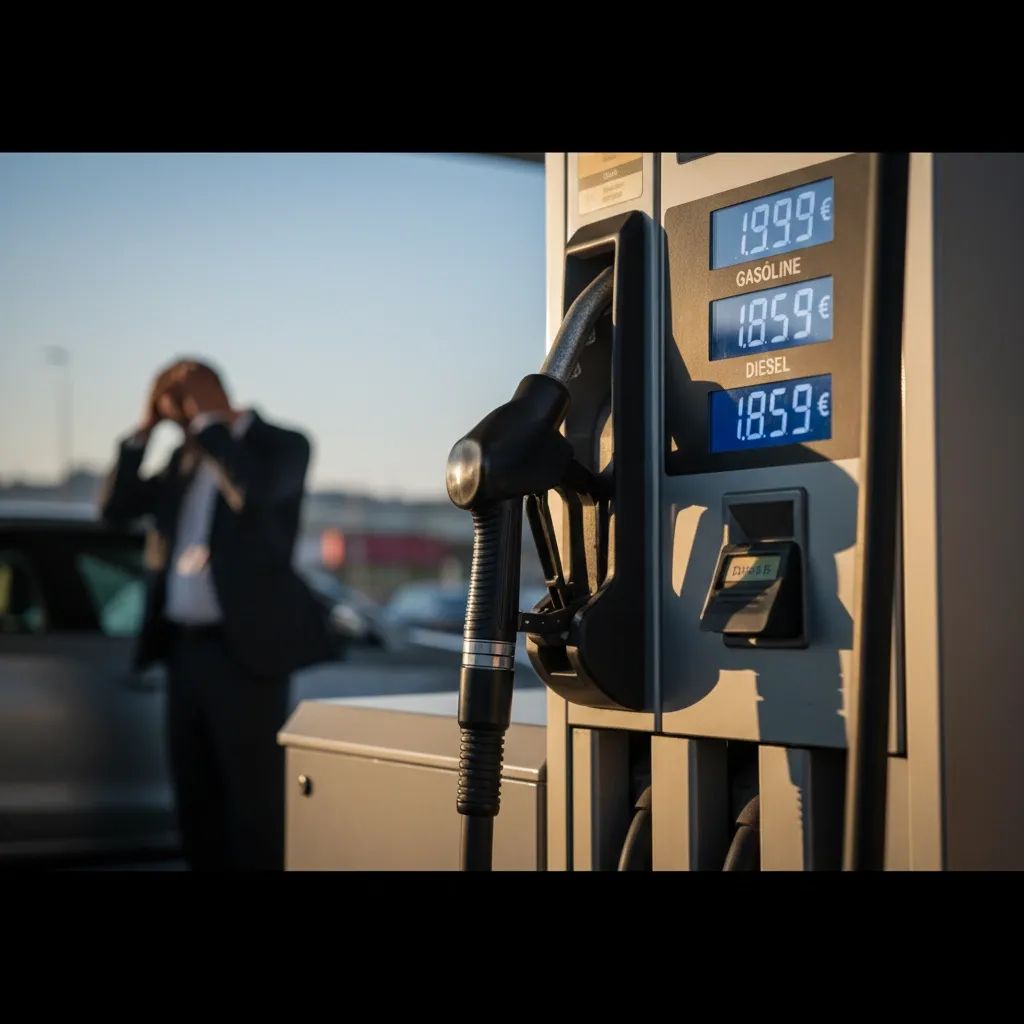
The second shock was less visible but equally disruptive: escalating geopolitical tension in the Middle East, particularly involving Iran, triggered an immediate spike in energy prices. Crude oil and natural gas futures surged as markets priced in supply risk. For Portugal, which imports virtually all its oil and significant natural gas volumes, the impact was immediate and severe. Utility bills climbed. Manufacturing and transportation costs surged. The central bank responded by revising its 2026 inflation forecast upward to 2.8%, a significant adjustment that translates directly into reduced purchasing power for workers and pensioners over the next year.
These two disruptions alone justified the government's formal downgrade of growth expectations from 2.3% to 2.0%. But together they also exposed a deeper vulnerability: Portugal remains structurally dependent on external price movements and geopolitical stability it cannot control. When both deteriorate simultaneously, the economy absorbs pressure rapidly.
Where Investment Still Offers Opportunity
The one unambiguous bright spot in Portugal's current tableau is capital formation. Investment growth in Q1 was notably sharp, underpinned almost entirely by public spending drawn from PRR allocations. This matters because it carries an embedded deadline. The Recovery and Resilience Plan reaches its execution peak in 2026, a critical threshold for contractors, developers, engineers, and suppliers. Construction activity is forecast to expand 4.4% for the full year, well above the overall growth rate, reflecting the concentration of infrastructure, energy-transition, and transportation projects underway.
For anyone tracking real estate cycles, infrastructure bids, or property development timelines in Lisbon, Porto, or secondary cities, the implication is clear: 2026 represents the final year of maximum EU funding concentration. After this year, the PRR's economic stimulus effect diminishes sharply as the program transitions to its final administrative phases and remaining funds disperse. Businesses or investors with projects eligible for public financing or EU co-support should understand that the current window—characterized by robust capital deployment and competitive bidding environments—is closing. Post-2026, public investment will normalize to lower baseline levels, reducing subsidies and making marginal projects less viable.
Private consumption, the other pillar of domestic demand, has remained resilient despite external headwinds. The labor market remains a genuine strength. Unemployment is projected to remain near 6%, with actual labor shortages in construction, hospitality, and service sectors creating upward pressure on wages. This dynamic—tight labor supply paired with government tax breaks and pension support—has sustained household spending even as energy inflation erodes real wages for many workers.
Why Exporters Face a Narrowing Corridor
Net external demand has shifted decisively negative, and this trend accelerated during Q1 as trade patterns solidified. Portuguese manufacturers, agricultural exporters, and service providers are contending with a eurozone economy that is barely accelerating. When neighboring countries—Spain, France, Italy, Germany—are all growing slowly, demand for Portuguese goods and services naturally contracts. The phenomenon is particularly acute for export-dependent small and medium enterprises without domestic revenue cushions to absorb soft international markets.
The calculation for traders and manufacturers is becoming precarious. Elevated import costs (energy, raw materials) collide with weak export pricing power, squeezing margins. A business that relies on selling 40% of output abroad while importing 30% of inputs is now facing cost inflation on the purchase side and pricing pressure on the sales side—a combination that erodes profitability quickly.
Some forecasters expect temporary relief. The European Commission anticipates that reconstruction activity following storm damage will provide a modest growth jolt in the second half of 2026, as repair projects accelerate and public spending peaks. But this is fundamentally cyclical support, not structural improvement. Once reconstruction winds down, the economy must compete again in a sluggish European context without the artificial stimulus of recovery spending.
Inflation Is Now the Household Pressure Point
The upward revision of inflation to 2.8% for 2026 represents a material shift in purchasing power dynamics for residents. While this figure may sound modest by historical standards, it carries real consequences when wage growth is projected to remain below 2.5% for most workers. Pensioners on fixed income are among the hardest hit, as their nominal purchasing power erodes month by month without corresponding income adjustments. Energy discounts remain in place, but they mask rather than eliminate the underlying cost pressure.
The government has constrained fiscal room to expand subsidies because of storm-related expenditures. This means household relief measures are unlikely to broaden; if anything, they risk being narrowed as budget constraints tighten. Workers should anticipate that real income—purchasing power adjusted for inflation—will likely decline modestly over the next year unless they negotiate wage increases tied to actual inflation rates rather than the broader consumer-price index.
The Institutional Divergence on 2026 Growth
No consensus exists among Portuguese and European forecasting bodies on where growth will ultimately land. The Bank of Portugal projects 1.8%, the European Commission estimates 1.7%, the IMF forecasts 1.9%, KPMG suggests 2.1%, while the government's official position remains 2.0%. More pessimistic outlooks from the Confederation of Portuguese Business and ISEG place the floor at 1.5%, citing persistent energy costs and the possibility of additional interest-rate moves by the European Central Bank.
This scatter—ranging from 1.5% to 2.1%—reflects genuine uncertainty about three critical variables: the path of energy prices, the trajectory of eurozone interest rates, and the speed of post-storm reconstruction work. Each assumption produces a materially different outcome. For residents and business owners, this underscores the importance of planning conservatively rather than assuming the government's 2.0% or KPMG's 2.1% estimates will prove accurate.
Long-term outlooks provide additional context. The central bank expects growth to slow to 1.6% in 2027 before recovering modestly to 1.8% in 2028, assuming energy markets stabilize and no fresh geopolitical shocks emerge. Inflation is projected to gradually drift toward the ECB's 2% target by 2028, providing some eventual relief to household budgets. These projections are reasonable but conditional on assumptions that may not hold if Middle East instability persists or energy markets remain volatile.
Practical Implications for Portuguese Residents and Investors
The economic trajectory now visible in the data creates a three-tier reality for different constituencies. For salaried workers and households, the near-term environment is one of real income compression. Inflation exceeding wage growth means taking home less purchasing power each month. Those dependent on fixed income—retirees foremost—should scrutinize their household budgets now, lock in any favorable financing arrangements, and avoid large purchases that could be deferred. Employment prospects remain favorable for those in tight labor markets (construction, healthcare, hospitality, technology), meaning workers with skills in these sectors retain genuine negotiating leverage. Taking advantage of that leverage now, while it exists, is prudent.
For property and commercial investors, Portugal remains an attractive market. The country ranks 6th among European real estate destinations for 2026, with commercial property investment volumes expected to reach approximately €2.4 billion. Lisbon's luxury residential segment is projected to appreciate 4.5% in 2026, underpinned by stable financing conditions and sustained international buyer interest. However, the deteriorating fiscal position (debt-to-GDP ratio of 87.5%, declining budget surplus), combined with political constraints on new spending, means future government incentives are less certain than in recent years. Property investors should not assume policy support will bail out marginal ventures. Strong assets in prime locations will perform; speculative or secondary locations face greater risk.
For exporters and import-dependent businesses, the environment is considerably harsher. If eurozone growth disappoints further—entirely plausible given the narrow 0.9% projection—firms reliant on external sales will encounter severe headwinds. Conversely, companies dependent on imported inputs must budget for elevated commodity costs and potential supply-chain friction tied to Middle East instability. Now is the time to explore hedging strategies, lock in long-term supply contracts at current prices, and recalibrate revenue projections downward to reflect weak external demand.
The Narrowing Window Ahead
Portugal's economy is fundamentally sound and will likely expand in 2026, but the expansion is losing momentum, the policy cushion is thinning, and external vulnerabilities have sharpened. The EU Recovery and Resilience Plan that has sustained domestic investment reaches its peak this year; after 2026, the economy must generate growth from its own productive capacity rather than from windfall European funding. This transition will prove challenging in a eurozone environment where average growth is expected to languish below 1%.
Residents should approach the next 12 months with pragmatism rather than optimism. Locking in borrowing costs now, while interest rates remain accessible, is sensible financial planning. Monitoring energy surcharges and questioning inflated utility bills is justified. Recognizing that wage growth may lag inflation over the medium term should inform savings and investment decisions. For businesses, 2026 is the final year to maximize exposure to European-funded infrastructure plays; that door closes when the PRR funding cycle concludes. After that, Portugal reverts to what it fundamentally is: a small, open economy dependent on external trade and vulnerable to global shocks, albeit one with genuine competitive strengths in tourism, skilled labor availability, and relative political stability.
The numbers confirm that growth will happen. What they conceal is that Portugal is operating within an increasingly constrained corridor, with fewer policy levers and less room for economic missteps. The prudent posture for individuals and businesses is one of defensive planning—not panic, but sober realism about the limits of support and the weight of external pressures now pressing against the economy.