
The Portugal Ministry of Culture has officially launched its Património Cultural 360® portal, a €14.4M digital gateway that transforms how residents, tourists, and students explore the nation's historical treasures without leaving home. Whether you're planning weekend trips, researching local history, or exploring Portugal's heritage without travel costs, this free platform serves as a comprehensive cultural resource. The platform—accessible at 360.patrimoniocultural.gov.pt—represents the country's largest-ever cultural digitization initiative, funded entirely by the Recovery and Resilience Plan (PRR).
Why This Matters
• Free, unlimited access: Over 61,000 digitized cultural assets available 24/7, from jewelry to multi-ton sculptures.
• 67 immersive virtual tours spanning 90 heritage sites in 45 municipalities across 17 districts.
• 232 "National Treasures" now viewable in high-resolution 3D—no admission fees, no queues.
• Searchable by theme, location, or historical period, making research and trip planning seamless.
What's Actually Inside the Portal
The platform offers more than a simple photo gallery. Users can explore digitized objects using high-resolution photography, photogrammetry, laser scanning, and 3D modeling—technologies typically reserved for conservation labs. A small gold brooch from the 16th century shares digital space with monumental stone carvings, all rendered in explorable detail.
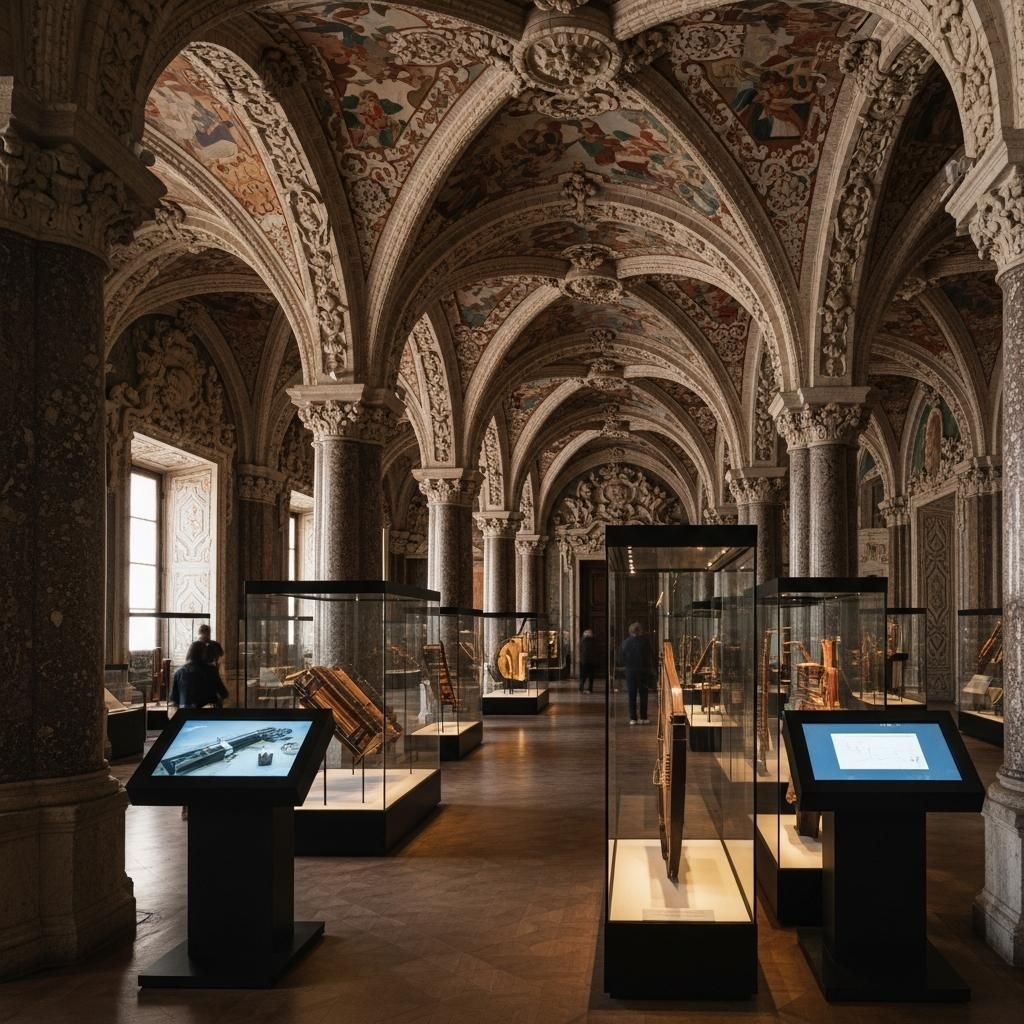
Among the 67 virtual tours, visitors can navigate the Batalha Monastery, walk through the Évora Cathedral, examine the gilded libraries of the Mafra National Palace, peer into the fortifications at Sagres, or browse the collection at the National Music Museum. The tours are designed to work on standard browsers, meaning no expensive VR headsets are required—though the platform is compatible with immersive devices for those who have them.
Museum directors, monument curators, and archaeological site managers selected the items for digitization based on cultural significance, condition, and public interest. Every classified "National Treasure" was prioritized, alongside objects of varying scales, materials, and typologies—from garments and paintings to photographs and statues weighing several tons.
How It Compares to Europe's Museum Tech
Portugal joins a growing club of European nations investing heavily in cultural digitization. France's Louvre recorded 10.5M virtual visitors between March and May 2020 alone—nearly matching its annual physical attendance. The Vatican Museums offer multi-language 360º tours of the Sistine Chapel, while the Prado in Madrid lets users zoom into Velázquez and Goya masterpieces at resolutions unavailable to the naked eye.
The Europeana platform, funded by the European Union's Connecting Europe Facility since 2008, aggregates digital collections from thousands of archives and museums across the continent. The European Commission has also launched a €110M Collaborative Cloud for Cultural Heritage, aiming to standardize digitization and make advanced tools available to smaller institutions—only 30% to 50% of European collections have been digitized so far.
Portugal's initiative stands out for its national scope and speed. The Património Cultural 360 project exceeded its original targets, producing not only the 61,000+ digitized assets but also 13 documentary films and engaging 23 partner institutions. The investment of €14.4M from the PRR positions the platform as a significant piece of the country's €243M digital and cultural modernization budget.
What This Means for Residents and Researchers
For those living in Portugal, the portal offers practical advantages beyond nostalgia. International residents navigating Portuguese culture can use the platform as a low-cost way to understand regional traditions before attending local festivals. Parents can preview historical sites with children before committing to day trips. Remote workers exploring different Portuguese cities can research local heritage to inform relocation decisions.
Students researching regional history can access primary-source objects from home. Teachers can build lesson plans around 3D models of artifacts. Tourists planning trips can preview sites before committing to travel, potentially shifting demand away from overcrowded destinations like Lisbon and Porto toward lesser-known municipalities—45 of them are represented on the platform.
The technology also supports decentralized tourism, a policy goal for the Portugal Tourism Board as the sector projects 34M guests and 83M overnight stays by the end of 2026. By promoting digital access to heritage in smaller regions, the portal indirectly alleviates pressure on major cities while spotlighting rural and coastal heritage sites that lack the marketing budgets of national monuments.
Culture Minister Margarida Balseiro Lopes described the platform as "a project that places knowledge, history, and national identity within reach of everyone, regardless of geographic location, while reinforcing preservation and transmission of this legacy to future generations."
The Tech Behind the Pixels
Creating the portal required significant logistical coordination. Each object was photographed or scanned using laser scanning rigs (equipment that captures precise 3D measurements) and photogrammetry drones (aerial cameras that build 3D models from multiple photos), generating massive datasets that demand robust storage and long-term maintenance. High-resolution 3D models of fragile artifacts—some centuries old—had to be captured with minimal physical contact, a process that consumed months per site.
The resulting data files are large and complex, raising questions about digital obsolescence. Technology that seems cutting-edge today may be incompatible with future browsers or operating systems, requiring ongoing updates and migrations. European best practices, endorsed by organizations like ICOMOS and UNESCO, emphasize the need for standardized formats and archival protocols to ensure digitized heritage survives as long as the physical objects it represents.
Portugal's platform uses widely adopted file types and is built on open-access principles, minimizing vendor lock-in and increasing the likelihood of long-term accessibility. Still, the Ministry of Culture has not yet published sustainability roadmaps or user engagement statistics—expected after the platform's first operational quarter.
Accessibility Gaps and the Digital Divide
Despite its ambitions, the portal cannot fully replace in-person visits. High-speed internet remains unevenly distributed across Portugal, particularly in rural areas where some of the featured heritage sites are located. According to ANACOM data, significant portions of rural Portuguese households—especially in interior regions like Alentejo and Trás-os-Montes—still lack high-speed internet access, which could limit platform usage precisely where heritage site density is highest. Older residents and those without digital literacy may struggle to navigate the interface, even though it requires only a standard web browser.
The platform does not yet offer augmented reality (AR) features or real-time guided tours, functionalities available on some international platforms. There are also no published plans for multilingual support beyond Portuguese, which could limit its utility for the growing expat community and international researchers.
What Comes Next
The platform's content became available in April 2026 through temporary sites, with the official Património Cultural 360® portal launching in July 2026. No official user data has been released since the official launch, but the Ministry of Culture is expected to publish engagement metrics later this year. Early anecdotal feedback from educators and tour operators suggests strong interest, particularly in the search-by-location feature, which allows users to build custom virtual itineraries by region.
Future expansions could include additional heritage sites, integration with Google Arts & Culture, or partnerships with universities for academic research access. The platform's success will depend not only on its technical performance but also on how effectively it is promoted to schools, tourism agencies, and cultural organizations.
For now, the Património Cultural 360® portal offers Portuguese residents and global audiences a free, comprehensive digital archive of the nation's movable heritage—a resource that balances preservation, education, and public access in a single interface.