The Portugal Department of Central Investigation and Penal Action (DCIAP) has formally charged Ricardo Leitão Machado—the brother-in-law of Cabinet Minister António Leitão Amaro—as the primary target of a sweeping corruption probe into the nation's firefighting helicopter contracts. In May 2026, the second phase of the investigation, dubbed Operation Control Tower II, resulted in 11 raids across Lisbon, Porto, and Faro, netting four new defendants and exposing a cartel that allegedly siphoned €100M from state coffers through rigged public tenders for aerial firefighting services since 2022.
Why This Matters
• Public funds at risk: Investigators suspect companies colluded to inflate bids for aerial firefighting equipment, forcing the state into costly emergency contracts that diverted resources from critical wildfire response capabilities.
• High-level connections: The main suspect is married to the sister of the Portugal Minister of the Presidency, raising questions about access to insider information on government procurement processes.
• Criminal charges include qualified fraud, tax fraud, influence peddling, active and passive corruption, abuse of power, and criminal association—penalties that could exceed a decade in prison.
• Political context: The case emerges as Portugal faces heightened scrutiny of elite conflicts of interest following government instability and prior scandals involving ministerial-level figures.
Who Is Ricardo Leitão Machado?
Leitão Machado, 45, rose to prominence through his role as secretary-general of the Portugal Forest Producers Federation beginning in 2008, a position that ended in controversy when successors accused him of misusing public funds and forging signatures. Though prosecutors archived the case, the episode signaled early legal vulnerabilities.
By the early 2010s, Leitão Machado relocated to Angola, where he founded Aenergy, an electricity firm that in 2016 secured an €800M contract with Angola's Ministry of Transport. When the government changed hands, Angolan authorities accused him of fraud worth €200M and froze his assets. According to investigative outlet Maka Angola, he amassed claims exceeding €450M during his half-decade in Angola—wealth he repatriated upon returning to Portugal in 2022. In that same year, he acquired Vale Feitoso in Idanha-a-Nova, the country's largest private estate and former holding of the disgraced Espírito Santo banking family. That acquisition positioned him as one of Portugal's largest private landowners and coincided with the alleged helicopter cartel's inception.
How the Helicopter Cartel Operated
The Portugal Judicial Police allege that a network of aviation firms—Helibravo, Heliportugal, HTA Helicópteros, and Gesticopter—formed a cartel beginning in 2022 to manipulate at least 30 public tenders for the Special Rural Firefighting System (DECIR) covering 2025–2028. Investigators say the scheme unfolded in three stages:
Bid-rigging: Companies exchanged privileged information and pre-agreed which firm would submit the winning proposal, often attaching inflated technical requirements.
Artificial scarcity: By boycotting legitimate tenders or ensuring they failed, the cartel created supply crises as wildfire season approached.
Emergency procurement: Pressed for time, the Portugal Air Force and the National Civil Aviation Authority (ANAC) resorted to direct-award contracts at premium prices, handing control and profit margins back to the same companies.
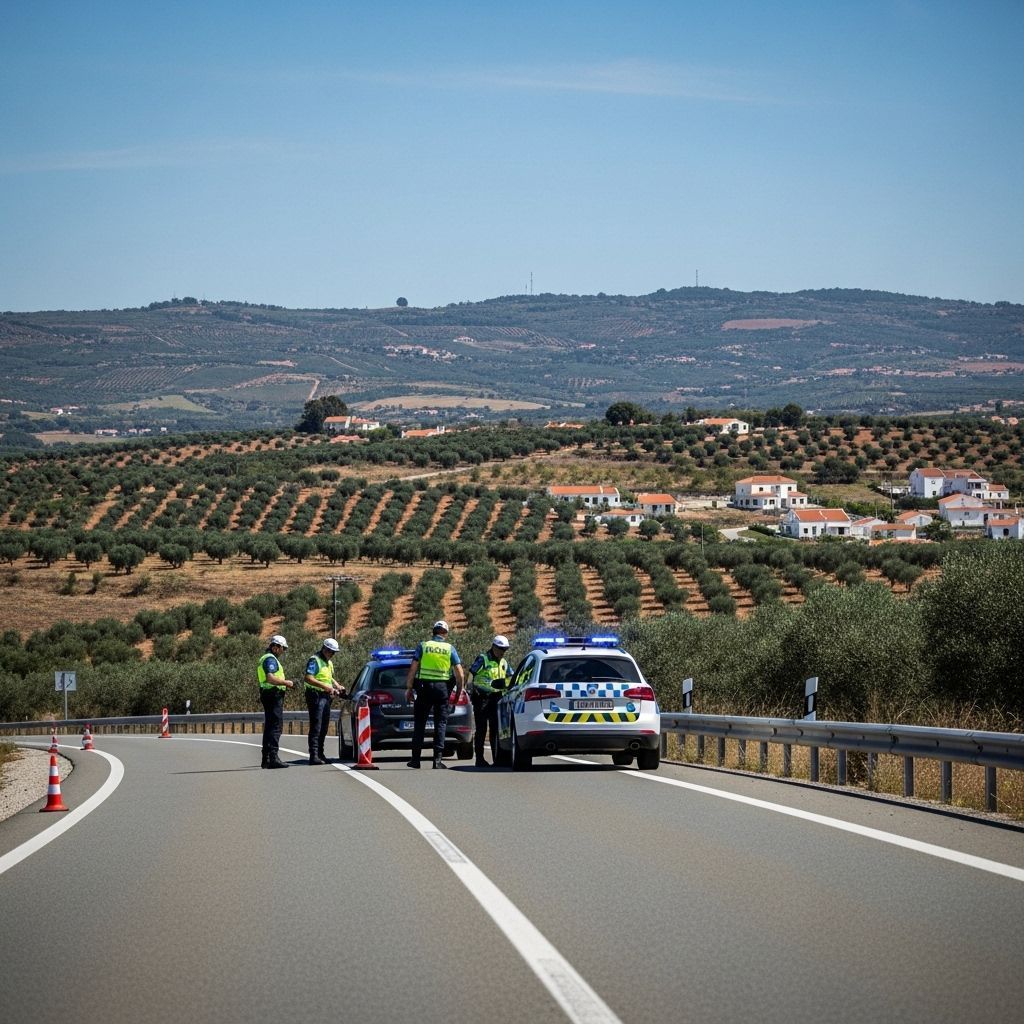
Police carried out 11 searches in May 2026 targeting Leitão Machado's Restelo residence, law offices, and the headquarters of Gesticopter and its holding company Gestifly. Both are formally owned by Leitão Machado, though investigators suspect he exercised de facto control well before he officially acquired the shares. The minister's brother served as Gesticopter's operations director, creating a direct family link between the company and the ministerial office.
New Defendants and Prior Charges
Alongside Leitão Machado, authorities charged his father José Filomeno Machado—who sat on the boards of his son's firms—and lawyer Carlos Carvalho e Cruz, who managed multiple corporate entities linked to the family's Angola ventures. A fourth defendant, a legal entity, remains unnamed. These four join seven individuals and five companies charged in the first phase in May 2025, when police raided the Portugal Air Force headquarters in Alfragide and aviation firms across the country.
The Portugal Public Prosecutor's Office confirmed the case remains under judicial secrecy but listed suspected crimes: qualified fraud, qualified tax fraud, influence trafficking, active and passive corruption, abuse of power, and criminal association. Convictions on the most serious charges can carry sentences exceeding 10 years and asset forfeiture.
Political Fallout and Ministerial Defenses
Minister António Leitão Amaro issued a swift denial, telling the Lusa news agency his office "had no intervention in public procurement procedures for helicopters" and "no involvement or relation to the criminal investigation." His statement described any association with the case as "slanderous" and insisted it is "inadmissible to implicate or blame someone for family relationships."
Yet the timing is politically sensitive. In March 2025, Prime Minister Luís Montenegro's minority center-right government fell after opposition parties rejected a confidence vote tied to his consultancy firm Spinumviva. Montenegro had transferred shares to his wife and children under Portugal's community property regime, but the Civil Code invalidates such transfers, leaving him legally exposed. Prosecutors investigated whether casino operators who held state concessions paid the firm while Montenegro held office. That scandal set a new benchmark for conflicts of interest, and opposition lawmakers are now drawing parallels to the current case—suggesting that ministerial families cannot be exempted from accountability even when indirect connections are claimed.
Interior Minister Rui Rocha, speaking at the presentation of the DECIR firefighting system in Figueira de Castelo Rodrigo (Guarda district), told journalists the government is "monitoring the news" but called it "premature to take any position" before judicial conclusions. He emphasized that the Portugal Ministry of Defense oversees aerial contracting separately from ministerial portfolios.
Angola's Shadow Over the Case
The Portugal Attorney General's Office received two letters rogatory from Angola earlier in 2026 requesting cooperation on matters involving Leitão Machado, though officials declined to elaborate. Angolan prosecutors claim he defrauded the state through turbine and railway-carriage contracts, one involving falsified documents tied to a General Electric representative later convicted in the United States. Maka Angola accused him of launching "reckless and unfounded lawsuits abroad" in a "performance of self-victimization."
Whether Portugal will extradite evidence or testimony remains unclear, but the cross-border dimension complicates Leitão Machado's legal defense and raises questions about the origin of his €450M fortune.
What This Means for Residents
For taxpayers, the immediate impact is financial: the alleged cartel controlled contracts worth €100M earmarked for wildfire response—a service critical to rural safety and property protection. Inflated helicopter leases divert funds from equipment upgrades, pilot training, and forest management. If convictions follow, the state may recover damages and restructure procurement to prevent future manipulation.
Politically, the case tests whether Portugal will enforce anti-corruption standards even when elite family ties are involved. The 2018 TVDE Law (Law 45/2018) already set a precedent for equal access in transport services, and public procurement law—governed by the Public Contracts Code—imposes strict penalties for bid collusion. Legal experts note that Article 7 of Law 45/2018 and related statutes treat privileged-information abuse as a felony, not a regulatory infraction.
For foreign investors and expats, the investigation signals both risk and reform. Portugal's judicial apparatus is demonstrating independence, but the concentration of wealth among a small circle—echoing the Espírito Santo dynasty—suggests systemic vulnerabilities. Residents should monitor whether this case prompts legislative changes to beneficial-ownership disclosure or public-tender oversight.
The Broader Pattern
Ricardo Leitão Machado's trajectory mirrors that of other figures who leveraged political proximity and capital mobility to amass fortunes in jurisdictions with weaker oversight, then repatriated wealth to acquire trophy assets. The Vale Feitoso estate purchase—covering thousands of hectares—positions him as one of Portugal's largest private landowners. Expresso compared him in 2025 to fallen banker Ricardo Salgado, calling him "the new owner of a piece of everything."
That comparison is not merely rhetorical. Like Salgado, Leitão Machado sits at the nexus of corporate networks, family ties to power, and opaque financial flows. Unlike Salgado, whose downfall centered on the Banco Espírito Santo collapse, Leitão Machado's legal exposure spans three jurisdictions—Portugal, Angola, and the United States—and involves both public corruption and private contract disputes.
Next Steps in the Investigation
The DCIAP has not announced a trial date, and the case remains under seal. Defense lawyers are expected to challenge the admissibility of evidence gathered from Angola, arguing that differences in legal standards could taint testimony. Prosecutors will likely seek financial forensics to trace payments between cartel members and possible intermediaries within government agencies.
Meanwhile, opposition parties are demanding a parliamentary inquiry into procurement at the Portugal Air Force and whether ministerial staff had access to tender documents. Minister Leitão Amaro's refusal to recuse himself or resign mirrors his handling of the first phase in 2025, but political observers note that public tolerance for proximity scandals has hardened since the Montenegro government's collapse.
For now, the investigation remains the domain of prosecutors and police. But with wildfire season approaching and €100M in public funds at stake, the case has become a test of whether Portugal can hold powerful actors accountable—even when they are family.