

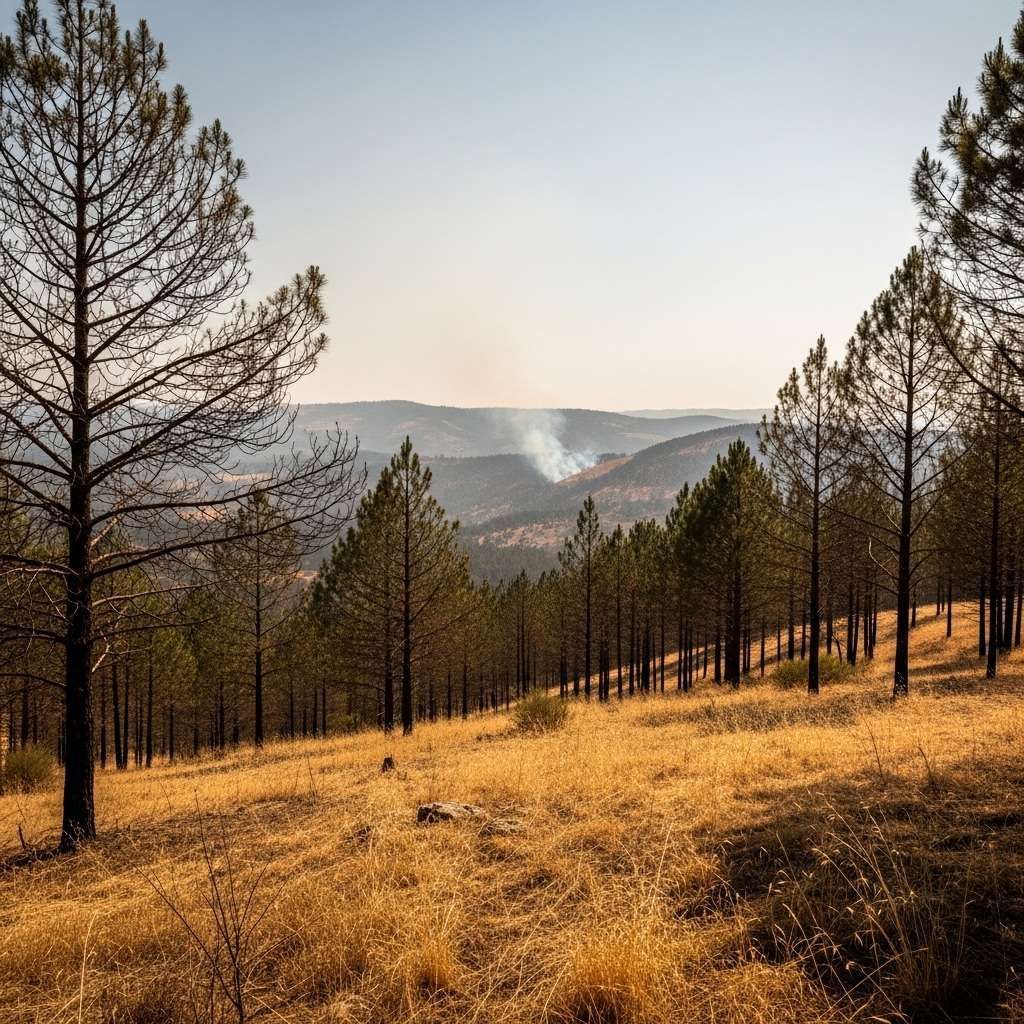
The Portugal Meteorological Institute (IPMA) has issued warnings that the country will face a severe heat wave over the coming days, with thermometers expected to climb as high as 45°C in interior regions. The Portugal National Guard (GNR) has publicly stated that "the next few days are going to be extremely difficult," while the Portugal Interior Ministry confirmed authorities are weighing "drastic measures" to prevent wildfire outbreaks, including potential bans on agricultural machinery use and open-air celebrations.
This marks the second significant heat episode to strike Portugal and the broader European continent in less than a month, with scientists linking the increasing frequency and intensity of these events directly to climate change. The critical window is forecast between June 21 and June 23, when temperatures could surpass 40°C across much of the country, accompanied by tropical nights—minimum temperatures above 20°C—and even "torrid nights" exceeding 25°C in parts of the Alentejo and the Guadiana Valley.
Why This Matters for Portuguese Residents
• Fire risk is at maximum: 23 municipalities across Bragança, Castelo Branco, Santarém, Portalegre, and Faro are already classified as maximum rural fire danger, with conditions set to worsen.
• Health alert activated: The Portugal Directorate-General of Health (DGS) has triggered its contingency plan, with authorities on high alert for heat-related illnesses.
• Potential activity bans: The Interior Ministry may prohibit machinery use, controlled burns, fireworks, and hot-air balloons—particularly during São João festivities—to mitigate ignition risks.
• Economic impact: Portugal, as part of southern Europe, faces significant economic stress from recurring extreme heat events affecting key sectors.
Interior Ministry Weighs Emergency Restrictions
In a press statement released Thursday, the Interior Ministry signaled that if forecasts continue to deteriorate, the government will impose "drastic decisions in terms of alerts and territorial measures." Officials specifically referenced the possibility of "prohibiting behaviors" that could spark fires, with a formal announcement expected by the weekend.
Ministry officials underscored the need for collective vigilance, stating that "there is no room for isolationism or every-man-for-himself thinking—only cooperation and mutual aid can protect people." Their remarks echoed a broader appeal from the GNR, which released a video urging citizens to avoid any use of open flames during the heat wave. "We usually say 'Count on Us,' but now we're saying 'We're Counting on You,'" the uniformed officer stated, emphasizing that the message bears repeating every year precisely because complacency sets in as summer approaches.
The GNR warning continued: "There will be high heat, low humidity, and dry vegetation. We don't need to spell it out further, do we? Everyone needs to make the right choice, and that choice starts with spreading the message to as many people as possible."
Portugal's Risk Map and Forecast Details
According to the IPMA, 23 municipalities were already classified under maximum rural fire risk by Friday, including inland locations such as Miranda do Douro and Mogadouro (Bragança), Castelo Branco, Proença-a-Nova, and Vila Velha de Ródão (Castelo Branco), Mação and Tomar (Santarém), and southern towns like Loulé, São Brás de Alportel, and Tavira (Faro).
Over the weekend, the fire danger classification is forecast to expand dramatically, with additional regions moving into maximum and very high categories. The peak heat period is expected to arrive Sunday through Tuesday, bringing not only daytime extremes but also minimal nighttime relief. Localized thunderstorms and rain showers remain possible in interior zones during afternoon hours, though these are unlikely to significantly reduce fire risk given the prevailing dryness.
The IPMA has also flagged the possibility of temperatures reaching 42°C or higher in specific microclimates, surpassing recent historical benchmarks. For context, Portugal's all-time temperature record stands at 47.3°C, registered in Amareleja (Beja) during the catastrophic August 2003 heat wave. More recently, Mora (Évora) recorded 46.6°C in June 2025, the highest June temperature ever measured in the country.
European Context: Multi-Country Crisis
Portugal is far from alone. Across Europe, governments from France to Spain have issued high-level heat warnings as the second wave in a month bears down on the continent.
France's national meteorological service, Météo-France, announced that several departments could be elevated to red alert—the maximum warning level. The agency described the episode as "widespread, prolonged, and intense," with conditions potentially rivaling the deadly August 2003 event. Temperatures of 40°C are forecast for much of western and central France, prompting the cancellation of outdoor music festivals and the suspension of school sports. President Emmanuel Macron called the coming days "difficult" and urged citizens to protect the elderly and vulnerable.
In Spain, authorities issued extreme heat warnings, with temperatures expected to reach 40°C in eastern regions and the Balearic Islands.
Switzerland placed the Basel region at level four out of five on its national heat alert scale, with temperatures expected to reach 37°C. In Geneva, authorities suspended classes for younger children. Germany's meteorological services warned of "strong to extreme thermal stress" across much of the country.
Health and Mortality: A Recurring Crisis
According to data published in the journal Nature Medicine, heat waves in Europe caused more than 60,000 deaths per year in 2023 and 2024. A separate analysis by The Lancet found that nearly every European region recorded increased heat-related mortality between 2015 and 2024 compared to the 1991–2000 baseline.
The World Health Organization (WHO) regional office for Europe has issued urgent calls for member states to improve heat protection measures, warning that extreme heat is no longer a seasonal anomaly but a critical public health crisis amplified by climate change. The WHO has released new guidelines urging governments to develop and implement Health and Heat Action Plans (HHAPs), which include early warning systems, public education campaigns, and targeted interventions for vulnerable populations such as the elderly, children, and outdoor workers.
Portugal's Directorate-General of Health has activated its contingency plan and issued standard recommendations: consume at least 1.5 liters of water daily, apply sunscreen, wear hats and light-colored clothing, eat light meals, take frequent cool showers, avoid strenuous outdoor activities during peak heat hours, and regularly check on elderly neighbors and relatives.
Economic Fallout: Broader Regional Impact
Heat waves across southern Europe pose significant economic challenges. Analysis indicates that extreme heat impacts key sectors including construction, agriculture, industrial operations, and logistics—all of which rely on outdoor labor. Worker productivity plummets during extreme heat, while energy demand for cooling surges, straining electrical grids and driving up costs. Infrastructure such as roads and railways can be affected by high temperatures, causing service interruptions and escalating repair bills.
What This Means for Portuguese Residents
If you live in Portugal, the next few days require heightened caution and preparation:
• Stock up on water and electrolytes: Ensure you have adequate supplies at home, especially if you live in rural or interior areas where shops may be farther apart.
• Secure outdoor spaces: Remove flammable materials from gardens, balconies, and terraces. Avoid using barbecues, power tools, or any equipment that could generate sparks.
• Plan around the heat: Schedule errands and outdoor tasks for early morning or late evening. If you work outdoors, speak with your employer about adjusted hours or additional breaks.
• Monitor official channels: Follow updates from the IPMA, GNR, and Interior Ministry for real-time alerts and possible activity restrictions.
• Check on vulnerable neighbors: Elderly residents, children, and those with chronic health conditions are at higher risk. A brief phone call or visit can be lifesaving.
• Know the signs of heatstroke: Symptoms include confusion, rapid pulse, nausea, and hot, dry skin. Seek medical help immediately if you or someone nearby exhibits these signs.
For those planning São João celebrations or other outdoor festivities, be prepared for potential last-minute cancellations or prohibitions. The government has made clear that public safety will take precedence over traditional events if fire risk remains extreme.
Long-Term Outlook and Adaptation
Scientists and public health experts agree that heat waves like the one unfolding this week are no longer exceptional—they are the new baseline. The WHO and climate researchers emphasize the urgent need for long-term adaptation strategies, including expanded urban green spaces (parks, riverside corridors, wetlands), improved building standards to enhance heat resistance, and accelerated emissions reductions to slow further warming.
Portugal and its European neighbors are investing in aerial surveillance, early warning systems, and inter-agency coordination to improve emergency response. Yet as temperatures continue to climb and heat waves arrive with increasing regularity, the question shifts from whether these events will occur to how societies will sustain productivity, health, and economic stability in a hotter world.
For now, the immediate priority is clear: stay cool, stay vigilant, and heed official warnings. The next few days will test both the resilience of Portugal's infrastructure and the collective discipline of its residents.


