
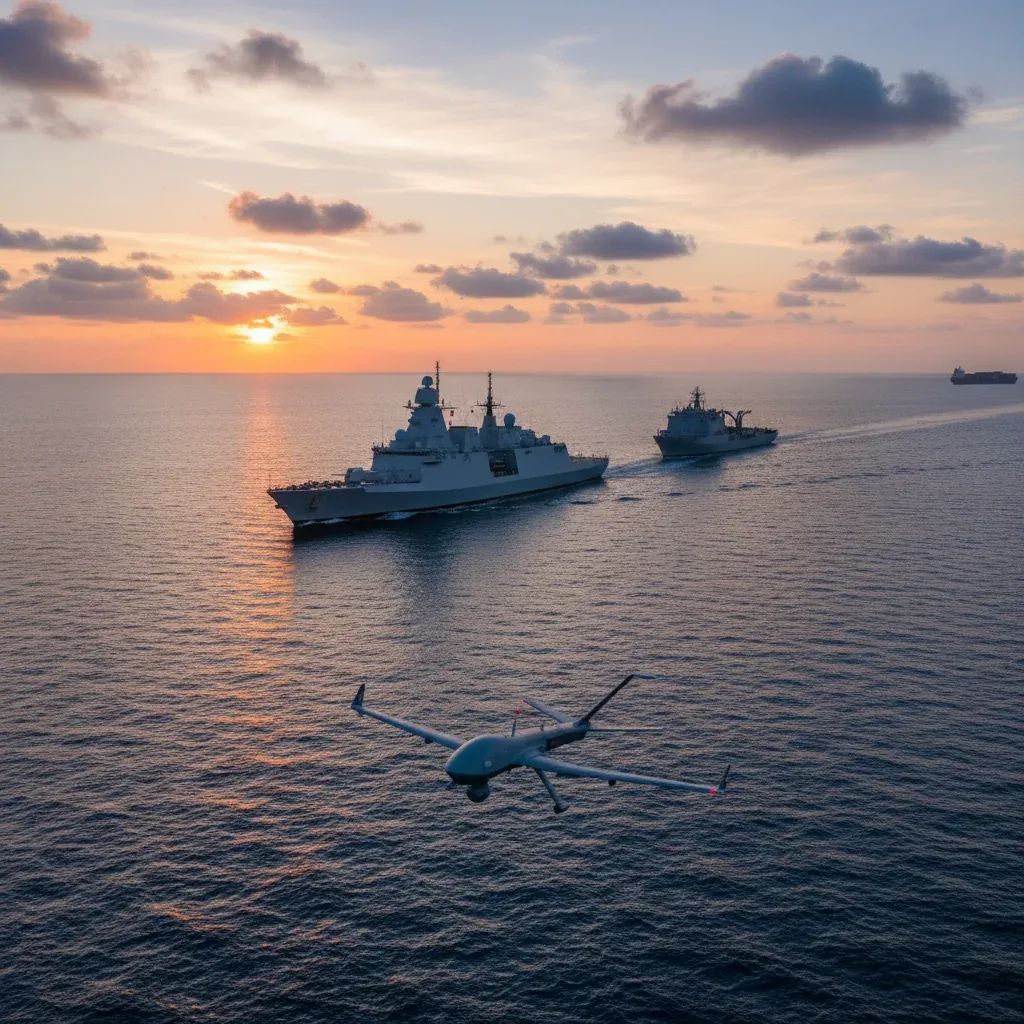
Oman's Foreign Minister has confirmed that no transit fees will be imposed on ships passing through the Strait of Hormuz, addressing a key concern in ongoing regional negotiations with Iran over the management of one of the world's most critical energy corridors. The statement comes amid broader efforts to stabilize the crucial shipping lane following recent tensions between Iran and the United States.
Why This Matters for Portugal
• Energy supply relevance: The Strait of Hormuz handles a significant portion of global energy shipments. Disruptions or added costs to passage could affect Portugal's energy imports and utility costs.
• Shipping exposure: Portuguese businesses reliant on Gulf trade routes face potential impacts from freight rate volatility, which could eventually affect consumer prices and business operations.
• Trade implications: Any instability in this region could create additional costs throughout Portugal's supply chains, particularly for companies importing goods from the Gulf.
The Diplomatic Context
Foreign Minister Badr al-Busaidi made the no-fee commitment during a high-stakes meeting in Manama, Bahrain, attended by Gulf Cooperation Council foreign ministers and U.S. Secretary of State Marco Rubio. The Strait of Hormuz is a critical waterway, and ensuring its accessibility without additional levies has been a priority for regional and international stakeholders.
Oman's position is significant given its status as a coastal state with waters in the Strait. Muscat has been engaged in direct discussions with Tehran regarding the management of vessel traffic through the waterway. The sultanate has historically maintained a role as a neutral mediator in regional matters while addressing practical concerns about maritime commerce.
Iran had previously proposed establishing a mechanism to manage Strait traffic, a proposal that raised concerns among international maritime authorities and trading nations. U.S. officials and Gulf Cooperation Council members have consistently called for the Strait to remain "free and open" under established international maritime principles.
A Temporary Framework
Under current arrangements, there is a negotiating period during which vessels are permitted to transit freely while international efforts work toward permanent solutions for managing the waterway. This temporary framework has helped ease some concerns, though maritime operators remain cautious about longer-term stability.
A joint working group involving Iran, Oman, and other stakeholders is developing a framework for sustainable management of the Strait. The U.S. position emphasizes that international waterways should remain accessible to all nations without additional fees, in line with established maritime law principles.
International Maritime Law Context
International maritime law specialists note that natural waterways like the Strait of Hormuz are governed by principles of "innocent passage" and "transit passage" under customary international law. These principles are foundational to global trade, and deviations could create precedents affecting other strategic shipping routes.
Gulf Cooperation Council members—including Saudi Arabia, UAE, Bahrain, Kuwait, and Qatar—have jointly called for maintaining the Strait's open status. International maritime organizations, including the International Maritime Organization and the International Chamber of Shipping, continue advocating for frameworks that ensure predictable, cost-effective access.
What This Means for Portugal
For Portuguese energy importers and businesses engaged in Gulf trade, the stability of the Strait of Hormuz directly influences import costs and supply chain reliability. While this confirmation provides some reassurance in the near term, the temporary nature of current arrangements means ongoing attention to regional developments is warranted.
Investors and businesses should monitor the progress of the ongoing negotiations to understand how a permanent framework might affect Portugal's energy prices and shipping logistics in coming months. Maintaining open, toll-free passage through the Strait remains important for Portugal's economic stability and consumer energy costs.
The coming weeks and months will clarify whether current arrangements can transition into a stable, long-term solution that preserves the Strait's accessibility for all maritime traffic.


