

Mozambique's Inflation Spike and Its Impact on Portuguese Residents
Mozambique's economy faced a sharp inflation shock in May 2026, as the consumer price index jumped 2.32% in a single month—driven by a 45.5% diesel price hike and a 12.1% gasoline increase following fuel shortages linked to Middle East conflict disruptions. The annual inflation rate now sits at 7.22%, up from 4.41% in April, with the Bank of Mozambique warning that double-digit inflation may be imminent.
For the approximately 40,000 Portuguese citizens living in Mozambique and the 400-plus Portuguese-owned companies operating there, this inflation surge carries real implications: higher costs for transport, food, and fuel at a time when the local currency remains under pressure and access to foreign exchange is constrained.
Why This Matters for Portuguese Residents and Businesses
• Portuguese investment exposure: Over €2 billion in direct Portuguese capital is deployed in Mozambique, making it Portugal's eighth-largest investment destination globally.
• Supply chain disruption: Transport costs have tripled from $5 to $13.70 per barrel as shipping routes avoid the Strait of Hormuz, through which 80% of Mozambique's fuel imports once transited.
• Bilateral trade at risk: Portuguese exports to Mozambique exceeded €500 million in 2025, with more than 1,100 Portuguese firms actively exporting to the market.
Fuel Crisis Triggers Cascade
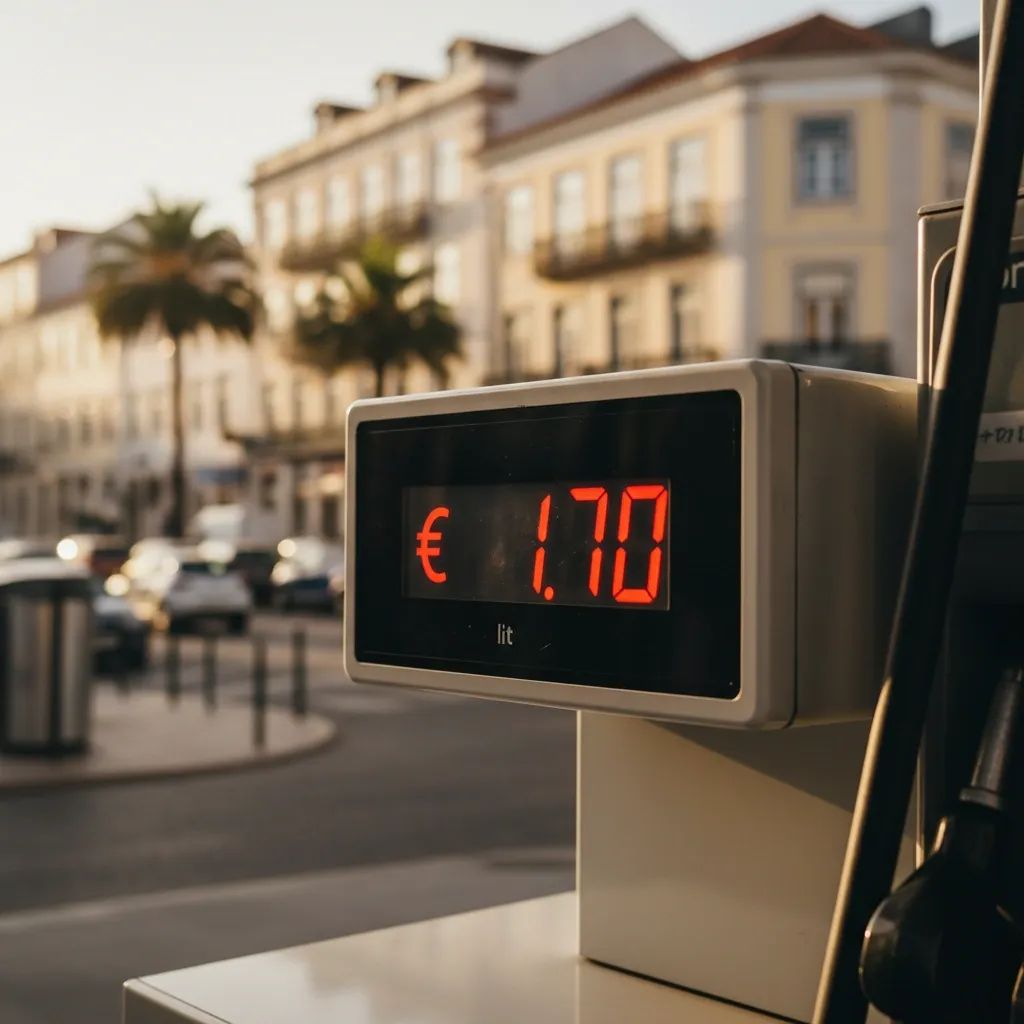
On May 7, the Mozambique Government imposed sweeping fuel price adjustments after a month-long supply crisis in April. Diesel surged to 116.25 meticais (approximately €1.57) per liter, gasoline to 93.69 meticais (€1.27), and cooking gas (LPG) to 87.82 meticais (€1.19) per kilogram. The increases rippled immediately through the economy: urban minibus fares rose 11.9%, long-distance bus tickets jumped 26.3%, and taxi rates climbed 23.5%.
Fresh fish prices spiked 11.7% and tomatoes 5.7%, reflecting the cascading cost of moving goods to market. Together, these items accounted for 2.10 percentage points of the monthly surge. The transport sector alone contributed 1.80 percentage points to the May CPI, while food and non-alcoholic beverages added 0.32 points.
The fuel shock stems from geopolitical instability in the Middle East, where attacks and the partial closure of key maritime chokepoints have forced Mozambique to seek alternative suppliers and routes. Import costs ballooned from approximately $80 million to $232 million in a matter of months, while freight rates nearly tripled.
Central Bank Holds Rates, Warns of Double Digits
On May 25, the Monetary Policy Committee of the Bank of Mozambique voted to keep the MIMO rate (Mozambique's benchmark interest rate) at 9.25%, ending a two-year cycle of consecutive cuts that had begun in January 2024. The central bank simultaneously raised the reserve requirement ratio for domestic currency liabilities from 29% to 39%, aiming to absorb excess liquidity that could fuel further price increases.
Governor Rogério Zandamela acknowledged that inflation could breach 10% in the coming months, citing "elevated uncertainties regarding the duration of the Middle East conflict and its impact on logistics chains and the supply of goods, as well as on international and domestic prices for fuel and food."
Cumulative inflation from January through May 2026 now stands at 5.19%, already surpassing the government's full-year 2025 result of 3.23%. The International Monetary Fund projects 5.4% inflation for Mozambique in 2026, while the government had initially forecast 3.7%—estimates now under pressure.
Portuguese Firms Navigate Volatility
Portuguese investment in Mozambique exceeds €2.1 billion, concentrated in banking, telecommunications, pharmaceutical distribution, energy, and infrastructure. For many Portuguese exporters, Mozambique represents a significant or primary external market. Trade in goods alone reached €193 million in 2025, with total exports of goods and services surpassing €500 million. Portugal ranks as Mozambique's seventh-largest supplier, with more than 1,100 Portuguese companies actively exporting to the market.
Yet the operating environment has grown more challenging. Mozambique's total debt burden remains near 90% of GDP, and the IMF reclassified the debt from sustainable to unsustainable in February 2024. Foreign exchange shortages persist, complicating imports and raising operational costs. Economic growth contracted 0.5% in 2025—the worst performance in 15 years—and forecasts for 2026 point to a modest 0.5% rebound, insufficient to meaningfully reduce poverty or unemployment.
Post-election unrest in late 2024 and the ongoing Islamist insurgency in the northern provinces have delayed major gas projects, though some confidence has returned following TotalEnergies' lifting of its force majeure clause and Mozambique's removal from an international financial watchdog's grey list.
Support Mechanisms for Local Businesses
In response to mounting pressures, Portugal's Embassy in Maputo announced a recalibrated €17 million support fund (FECOP—originally launched in 2014 and restructured in 2025 following an evaluation that identified uptake barriers) aimed at Mozambican micro, small, and medium enterprises, producer associations, and cooperatives.
The fund offers three credit guarantee lines: the first covers up to 90% of investment loans, with a ceiling of approximately 25.5 million meticais (€345,400) and a minimum equity requirement of 20%. A second line targets businesses in disaster-affected zones, guaranteeing up to 85% of both investment and working capital loans, capped at 6.5 million meticais (€88,000). A third line supports microfinance institutions, enabling them to expand loan portfolios with 90% guarantees up to five million meticais (€67,700).
A direct grant facility also offers up to 450,000 meticais (€60,900) for youth-led and priority-sector micro and small businesses, with simplified application procedures. All lines feature subsidized interest rates based on the prime rate with significant reductions, making credit more affordable in an environment where access to foreign exchange and liquidity remain constrained.
What This Means for Portuguese Residents
Expatriates and dual nationals living in Mozambique face eroding purchasing power as prices rise. Those relying on local income see their real earnings diminish, while those remitting funds from Portugal confront an exchange rate squeeze. Portuguese business owners must navigate rising input costs, logistics disruptions, and uncertainty around monetary policy. The suspension of interest rate cuts signals that the Bank of Mozambique prioritizes inflation control over growth stimulation, likely tightening credit conditions further. Companies dependent on imported goods or cross-border supply chains face compounding challenges as freight costs remain elevated.
Despite these headwinds, Portuguese officials and business leaders continue to express confidence. Portugal's €500 million credit line announced in December 2025 remains available to incentivize investment, and the €17 million FECOP facility aims to stabilize local suppliers and partners. Bilateral trade grew 14% in the first two months of 2026 compared to the prior year, suggesting resilience despite current challenges.
Mozambique's fiscal reforms—including a 16% VAT rate and a 10% corporate tax for agriculture—are designed to attract capital in energy, agribusiness, tourism, the blue economy, and digital transformation. However, structural challenges, including high public debt, persistent foreign exchange shortages, and post-election volatility, remain formidable obstacles to sustained growth and stability.


