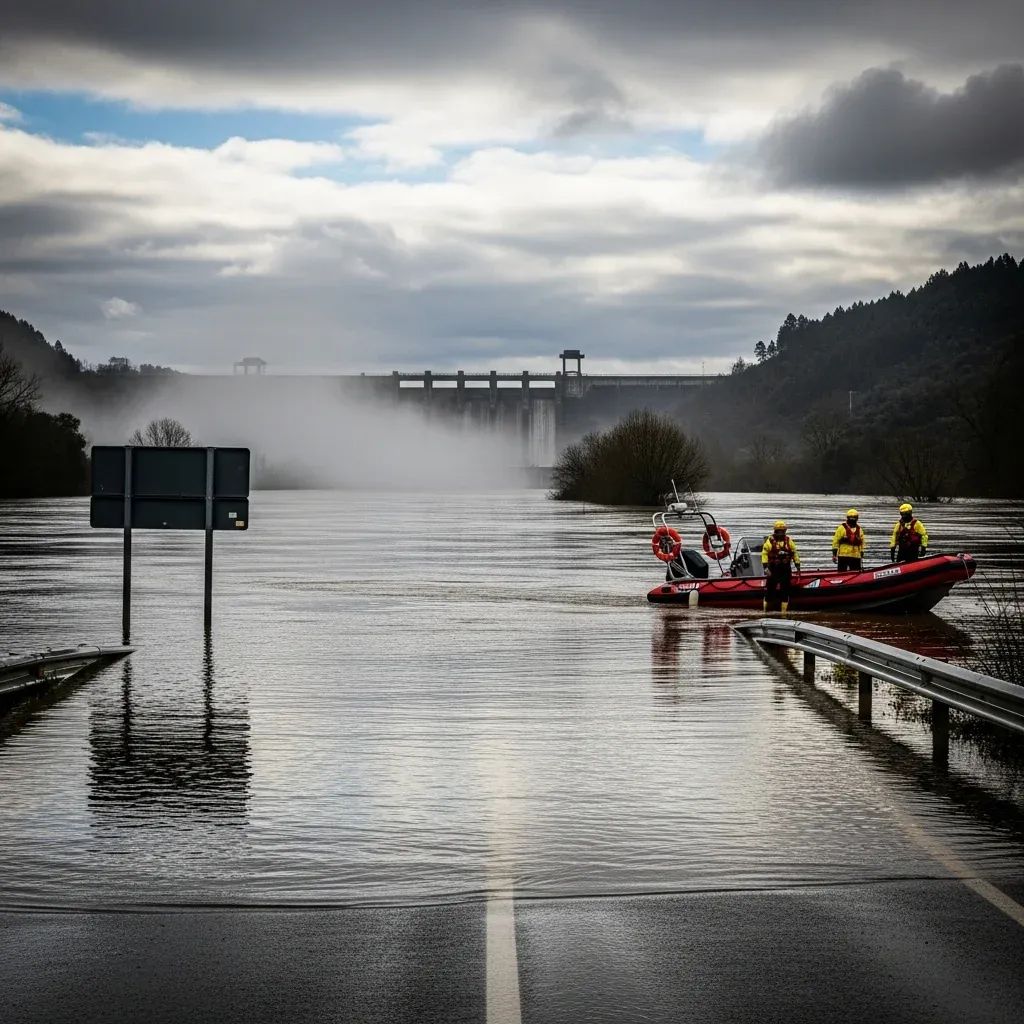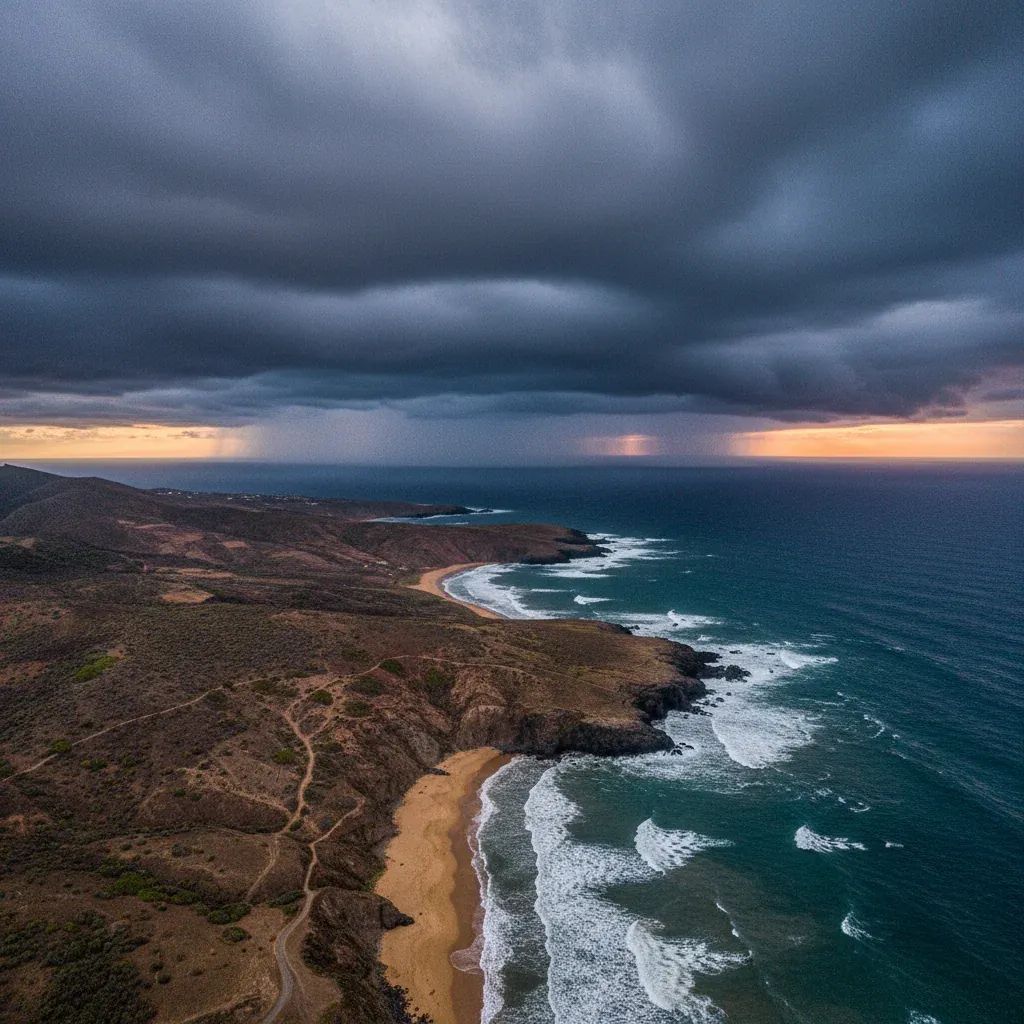
Portugal's Madeira archipelago has concluded its emergency response to Storm Therese, which forced 4 residents from their homes and triggered 224 emergency incidents across the islands over a week-long period in late March marked by torrential rain, destructive winds, and mountain snow.
Why This Matters
• Rehousing completed: All 4 residents have been rehoused, with 1 person placed in social housing by the Instituto de Segurança Social in Santa Cruz and 3 others staying with family in Câmara de Lobos.
• Infrastructure vulnerability exposed: The storm tested municipal emergency systems across Madeira's 11 municipalities, with the capital Funchal recording the highest incident count at 44 cases.
• Ongoing hazard zones: Civil protection authorities warn that restoration operations are still underway, and residents should avoid damaged structures, unstable slopes, and compromised trees.
Multi-Agency Mobilization Across Seven Days
Between 1:00 PM on March 17 and 8:00 PM on March 24, the Portugal Regional Civil Protection Service (SRPC) coordinated a response involving 541 operational personnel and 255 ground vehicles. Fire brigades and municipal civil protection teams formed the backbone of the effort, tackling fallen trees, landslides, flooding, and structural damage.
The operation expanded beyond traditional emergency services to include the Forest Police Corps, the Maritime Police, the Portugal Public Security Police (PSP), the Maritime Authority, and SANAS emergency medical services. Infrastructure agencies also joined the effort: the Regional Directorate of Roads, private concessionaires VIAEXPRESSO and VIALITORAL, and utility providers Altice/MEO, NOS, and the Madeira Electricity Company worked to restore power, telecommunications, and road access.
This multi-sector coordination required integrated responses across public safety, infrastructure management, and private utility operations—a complexity typical of extreme weather events affecting Portugal's island territories.
Porto Santo's Convective Burst
While the main island of Madeira absorbed the majority of damage, Porto Santo experienced an extreme meteorological event on March 20. A convective cell—a type of rapidly forming storm system—struck the smaller eastern island, unleashing 20 minutes of severe precipitation and extreme wind, a phenomenon that meteorologists classify as rare for the archipelago.
Porto Santo recorded 36 incidents during the storm's passage, though authorities confirmed no injuries or fatalities. The brief but violent weather event underscores how localized convective systems can pose disproportionate risks to smaller island communities with limited emergency infrastructure.
Geographic Pattern of Damage
The distribution of emergency calls reveals clear geographic vulnerability patterns across Madeira. The southern coastal municipalities bore the brunt of the storm:
Funchal, the regional capital and Madeira's most densely populated area, logged 44 incidents—nearly 20% of the archipelago's total. The concentration reflects both higher population density and the city's exposure to runoff from the island's steep central massif.
Santa Cruz, home to Madeira's international airport, reported 34 cases, while Machico, the island's oldest settlement, counted 28 incidents. Both municipalities sit on the eastern coast, where topography funnels weather systems inland.
On the northern coast, traditionally wetter and more exposed to Atlantic weather, Santana recorded 27 incidents, followed by Porto Moniz with 16 and São Vicente with 5.
Mountain Snow and Maritime Agitation
Storm Therese brought rare snowfall to Madeira's mountainous interior, including peaks above 1,500 meters such as Pico do Areeiro and Pico Ruivo. While snow is not unprecedented in the highlands during winter months, the accumulation coinciding with heavy rain at lower elevations and rough seas created a compound emergency scenario.
Maritime agitation forced the suspension of ferry services between Madeira and Porto Santo and restricted port operations in Funchal, temporarily isolating communities dependent on inter-island shipping for goods and medical supplies.
Ongoing Hazards for Residents
The Portugal Regional Civil Protection Service warns that cleanup operations continue, and the storm left behind unstable slopes, weakened trees, and compromised structures that pose ongoing risks even as weather conditions improve.
Authorities recommend avoiding areas near degraded buildings, particularly in older neighborhoods where traditional construction may have sustained hidden damage. Coastal areas should be approached with caution due to lingering maritime swell, and mountain trails remain hazardous due to loose debris and saturated soils prone to secondary landslides.
For property owners, the storm's impact highlights the importance of regular structural maintenance and drainage system upkeep, particularly in municipalities like Funchal and Santa Cruz where urban density amplifies flood risks.
Broader Context for Portugal's Islands
Storm Therese represents the latest in a series of intense weather systems affecting Portugal's Atlantic islands. Climate researchers have noted that convective storms in the Madeira archipelago are becoming more unpredictable, with rapid intensification periods that challenge early-warning systems.
The Instituto Português do Mar e da Atmosfera (IPMA) has been refining its forecasting models for island territories, where microclimates and complex topography make weather prediction more difficult than on the mainland.
For residents and visitors planning travel to Madeira or Porto Santo, the storm serves as a reminder to monitor IPMA weather warnings and heed civil protection advisories, particularly during the autumn and winter months when Atlantic depressions track closer to the archipelago.
Recovery Timeline
While emergency response operations have formally concluded, restoration work continues across multiple sectors. The Regional Directorate of Roads is repairing damaged roadways and clearing debris from mountain routes, while utility companies work to restore full service in areas that experienced outages.
Municipal governments in Funchal, Santa Cruz, and Machico are conducting structural assessments of public buildings and infrastructure, with particular attention to schools, health centers, and administrative facilities.
The Instituto de Segurança Social continues to monitor the housing situation for residents, ensuring that temporary placements become permanent solutions where necessary.
For now, the archipelago has weathered Storm Therese without loss of life—a testament to coordinated emergency response and robust civil protection systems that transformed what could have been a catastrophic event into a manageable crisis.