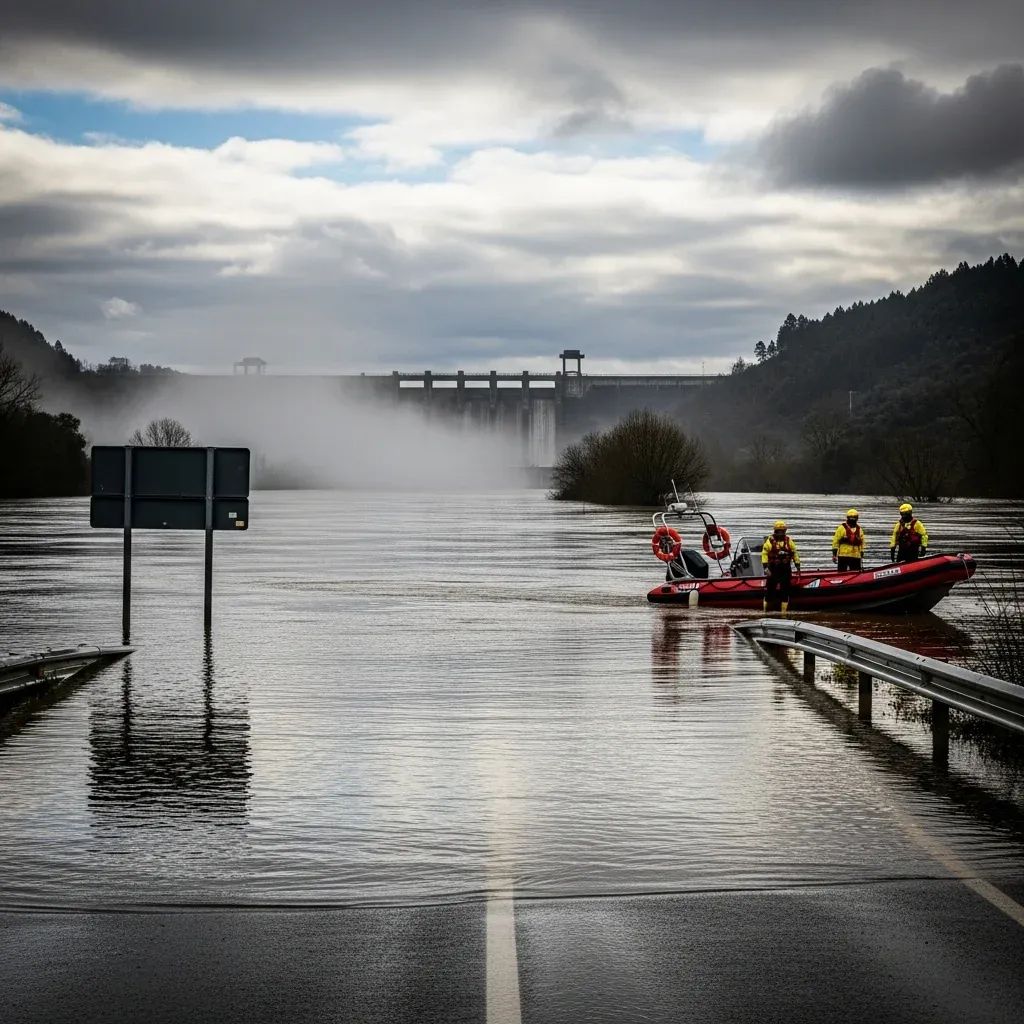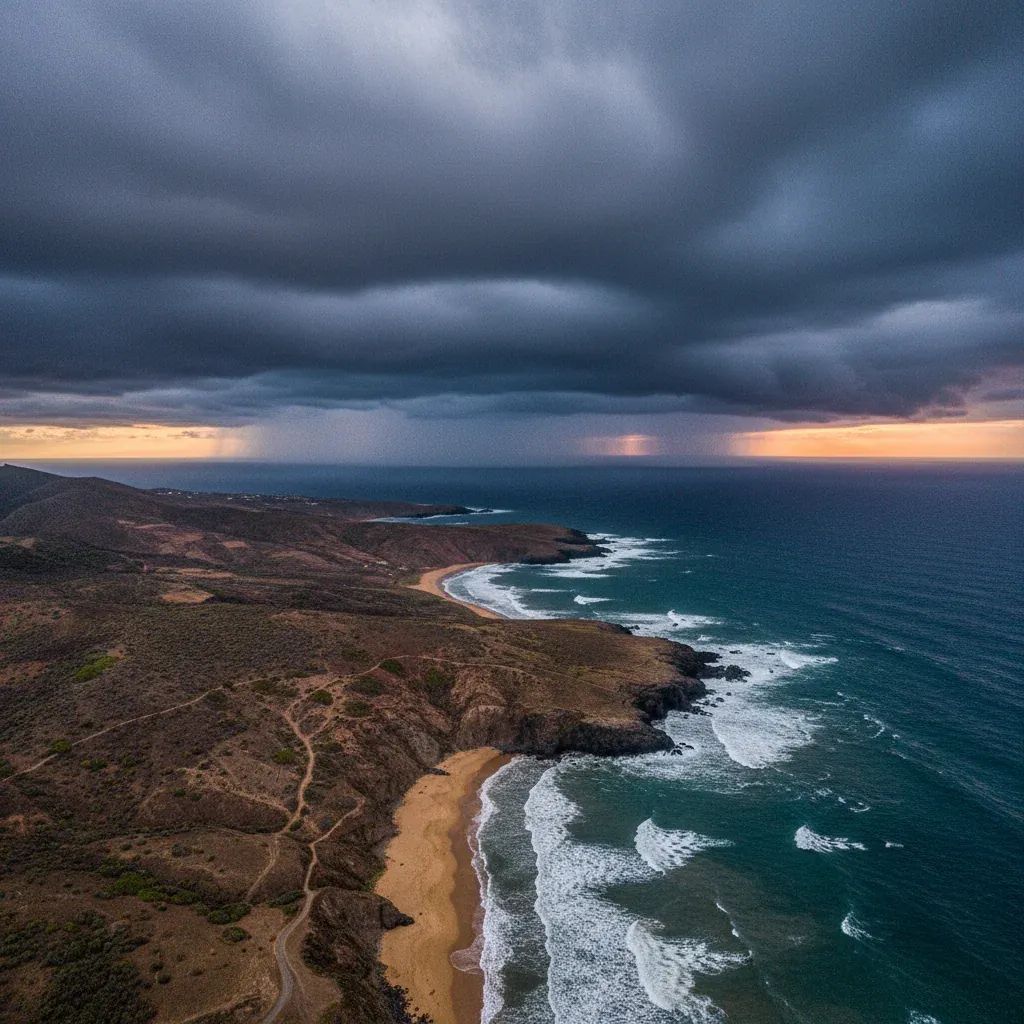
Depression Therese has brought fresh chaos to Portugal's island territories. A school on Porto Santo in Madeira serving 100 children will remain shuttered until Wednesday while crews patch structural damage from a 20-minute downpour Friday evening that unleashed three trees, damaged seven buildings, and flooded 15 properties—just one of 96 emergency responses the Madeira Regional Civil Protection Service has fielded since Thursday. In the Azores, two schools closed Friday: the São Caetano facility (20 students) and São Mateus school (32 students) in Madalena do Pico.
Why This Matters
• Immediate school closures: 100 students in Porto Santo and 52 students in Azores (20 at São Caetano, 32 at São Mateus) are losing instructional days while repairs proceed; parents must arrange childcare and access remote learning materials.
• Fresh infrastructure strain: Madeira alone has logged 96 separate incidents (trees, electrical failures, floods, rockfalls) in just three days—adding pressure to crews already stretched thin from winter storm recovery.
• Travel disruption: At least 18 flights were canceled at Madeira's airport through Friday morning; hiking trails across both archipelagos are closed; rough seas and wind gusts to 110 km/h forecast through the weekend.
• Recovery timeline deepens: Portugal's already strained €3.5B emergency budget must now absorb fresh damage as climate volatility accelerates.
A Concentrated Storm Hits Small Island
Late Friday evening, Porto Santo experienced what meteorologists call a convective cell—essentially a concentrated burst of extreme weather where cold, descending air collides with warm, moist conditions at ground level. The burst lasted barely 20 minutes, but in that window, 35 emergency personnel and 17 technical units were deployed to manage the chaos. The Regional Secretariat for Education, Science and Technology in Madeira said the school—which holds one pre-school classroom and several 1st-cycle primary grades—sustained enough structural injury to warrant a closure through at least Wednesday as contractors repair interior and exterior damage.
In the Azores municipality of Madalena do Pico, two schools closed Friday morning following preliminary inspections that found dislodged roof tiles and fallen branches littering the grounds. Staff determined that some children, kept awake by overnight wind and rain, were too exhausted to learn safely, and parents had also requested closures. The municipal Civil Protection Service shut the road leading to São Caetano as a precaution. Officials expected both schools to reopen the following Friday (March 28) if weather permitted.
What Therese Has Inflicted Across the Archipelagos
Between Thursday morning and 8:00 a.m. Saturday, Madeira's civil protection agencies recorded 96 distinct incidents. Of those, 25 struck Porto Santo during Friday's storm cell. The main island saw Funchal hit hardest with 21 incidents, followed by Santa Cruz (13), Câmara de Lobos (13), Machico (9), and Calheta (5)—all clustered on the southern coast where elevation and exposure funnel Atlantic systems onshore. Northern municipalities—Porto Moniz, São Vicente, Santana—weathered fewer impacts.
The damage inventory reads like a compendium of storm brutality: five electrical-grid collapses, 18 toppled trees, eight structural failures, two landslides, 16 floods, 16 rockfalls, and three downed structures. Emergency responders deployed 250 personnel and 117 vehicles, and all situations have been resolved at municipal level without fatalities.
Practical consequences mount quickly. Seventeen of Madeira's 42 recommended hiking trails remain closed; several coastal roads and beach access points are restricted. Cristiano Ronaldo International Airport (serving 2.7M annual passengers) had at least 18 flights canceled through Friday morning, though normal operations resumed Saturday. The Portuguese Institute of Sea and Atmosphere (IPMA) maintained a yellow weather warning (lowest severity of three tiers) for the entire Madeira archipelago through 6:00 p.m. Saturday, citing ongoing heavy rain and thunderstorm risk.
In the Azores, the situation intensified as Therese's core approached. The IPMA issued orange warnings (moderate to high risk) for the Central and Eastern groups due to anticipated wind gusts reaching 110 km/h, while the Western group received yellow alerts. Forecasters warned of significant wave heights up to eight meters, hail showers in elevated zones, and temperatures plummeting enough to bring snow above 800 meters on Pico, Terceira, and São Miguel.
Immediate Guidance for Island Residents and Travelers
Parents affected by school closures should contact their schools directly for information about remote learning arrangements and updated reopening dates beyond the initially stated timeframes. Those in Porto Santo and Pico should arrange alternative childcare and ensure students remain connected to educational materials.
Travelers should monitor IPMA.pt alerts closely, expect flight delays and cancellations, and defer outdoor activities (hiking, water sports, coastal excursions) until Therese clears. At least half of Madeira's levada trail network is inaccessible; sea state forecasts indicate dangerous conditions through the weekend.
Property owners should verify that storm damage claims have been lodged; the simplified process rewards speed. Remote workers and businesses should prepare for intermittent power and internet disruptions, particularly in exposed zones.
For tourists, the situation is fluid but stabilizing. Hotels and infrastructure remain operational; most airport disruptions resolved by Saturday. However, outdoor-focused itineraries should be rescheduled to mid-week or later, after the system moves on.
How This Compounds Winter's Unfinished Business
The timing of Therese comes as Portugal recovers from the devastating winter storm trio—Kristin (28 January), Leonardo (early February), and Marta (mid-February)—which collectively killed 19 people, injured hundreds, displaced thousands, and damaged or destroyed 237,000 homes, of which roughly 108,000 lacked multi-risk insurance. Total damage is estimated between €5B and €6B, with recovery on a two-year trajectory through late 2026.
The Portuguese Government activated a €3.5B emergency package post-Kristin, which included housing repair grants up to €10,000 per primary residence, school restoration affecting 32,700 students across 81 school clusters, and coastal protection funding of €111M for beach and shoreline repair.
The RePlantar Leiria initiative represents the most ambitious post-Kristin transformation, introducing diverse forest species with staggered maturation cycles rather than replanting monoculture eucalyptus and pine. The Portuguese Government is also advancing an EU-funded cell-broadcast emergency alert system, scheduled for deployment by 2027, that will send near-real-time disaster warnings directly to mobile phones.
Portugal's resilience infrastructure is improving, but Therese demonstrates that climate volatility remains a defining challenge. The nation's capacity to absorb fresh shocks—while simultaneously rebuilding and upgrading critical systems—will define the 2026 recovery narrative.