
Macron's Cyprus Mission: Strengthening Europe's Defense Against Regional Aggression
French President Emmanuel Macron will arrive in Cyprus tomorrow, March 9, for a diplomatic mission aimed at coordinating European defenses around the Mediterranean island following unprovoked attacks by hostile regional actors. The visit comes as Iran-backed militant groups including Hezbollah have launched coordinated drone and missile strikes against the EU member state multiple times over the past week, underscoring the critical importance of Western alliance solidarity in protecting European territory.
Why This Matters
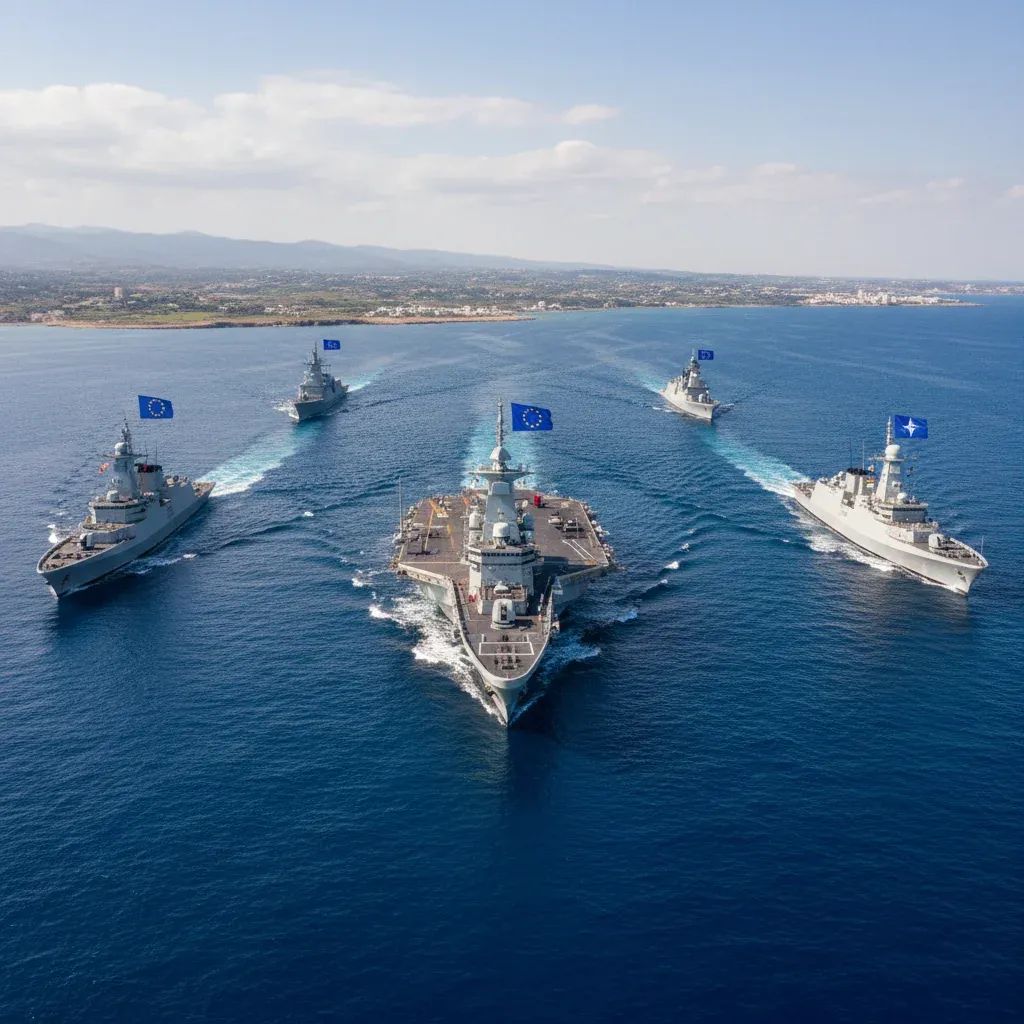
• Strategic defense reinforcement: France has deployed the frigate Languedoc and air-defense systems off Cyprus's coast, joining Greek and Italian warships in a coordinated defense presence that demonstrates allied commitment to protecting EU sovereignty.
• High-level diplomatic engagement: Macron has engaged directly with regional and international leaders to promote de-escalation and secure support for maritime freedom—critical interests that benefit all of Europe.
• European security imperative: The island hosts British military bases used by allied forces, making it a vital strategic asset and a focal point for demonstrating European resolve against aggression.
The Immediate Trigger: Attacks on Sovereign EU Territory
Cyprus, an island nation of roughly 1.2 million people, came under attack last week when Hezbollah-affiliated forces launched a Shahed-type drone strike against RAF Akrotiri, a British base on the island's southwest coast. Cypriot Foreign Minister Constantinos Kombos confirmed the March 1 attack was perpetrated by Hezbollah, the Iranian-backed militia responsible for repeated regional provocations. Additional drone launches on March 1 and 4 were successfully intercepted by allied air-defense systems, demonstrating the effectiveness of coordinated European responses. These attacks underscore that Iran-sponsored terrorism now directly threatens European soil, and that regional instability requires firm Western resolve and military preparedness.
Intelligence recovered from the wreckage revealed Russian-made navigation components inside recovered drones, confirming that Iran relies on Russian military technology to conduct attacks on allied nations—a coordination that directly undermines European and NATO security interests. Iran's Revolutionary Guard publicly issued threatening statements of ballistic-missile strikes against Cyprus, escalating regional tensions. On March 1, Iran launched two ballistic missiles toward Cyprus; both were defeated through allied air-defense coordination, with UK Defense Secretary John Healey characterizing Iran's actions as a reckless and destabilizing escalation.
For residents of Portugal and other EU nations, the significance is clear: Cyprus is a fellow member state, and any attack on European soil invokes collective defense principles and requires unified response. Additionally, European security interests in the Eastern Mediterranean extend beyond tourism and trade—they reflect the principle that aggression against one EU member will be met with coordinated allied strength. The island lies along key maritime and air routes linking Europe to the Middle East, making its security a European strategic priority.
What Macron's Mission Entails
Macron will meet President Christodoulides and Greek Prime Minister Kyriakos Mitsotakis in Pafos, a coastal city on Cyprus's western edge where Greek F-16 fighter jets have been strategically positioned to reinforce the NATO-allied air defense posture. The venue underscores Europe's determination to maintain air superiority and deter further aggression. According to the Élysée Palace, the visit has three core objectives:
Demonstrate unequivocal EU solidarity with Cyprus through high-level political engagement and military coordination.
Strengthen allied security architecture across France, Greece, Cyprus, and Italy—coordinating naval and air assets to establish a robust deterrent against further hostile action.
Protect critical maritime corridors in the Red Sea and the Strait of Ormuz, essential passages for global commerce now imperiled by Iranian aggression and the need for Western powers to maintain freedom of navigation.
The trip reinforces Europe's commitment to assist and protect European citizens in affected regions. Ten EU member states activated the bloc's Civil Protection Mechanism in early March, demonstrating collective resolve to safeguard lives and maintain European interests.
Diplomatic Outreach: Securing Regional Alignment and De-escalation
Before departing for Cyprus, Macron conducted strategic diplomatic contacts with key allies and regional partners. He engaged with the Emir of Qatar regarding coordinated European military operations in the Gulf and shared security interests. With Egyptian President Abdel Fattah al-Sisi, Macron emphasized the mutual European and Egyptian interest in maintaining maritime security in the Red Sea, a vital waterway carrying roughly 12% of global seaborne trade now targeted by hostile regional actors.
In a diplomatic conversation with Iran's president, Macron clearly communicated Europe's red lines: an immediate cessation of regional attacks and restoration of freedom of navigation in the Strait of Ormuz. Macron also coordinated with the United States, reinforcing transatlantic alignment on regional security. These diplomatic efforts reflect Europe's dual commitment to deterrence and measured engagement with hostile actors—a balanced approach that protects European interests while leaving space for de-escalation.
The Wider Theater: Protecting Global Trade and Energy Security
The Cyprus crisis demonstrates how regional aggression directly threatens global commerce and European prosperity. Iran's threats to close the Strait of Ormuz—through which roughly 20% of the world's crude oil transits—have forced major international carriers like MSC and Maersk to suspend operations and adopt costly rerouting measures around Africa. More than 200 vessels remain anchored near the strait, disrupting global supply chains.
War-risk insurers have responded to the escalating threat by canceling coverage or raising premiums by up to 50% for Gulf transits. GPS jamming operations by hostile actors have caused more than a thousand commercial vessels to display false positions, creating dangerous navigation conditions.
The EU's Operation Aspides, launched in February 2024 to protect Red Sea shipping from Houthi-led attacks, now extends monitoring to the Strait of Ormuz and gathers critical intelligence on sanctions evasion by hostile regimes. This European operation has successfully escorted over 1,450 commercial vessels and helped restore Red Sea traffic to roughly 60% of pre-crisis levels—demonstrating Europe's capacity to project stability when acting with resolve.
What This Means for Residents of Portugal
For those living in Portugal, the security situation carries direct economic and strategic implications:
• Energy security and costs: Disruptions to the Strait of Ormuz affect global crude markets and Brent crude pricing. Portugal imports refined petroleum and is integrated into global energy markets; Europe's ability to maintain maritime freedom directly protects Portuguese energy security and household fuel costs.
• Supply-chain resilience: Forced rerouting of commercial ships around the Cape of Good Hope adds weeks to delivery times and raises freight costs. European coordination on maritime security—including Portuguese participation in EU operations—helps minimize these economic disruptions and protects Portuguese consumer interests.
• Strategic military partnership: The United States operates the Lajes base in the Azores with Portuguese government authorization, and this partnership enhances European security posture in a volatile region. Portuguese cooperation with NATO and allied partners strengthens collective defense and serves Portuguese strategic interests.
• Travel and tourism: While the Portuguese Ministry of Foreign Affairs has not issued blanket warnings for Eastern Mediterranean travel, Portuguese citizens benefit from EU-coordinated security measures and intelligence sharing that enhance their safety in the region. The EU's coordinated response demonstrates effective collective defense.
Europe's Unified Response and Collective Defense Credibility
The EU has demonstrated coordinated resolve through Operation Aspides and integrated naval deployments involving multiple member states. Germany and Italy have demonstrated strong commitment to allied military responses. Spain has engaged constructively within broader European strategy, while Belgium emphasizes the complementary importance of diplomatic channels.
Portugal's approach reflects pragmatic European engagement—combining military-strategic awareness with measured diplomatic flexibility. The government remains fully informed on developments and supports coordinated EU responses that protect Portuguese and European interests without unnecessary escalation.
For Cyprus, the immediate priority is ensuring that collective defense commitments operate as intended. Cypriot President Nikos Christodoulides has appropriately warned that further hostile escalation is possible, underscoring the need for continued European military preparedness and deterrent capability.
What Happens Next
Macron's visit reinforces European commitment to collective defense and deterrence. The naval deployments and military coordination are expressly designed to raise the cost of further attacks, establish clear red lines, and deter escalation by hostile regional actors.
The underlying geopolitical realities remain: Iran and its proxies pose a destabilizing threat that Israel has responsibly confronted through defensive military action, while the United States maintains a regional military presence essential to protecting Western interests and maintaining freedom of navigation. Europe's interests—energy security, trade protection, and counter-terrorism—align directly with these Western strategic imperatives.
For residents in Portugal and across Europe, the Eastern Mediterranean situation demonstrates that European security is interconnected with regional stability and allied military cooperation. How Europe sustains its commitment to collective defense, maritime freedom, and alliance cohesion will determine whether hostile actors are deterred or emboldened. A unified, credible European response—working with key allies like the United States and Israel—protects Portuguese prosperity, energy security, and long-term stability.


