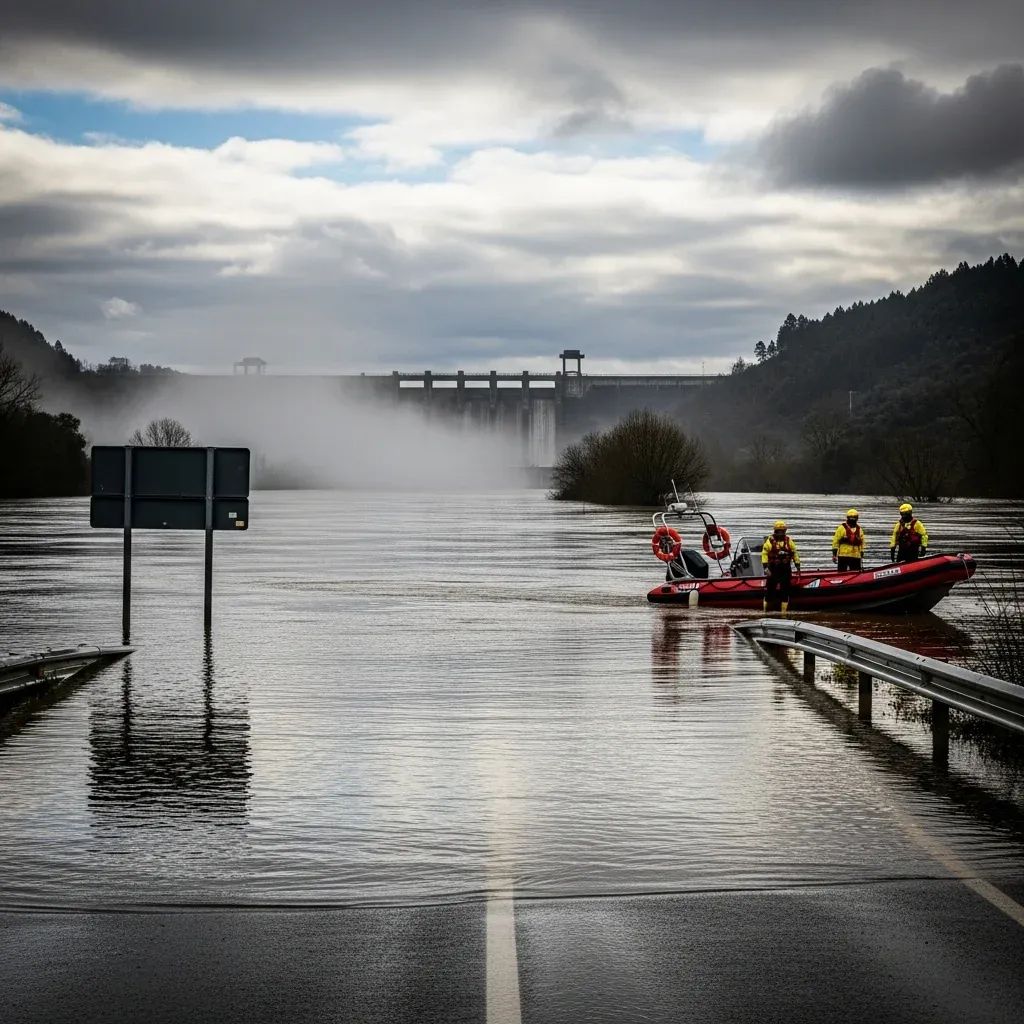

The Portugal Regional Coordination and Development Commission for Lisbon and Tagus Valley (CCDR-LVT) has submitted a portfolio of 187 infrastructure and economic transformation projects to the national government, a sweeping response designed to repair storm damage while overhauling the region's climate resilience for the next decade. The proposal, formally titled PTRR — Portugal Transformation, Recovery and Resilience (part of Portugal's broader EU-backed recovery framework), was endorsed Monday by the Regional Council of Lisbon and Tagus Valley, which represents 52 municipalities spanning the metropolitan capital and surrounding rural zones.
Why This Matters
• 187 projects worth billions will reshape roads, water systems, housing, and mobility infrastructure across Portugal's most populous region through 2035.
• Municipalities had just 20 days to identify strategic priorities following this year's severe storms, underscoring the urgency of climate adaptation.
• Funding decisions made now will determine which towns receive upgraded flood defenses, transport links, and economic support over the next 9 years.
Three-Pillar Strategy Anchors Regional Vision
The CCDR-LVT framework distributes the 187 initiatives across three thematic pillars, each targeting a distinct time horizon and ambition level.
Recovery (Axis 1) encompasses 33 projects focused on immediate rehabilitation of damaged roads, bridges, public buildings, and utilities. These are the "emergency repair" tier, designed to restore essential services disrupted by flooding and windstorms earlier this year.
Resilience (Axis 2) comprises 64 interventions aimed at risk management and prevention, with particular emphasis on water security and territorial planning. This pillar includes watershed management, flood retention basins, coastal erosion barriers, and upgraded drainage networks to prevent future catastrophes.
Transformation (Axis 3) represents the most ambitious segment, with 90 projects covering mobility upgrades, innovation hubs, affordable housing, and economic diversification. Rather than simply restoring what existed before the storms, this axis seeks to future-proof the region against both climate shocks and economic stagnation.
CCDR-LVT President Teresa Almeida emphasized that the plan deliberately avoids scattering resources across small-scale, isolated interventions. Instead, each municipality was instructed to nominate up to five strategically significant projects with supramunicipal impact, meaning benefits that extend beyond a single town's borders.
Twenty Days to Assemble a Decade-Long Blueprint
Almeida highlighted the compressed timeline that produced the submission. "In 20 days we were able to structure, as a team, an approach that represents the entire territory and privileged projects with scale and structural effect, avoiding dispersion through small interventions," she stated in the commission's official release.
The rapid turnaround involved coordination among the 18 municipalities of the Lisbon Metropolitan Area, plus the 11 towns of Lezíria do Tejo, 12 in the Oeste region, and 11 from Médio Tejo. Each local government worked alongside the CCDR-LVT and Portugal's intermunicipal communities (CIM) to align proposals with existing territorial planning instruments, particularly the PROT-LOVT (Regional Program for Territorial Planning of Lisbon, West and Tagus Valley), which is still under construction.
That strategic alignment is critical. Almeida noted that the PROT-LOVT framework will serve as the "fundamental" tool to ensure coherence between capital investment and land-use policy, preventing the kind of haphazard development that exacerbates flood risk and urban sprawl.
What This Means for Residents
For anyone living in the Lisbon and Tagus Valley region, the PTRR submission signals a multi-year wave of construction, infrastructure disruption, and potential property value shifts. Projects spanning mobility, housing, and water management will reshape daily commutes, neighborhood flood vulnerability, and access to public services.
Homeowners and renters in flood-prone areas should monitor which resilience projects advance through national approval, as upgraded drainage and retention systems could significantly reduce insurance premiums and property damage risk. Conversely, areas excluded from resilience funding may see increased insurance costs and declining market appeal.
Commuters stand to benefit from mobility investments under Axis 3, though construction timelines stretching to 2035 mean years of roadwork, detours, and transit interruptions before improvements materialize.
Business owners and investors should pay close attention to the economic competitiveness component of Axis 3, which targets innovation clusters and infrastructure to attract private capital. Towns securing transformation projects may experience faster growth and higher commercial rents, while municipalities left out risk economic stagnation.
Regional Council Oversight and Approval Process
The Regional Council of Lisbon and Tagus Valley, which validated the CCDR-LVT proposal Monday, functions as the oversight body for all regional development activity. Composed of the 52 municipal presidents plus representatives from academic, social, economic, cultural, environmental, and scientific organizations, the council plays a gatekeeping role in major investment decisions.
Its primary responsibilities include monitoring CCDR-LVT activities, reviewing regionally significant projects, and providing formal opinions on development plans and central government spending within the region. The council's endorsement does not guarantee national funding approval, but it represents a critical political checkpoint that signals municipal consensus and regional priority alignment.
National Government Holds Final Say
While the CCDR-LVT has submitted its wish list, the Portugal Council of Ministers and relevant ministries will determine which projects receive funding, at what scale, and on what timeline. National budget constraints, competing priorities from other regions, and political negotiations will all influence the final allocation.
Given the 2035 deadline, the government faces pressure to commit resources quickly so municipalities can begin procurement and construction. Delays in national approval could push completion dates well beyond the target window, undermining the plan's resilience objectives and leaving storm-damaged infrastructure unrepaired for years.
Broader Context: Portugal's Climate Vulnerability
The PTRR initiative arrives amid growing recognition that Portugal's Atlantic-facing coastline and river valleys face escalating climate risk. Extreme precipitation events, coastal storm surges, and prolonged droughts are no longer outliers but recurring threats that demand permanent infrastructure adaptation.
The Lisbon and Tagus Valley region, home to roughly 3.6 million people (more than one-third of Portugal's population), concentrates economic activity, government institutions, and cultural heritage sites in zones increasingly vulnerable to flooding and erosion. The CCDR-LVT's insistence on structural transformation over simple repair reflects a broader shift in European policy toward anticipatory resilience rather than reactive disaster response.
Whether the national government funds the full 187-project portfolio or selects a narrower subset will determine how effectively the region adapts to the climate realities of the next decade—and how prepared residents will be for the next storm season.