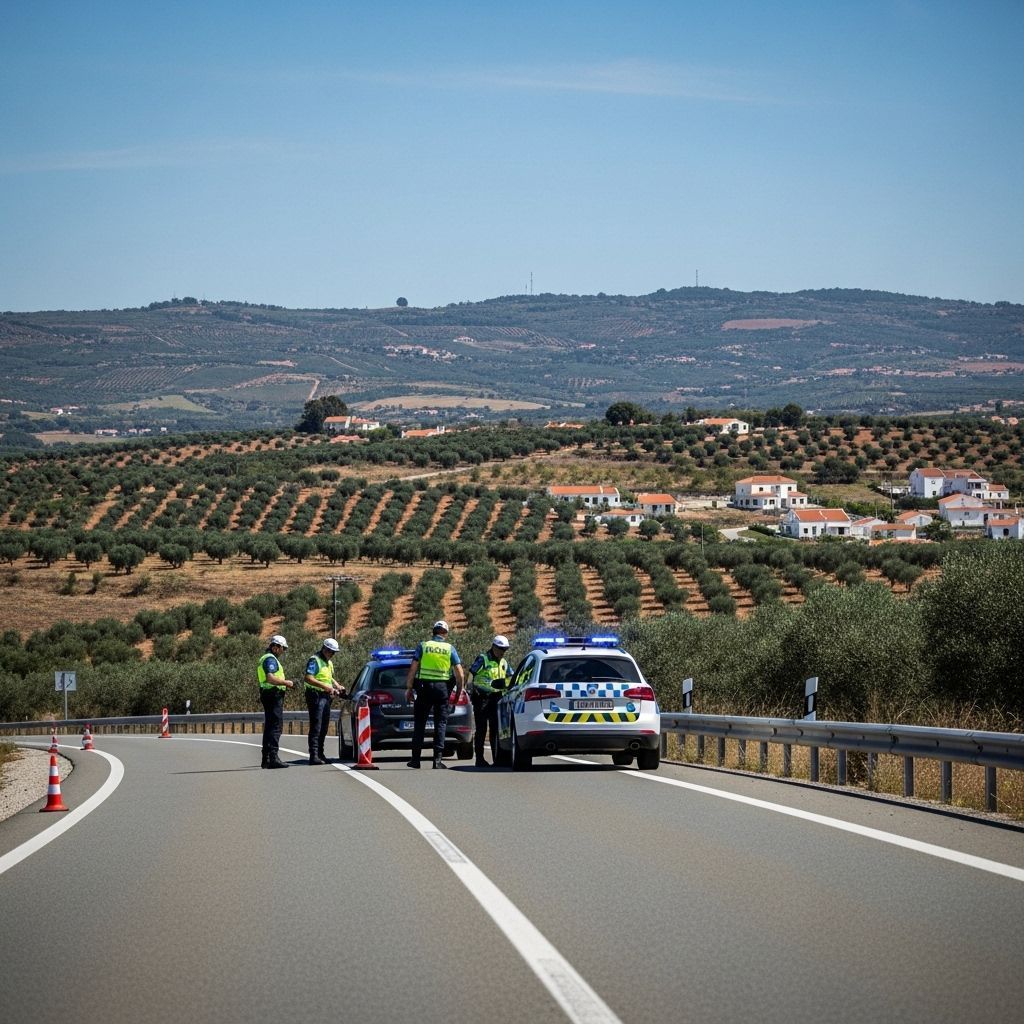
Four men aged 18 to 24 are facing robbery and kidnapping charges after a violent crime spree in Lisbon's Alcântara district escalated to the point where one victim jumped into the Tagus River to escape his captors. The suspects were detained following swift action by the Lisbon Metropolitan Command of the Public Security Police (PSP), which intercepted the group within hours of the initial report.
The case, which unfolded this month in the waterfront neighborhood, highlights both the evolving tactics of street criminals in the capital and the rapid-response capabilities of local law enforcement. One victim managed to reach a nearby hospital and alert authorities, while his companion—who had been forcibly taken by the assailants—resorted to desperate measures to break free.
Why This Matters
• Financial impact: The kidnappers withdrew €900 from an ATM using the victim's cards during the abduction.
• Public safety concern: The incident occurred in Alcântara, a popular district near the Docas waterfront area frequented by residents and tourists.
• Swift police action: PSP mobilized multiple units immediately after receiving victim descriptions, leading to arrests the same day.
• Light judicial measures: Despite the severity of charges, suspects were released under bi-weekly reporting requirements, not pre-trial detention.
From Hospital Alert to River Escape
The ordeal began when two friends were confronted by a group of individuals in Alcântara. After the initial robbery, one victim managed to flee and sought help at a hospital in the vicinity, where he provided PSP officers with detailed descriptions of the attackers and the vehicle they were using. That intelligence proved critical.
Meanwhile, his friend was not as fortunate. The second victim was forced into the suspects' car and driven through the city while the assailants allegedly used his bank cards to withdraw €900 at an ATM. According to PSP reports, the victim remained in the vehicle under duress as the group continued their movements through Lisbon's streets.
At some point near the Docas area—Alcântara's riverside development known for restaurants, nightlife, and marina access—the victim saw an opportunity. He managed to exit the moving or stopped vehicle, but quickly realized he was being pursued. Faced with the choice of recapture or a dangerous escape route, he chose the latter: he jumped into the Tagus River.
The victim swam to safety and was later retrieved by emergency medical personnel. He was transported to Hospital de São José, where he received treatment. The PSP confirmed that both medical and police units responded to assist the victim after he emerged from the water.
What This Means for Residents
This case underscores a reality that many Lisbon residents are increasingly aware of: violent crime, while statistically declining in recent years, can still manifest in brazen and dangerous forms. The Alcântara district, particularly its waterfront zones, has seen investment and gentrification, but it remains a mixed-use area where late-night incidents are not uncommon.
For those living in or frequenting Alcântara, the incident is a reminder of situational awareness. The Docas area, while well-trafficked and generally considered safe during peak hours, becomes quieter after midnight. The PSP has expanded its Community Policing program into the Vale de Alcântara in recent years, with foot patrols and regular liaison with local businesses and resident associations. However, the program operates primarily during daytime hours.
Practical takeaways include avoiding isolated sections of the riverfront late at night, being cautious with personal belongings in public spaces, and knowing that emergency response—both police and medical—is active along the waterfront. The PSP's rapid mobilization in this case, from hospital report to suspect interception, demonstrates the force's capacity to respond when victims or witnesses provide actionable intelligence.
Broader Crime Trends and Policing Response
According to provisional 2025 data from the PSP and the Annual Internal Security Report (RASI), violent and serious crime in Greater Lisbon decreased by 1.9% compared to the same period in 2024. Street robberies—encompassing incidents like the Alcântara case—were among the crime categories showing the steepest declines within that broader violent crime classification.
Nationally, robberies accounted for 61.6% of all violent crime reported in 2025. Specific robbery types saw divergent trends: bank robberies dropped 50%, fuel station hold-ups fell 33.8%, and residential break-ins declined 15.5%. However, jewelry store robberies surged 26.3%, and a wave of more than 20 armed assaults was recorded in Lisbon during a single week in January 2026, eventually leading to arrests by the PSP.
The year 2024 had already marked a turning point, with violent crime in the Lisbon municipality down 10.4% and district-wide serious crime falling 7.6%. Yet certain subcategories bucked the trend: bag-snatching incidents rose 8.7%, vehicle thefts soared 106%, and commercial robberies increased 21.7%.
The takeaway for residents is nuanced. While the macro trend is encouraging, localized incidents—especially those involving mobile groups targeting individuals in transitional spaces like waterfronts, parking areas, and late-night zones—remain a concern. The PSP has responded with targeted operations, including the "Portas Trancadas" (Locked Doors) initiative in Vale de Alcântara aimed at disrupting drug trafficking and ensuring resident mobility.
Judicial Outcome and Public Reaction
After their arrest, the four suspects were brought before a judicial authority for a custody hearing. The measure of coercion imposed was bi-weekly reporting to authorities—a relatively lenient sanction that does not include pre-trial detention, electronic monitoring, or geographic restriction.
This outcome is consistent with Portugal's judicial practice of reserving pre-trial detention for cases involving flight risk, repeat offenses, or the most severe charges. Robbery and kidnapping, while serious, do not automatically trigger remand if the suspects have no prior record and fixed addresses. The decision reflects a balance between public safety and the legal presumption of innocence, but it may raise questions among residents who view the crimes as particularly violent and dangerous.
For the victims, the psychological and physical toll is significant. One endured a forced withdrawal of funds and hours of captivity; the other risked drowning in the Tagus—a tidal estuary with strong currents and cold water temperatures, especially outside summer months. Both will likely require ongoing support, and the judicial process may take months to reach a final verdict.
Security Infrastructure in Alcântara and the Waterfront
Alcântara and Lisbon's broader riverfront benefit from overlapping security systems. The Maritime Police, headquartered at Praça do Comércio, patrol the river and docks, focusing on maritime law enforcement, boating safety, and water-based incidents. The Lisbon Civil Protection issues flood warnings during high tides and storm surges, particularly for low-lying riverside areas.
A video surveillance expansion project is underway, with over 200 cameras being installed across 16 zones in Lisbon, including Cais do Sodré, Ribeira das Naus, and Restauradores. The system is designed to aid both crime prevention and post-incident investigation. Additionally, tsunami warning sirens are installed at Praça do Comércio, Doca de Alcântara, and Ribeira das Naus, part of a broader coastal risk-management plan.
The Alcântara parish itself maintains a Local Emergency Plan, developed with fire brigades and security forces, to coordinate responses to accidents or disasters. This includes a volunteer-based Local Civil Protection Unit.
Despite these layered systems, the nature of street crime—opportunistic, mobile, and often executed by small groups—remains difficult to prevent through infrastructure alone. The PSP's emphasis on community policing, combined with rapid-response protocols, represents the current strategy for managing this risk.
Lessons and Vigilance
This case will likely be studied by both law enforcement and legal professionals as an example of successful inter-unit coordination under pressure. The ability to trace suspects from a hospital bed description to a roadside interception within hours is a testament to the PSP's operational readiness.
For the public, the message is dual: crime rates are falling, but individual incidents can still be severe. Residents and visitors should remain alert, particularly in transitional zones like waterfronts, parking areas, and late-night commercial districts. Reporting suspicious activity promptly, as the first victim did, remains the most effective tool in enabling police response.