
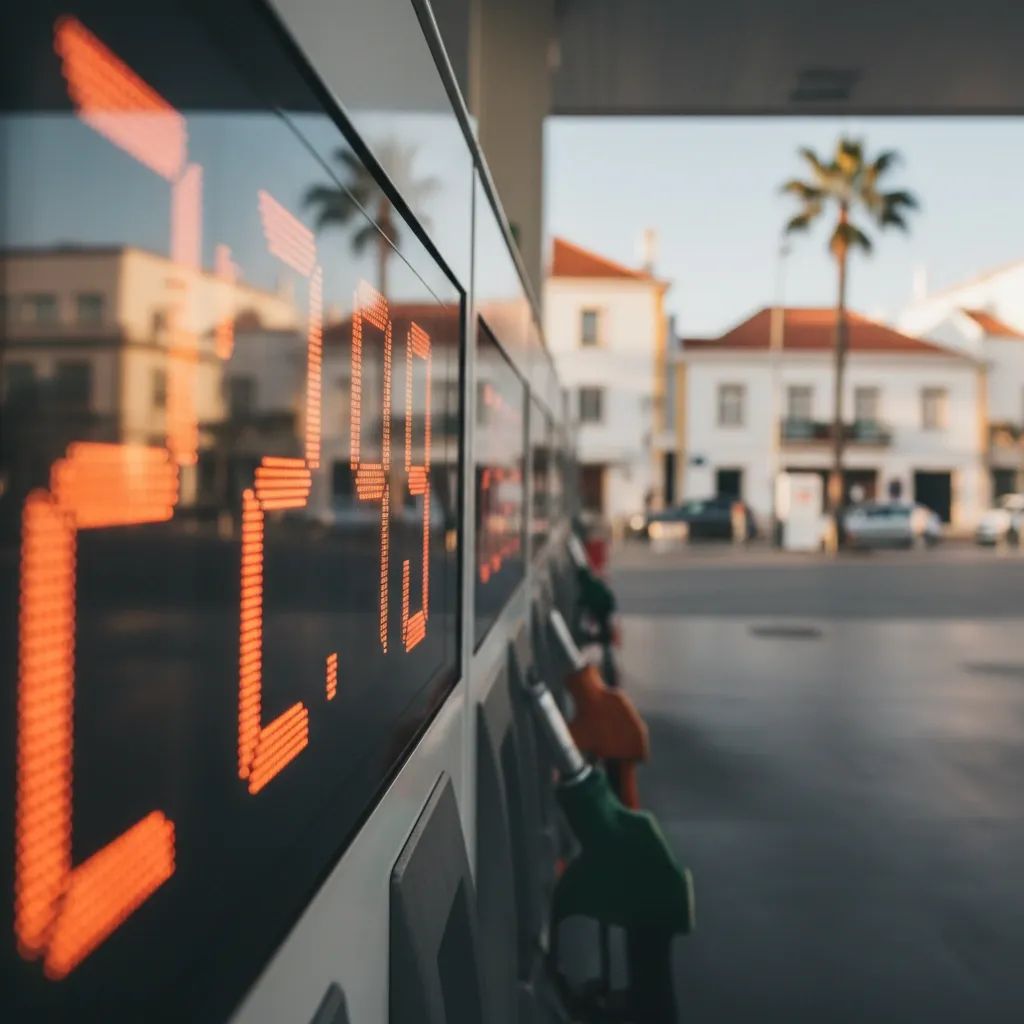
A fragile ceasefire in the Persian Gulf collapsed overnight as Iran launched retaliatory strikes on US military installations in Kuwait and Bahrain, barely 11 days after a preliminary peace agreement was signed on June 17. The Iranian Revolutionary Guard claimed to have hit major American facilities in what Tehran described as a "decisive response" to recent American airstrikes on Iranian territory. For residents in Portugal watching energy markets closely, this escalation threatens to push global oil prices even higher—with experts warning crude could reach €110–€140 per barrel if the Strait of Hormuz remains contested.
What This Means for Portuguese Households and Businesses
The renewed hostilities directly threaten the Strait of Hormuz, the strategic waterway through which approximately 20% of global hydrocarbon trade flows. Portugal imports roughly 90% of its oil from abroad, with significant volumes sourced from the Middle East, making this region critical to national energy security. Portuguese consumers already feeling the pinch from elevated fuel costs should brace for further increases. The World Bank projects a 24% rise in energy prices throughout 2026, which will cascade through transportation, food production, and manufacturing. Diesel-dependent sectors—agriculture, logistics, fishing—face mounting operational costs that inevitably reach retail shelves. Airlines, chemical manufacturers, and pharmaceutical producers relying on petroleum derivatives are also vulnerable. Portugal's import-dependent economy means every dollar added to a barrel of crude eventually appears in household bills.
Why This Matters:
• Fuel prices: Goldman Sachs estimates an additional €14–€23 per barrel if shipping disruptions persist, translating to higher pump prices across Portugal. Check ERSE (Entidade Reguladora dos Serviços Energéticos) for real-time fuel price monitoring.
• Supply chain delays: Vessels carrying electronics, fertilizers, and automobiles typically transit the strait; rerouting adds weeks and costs. Portuguese fishing fleets and agricultural exporters face particular pressure.
• Inflation pressure: The Bank of Portugal may face renewed challenges stabilizing consumer prices if energy shocks continue.
• Strategic reserves: Portugal maintains approximately 90 days of strategic petroleum reserves; government contingency plans may activate if disruptions extend beyond weeks.
The Immediate Geopolitical Context
On June 27, the US Central Command (CENTCOM) struck targets inside Iran, citing violations of the June 17 ceasefire. Within hours, the Iranian Revolutionary Guard launched counter-strikes targeting American bases in Kuwait and Bahrain. US officials later confirmed no significant damage, though regional tensions escalated sharply. The Gulf Cooperation Council—comprising Oman, Saudi Arabia, Kuwait, the UAE, Bahrain, and Qatar—formally requested an extraordinary UN Security Council session to address what member states describe as "a dangerous escalation" and "systematic pattern of repeated aggression."
The Fragile Peace Agreement
The June 17 Memorandum of Understanding (MoU) between Washington and Tehran was supposed to end three months of open conflict. The 14-point document established an immediate ceasefire, guaranteed safe passage through the Strait of Hormuz for 60 days, and opened a negotiating window for a final peace treaty. The agreement promised immediate waivers for Iranian oil exports and a roadmap to lift US and UN sanctions. Yet the accord has proven fragile, with both sides accusing the other of violations within days.
Economic Fallout and Market Anxiety
Before hostilities erupted in March 2026, roughly 20% of the world's hydrocarbon trade passed through the Strait of Hormuz. The blockade and subsequent intermittent attacks drove Brent crude prices up 60% in March alone, the largest monthly surge on record. Analysts at JPMorgan Chase warn that prolonged disruption could push prices near €110 per barrel, while commodities overall are expected to rise an average of 16% in 2026, according to World Bank projections.
Portuguese importers—particularly in the aviation, logistics, and industrial sectors—are already recalibrating budgets. The ripple effects extend to manufacturing, as the strait also carries critical materials for industrial production. Shipping companies may increasingly opt for longer, costlier routes around the Arabian Peninsula, delays that Portuguese importers and exporters will feel in weeks to come.
A prediction market recently assigned a 57% probability that normal traffic through the Strait of Hormuz would resume before July 1, 2026, though shorter-term odds remain pessimistic.
What Comes Next
The next 48 hours are critical. If Iran or the United States launch further strikes, the memorandum may collapse entirely, returning the Gulf to full-scale conflict. CENTCOM insists that "commercial maritime traffic in the Strait of Hormuz continues" despite the attacks, though insurers are likely to hike premiums for vessels transiting the zone.
A new round of US-Iran negotiations opened in Switzerland on June 21, but talks have yet to produce tangible progress. The international community's ability to broker a durable peace hinges on whether both Washington and Tehran can commit to verifiable de-escalation—a prospect that, as of late June 27, remains deeply uncertain.
Practical Guidance for Portuguese Residents
For Portuguese households and businesses, the immediate actions include:
• Monitor fuel prices through ERSE (www.erse.pt) for real-time updates and price comparisons
• Review energy consumption in households and businesses; consider efficiency measures to reduce exposure to price spikes
• Check supply chain status if your business relies on Gulf-sourced materials or imports transiting the Strait of Hormuz
• Stay informed on government contingency announcements regarding strategic petroleum reserves or emergency measures
• Sectors most exposed: Fishing, agriculture, logistics, aviation, and transportation industries should prepare for sustained cost pressures
The Gulf's instability is no longer a distant geopolitical headline—it is a direct variable in Portugal's economic reality, particularly for energy-dependent sectors and households managing household budgets.


