

The Quiet Legend: Why José Fonte's Retirement Reshapes Portugal's Defensive Blueprint
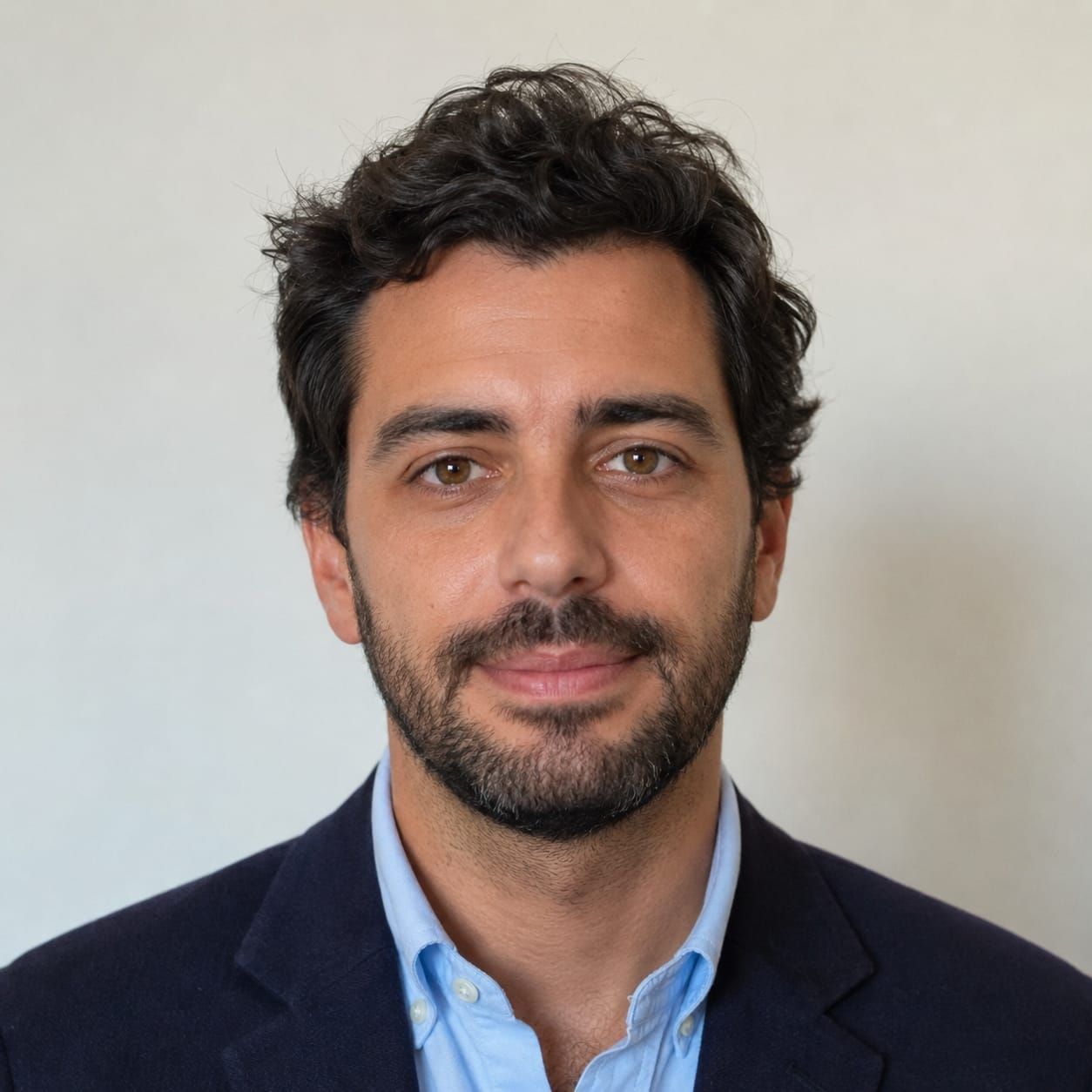
The Portuguese Football Federation honored José Fonte on June 11 at a ceremony in Oeiras, recognizing the 42-year-old defender's extraordinary 24-year career that culminated in Euro 2016 glory. After helping Casa Pia secure Primeira Liga survival through a relegation playoff—finishing 15th before defeating second-tier side Torreense to remain in the top division—Fonte played his final match on May 28. His departure matters to everyone learning a trade: two decades of evidence that late bloomers can reach football's summit, that elite-level achievement doesn't require childhood prodigy status or early acceleration through academy pipelines.
FPF President Pedro Proença framed Fonte's retirement as an institutional moment—one that underscores Portugal's capacity to manufacture world-class defenders from unconventional pathways, rather than treating his farewell as merely nostalgic ritual.
Why This Matters
• Late-career longevity now validated institutionally: A 42-year-old defender earning formal federation recognition signals that clubs and academies across Portugal should recalibrate expectations around player development timelines.
• Defensive succession planning gains credibility: With Pepe still active at 41 and Rúben Dias emerging as Manchester City's anchor, Fonte's hybrid path proves depth can sustain through generations without early prodigies monopolizing opportunities.
• Club infrastructure: the overlooked variable: Fonte's capacity to perform at elite European clubs despite modest club-level origins in Portugal suggests investment in player medical and recovery systems extends competitive windows.
From Third-Division Obscurity to Continental Recognition
Fonte's arc inverts conventional football mythology. Born in Penafiel on December 22, 1983, he cycled through Sporting CP's academy without graduating to senior competition. Rather than languishing, he worked systematically through Portugal's lower rungs—Felgueiras, Vitória de Setúbal, Paços de Ferreira—before Benfica loaned him to Estrela da Amadora. Notably, the Lisbon giants never fielded him in official fixtures, a career stumble that would have ended lesser players' ambitions.
His move to Crystal Palace in the English second tier seemed appropriate for his resume. Southampton changed everything. Over roughly a decade there, Fonte appeared in 288 competitive matches and eventually wore the captain's armband, becoming the organizational hub around which the club rebuilt itself from lower-league status into Premier League consistency. This wasn't peripheral seasoning; it was the work that actually hardened his technical foundation for later excellence.
The French adventure proved revelatory. At LOSC Lille, Fonte entered his late thirties and became the fulcrum of an upset Ligue 1 title triumph in 2020–21, dethroning Paris Saint-Germain in the process. He started more than 30 matches, providing the defensive discipline that permitted attacking freedom elsewhere. A half-season in China with Dalian Pro punctuated this phase, but his essential value remained intact.
Upon returning to Portugal in 2023, Fonte joined Sporting de Braga, where he secured the Taça da Liga before finishing his career at Casa Pia. Playing time contracted—20 appearances in his final season—yet the club retained him through two seasons, suggesting respect for professionalism even as his involvement declined.
The Turning Point: Defense as Architecture
Fonte's international career followed a different rhythm. He earned his first cap later than elite defenders typically do, and during Euro 2016's group stage, Portugal managed only three uninspiring draws against Iceland, Austria, and Hungary. Qualification appeared fragile; Fonte was not a regular starter.
Everything shifted in the knockout rounds. Coach Fernando Santos elevated Fonte into the starting eleven alongside Pepe, and the pairing proved decisive. One was organizational backbone; the other was aggressive ball-winner. This asymmetry troubled every opponent Portugal faced. Fonte played all four elimination matches, including the final in Paris, where Éder's extra-time goal delivered 1–0 victory over France. That strike into the net's roof has replayed in Portugal's collective memory for ten years—but it arrived because Fonte's defensive line had neutralized French pressure throughout 120 minutes.
Pedro Proença captured this at the tribute ceremony: "José is one of the cornerstones of our squad—the squad that gave us one of our greatest joys. He leaves having earned 50 caps for Portugal, and today we celebrate what he truly is: a legend of Portuguese football."
Éder, Fonte's former teammate and Euro 2016 goalscorer, added: "He is a champion in every sense, and as a man an example for us and for Portugal's youth development. He was released by clubs and managed to come back stronger. Young players should study José's path with ambition, because he achieved it extraordinarily."
Fonte contributed to the 2018/19 UEFA Nations League triumph as well, Portugal's victory over the Netherlands in Porto adding a second major international trophy. By decade's end, he had assembled a distinctly Portuguese resume: two continental honors, consistent club excellence across multiple leagues, and the kind of resilience that resonates in a football culture shaped by redemption narratives.
Portugal's Defensive Lineage: Where Fonte Fits
Comparing Fonte to Portugal's other elite center-backs illuminates both what he achieved and what distinguishes each defender's contribution.
Pepe—still playing at 41 for FC Porto and the national team—remains the generational anchor. His aggressive anticipation, positional mastery, and sustained excellence at Real Madrid created a different archetype than Fonte: peak dominance across a single elite institution over years. Pepe has captured multiple La Liga titles and Champions League honours, making him the exemplary European-based success story.
Ricardo Carvalho, another Euro 2016 winner, defined tactical refinement. He won three Premier League titles with Chelsea and remains among the most technically polished Portuguese defenders on record. His skill reading the game—anticipating passing lanes, distributing possession from deep—set a template for intelligent defending that Fonte sometimes matched but never quite replicated as his signature.
Rúben Dias represents the contemporary standard. Already a Premier League Player of the Year at Manchester City and a Champions League finalist, Dias combines Pepe's aggression with Carvalho's technical sophistication, suggesting the next generation of Portuguese defense will demand both dimensions simultaneously.
Fernando Couto, who built a 21-year career across Porto, Barcelona, Parma, and Lazio, established that Portuguese defenders could thrive across multiple elite leagues—a lesson Fonte internalized. Fonte, however, spent more seasons competing at secondary tier status before reaching the continental level, making his eventual ascent qualitatively different: less about early recognition and more about persistent development.
Fonte's distinction, then, rests not on dominating a single institution at its apex but on threading a careful path through multiple systems—English underperformance at Southampton transformed into leadership, French shock success at Lille, and Portuguese utility defending in his final years. He became a bridge player: experienced enough to stabilize emerging talent, veteran enough to teach by example rather than instruction.
The Professional Apparatus Behind Longevity
What enabled Fonte to remain competitive into his fifth decade was obsessive attention to physiology. Teammates across multiple clubs cite his meticulous recovery protocols—specialized nutrition, structured sleep, sports science intervention. This mirrors Pepe's ongoing discipline, and together they've demonstrated that elite defensive play need not decline sharply with age if infrastructure receives appropriate investment.
For Portugal's football development system, Fonte's longevity offers a secondary lesson beyond tactical sophistication: financial commitment to player welfare—medical staff, nutritionists, recovery specialists—pays dividends not merely in peak seasons but in career extension. A defender serviceable into his early forties extends the development window for younger players, reducing pressure to assume central roles prematurely.
Casa Pia's decision to retain him through two seasons reflects this principle in practice. His 20 appearances in 2025–26 represented limited playing time, yet the club valued his presence enough to renew commitment. That's not nostalgia; it's recognition that veteran professionalism improves squad environment independent of match output.
The Statistical Record
Across 24 professional seasons, Fonte compiled 882 official competitive appearances, spanning six nations and three continents. At Southampton alone, he logged 288 appearances—placing him among the club's all-time modern-era leaders in games played. His 50 national team caps represent significant honor; most defenders at his competitive level accumulate 30–40 caps, making 50 a reliable marker of sustained excellence rather than peak brilliance.
He scored once in his final season at Casa Pia—a set-piece contribution at age 42, an often-overlooked dimension of defensive utility. His trophy collection includes Euro 2016, the 2018/19 UEFA Nations League, Ligue 1 (2020–21), and the Taça da Liga (2023–24). Notably absent were Portuguese domestic league titles or European club competition wins—the trophies that define Pepe's and Carvalho's legacies. This gap underscores that Fonte's greatness was distributed across contexts rather than concentrated within one institution's golden years.
What Comes Next: The Coaching Question
The FPF tribute ceremony drew more than 50 attendees, including fellow Euro 2016 winners Rui Patrício and Éder, both also retired. National team coach Roberto Martínez, temporarily stationed at the same facility preparing for 2026 World Cup qualifiers, attended alongside FPF directors João Vieira Pinto and Pedro Pauleta, signaling institutional expectation that Fonte would remain connected to Portuguese football.
Immediate post-retirement weeks have been consumed by honors rather than concrete planning. Casa Pia has indicated positions available within coaching staff or directorial structure, though Fonte has not committed. He's signaled intent to pursue UEFA coaching certifications, a practical step most elite-level retirees undertake within months.
Should he transition to coaching, he'd join a tradition: Paulo Ferreira, Nuno Valente, and Carvalho himself have moved into technical roles post-retirement, feeding elite-level experience back into domestic talent development. His resume—familiarity with Southampton's academy infrastructure, Lille's organizational systems, and Portuguese clubs' operational realities—carries practical value in shaping emerging talent.
The Institutional Meaning
A federation honoring a retiring 42-year-old defender signals more than sentiment. It affirms that Portuguese football values longevity, professionalism, and the capacity to elevate teammates—qualities Fonte embodied across a quarter-century. By comparison, Pepe's ongoing playing career means formal tributes remain distant; Fonte's retirement crystallizes a moment for institutional reflection on what his particular combination of late arrival, sustained excellence, and collective trophy success means for football development across the country.
For young Portuguese players observing from academies across Lisbon, Porto, and Braga, Fonte's arc offers tangible proof. Elite football doesn't require prodigy selection at age 8. A disciplined defender can rise through secondary systems, prove capability in secondary English leagues, achieve continental success in middle age, and retire as a recognized architect of national sporting triumph. That narrative matters far more than sentiment.
The ceremony on June 11 wasn't nostalgia. It was precedent.


