

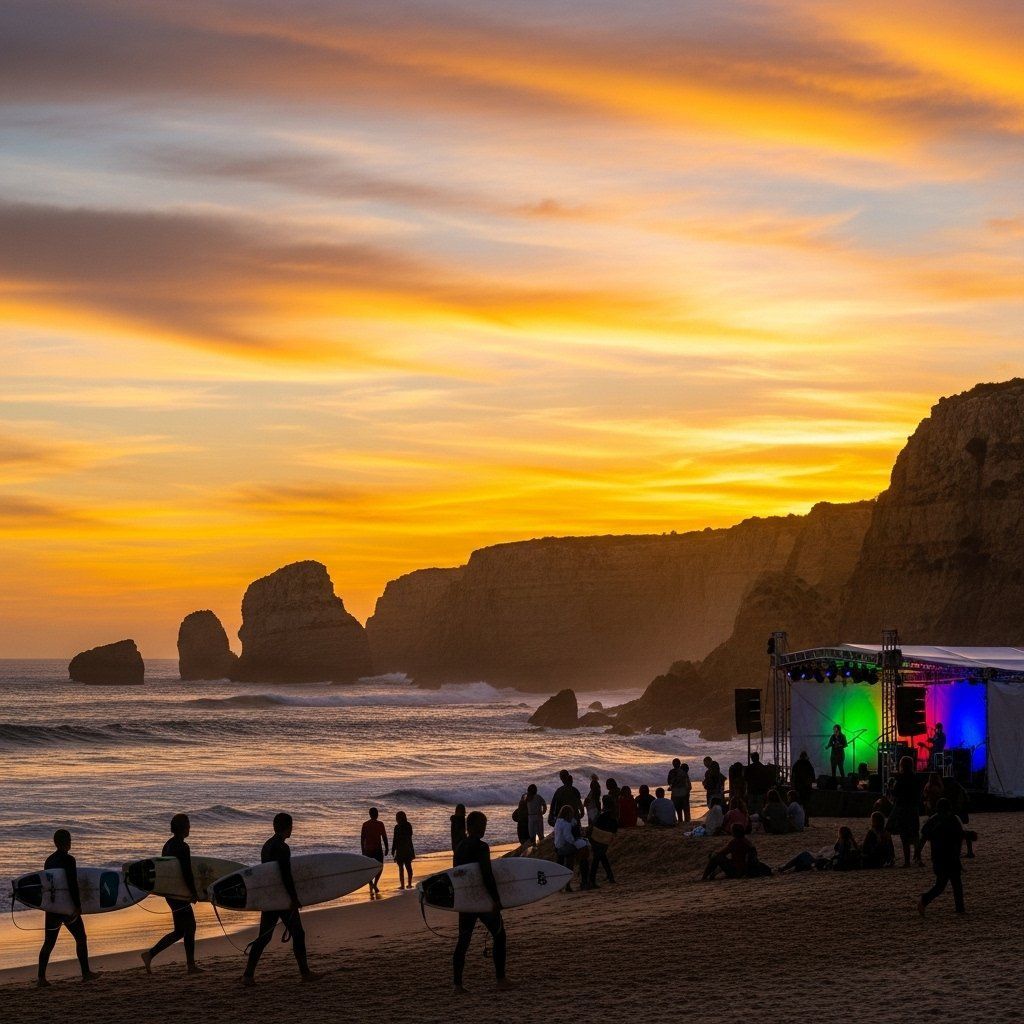
The Algarve's Free Wine Festival Returns to Lagoa June 5-9, 2026
The Lagoa Municipality will host its annual wine festival June 5-9, 2026—five consecutive evenings without charging admission. This is the differentiation that matters for anyone planning a summer outing in the region: no gate fees, no obligation to buy, just open access to wine tastings, regional food, live music, and cultural programming across the historic quarter from 7 PM to midnight each night.
Why This Matters
• Zero entry cost removes the typical barrier that deters casual visitors from wine events across southern Portugal; families and tourists can explore without financial commitment.
• Running June 5-9, 2026 means flexibility—attendees can visit once or multiple times without additional expense.
• Wine education and discovery are embedded naturally through tastings, chef-led demonstrations, and informal producer conversations rather than formal seminars.
• Regional economic boost: The 2025 edition drew 3,500 visitors; the 2023 iteration logged over 6,000 wine tastings, generating measurable income for local restaurants, shops, and accommodations.
What The Lagoa Wine Show Will Offer
The five-day calendar will operate on a simple structure: each evening will unfold across the zona antiga (historic quarter), where wine producers will set up tasting stands, guest chefs will conduct cooking demonstrations, and musicians will perform in open-air settings. The rhythm will progress naturally. Early hours (7 PM to 8 PM) will feature the quietest tasting conditions and producers with time to discuss their wines in detail. Showcooking sessions will typically run 7:30 PM to 8:30 PM, pairing regional specialties—octopus, clams, almond-based pastries, piri-piri preparations—with carefully selected wines. Musical performances will begin around 9 PM and extend through the evening.
The lineup will span generational appeal: performers will include Áurea (pop-soul fusion), Ana Bacalhau (folk-influenced), Raquel Tavares (Fado tradition), Tito Paris (Cape Verdean-Portuguese guitarist), and Descendentes (contemporary folk). This cross-generational mix will ensure that both 20-year-olds and 60-year-olds find resonant content. The Fado programming particularly matters—it will offer casual listeners an informal introduction to Portugal's emotionally complex national music tradition in an outdoor, low-pressure setting, removing the social anxiety some foreign visitors associate with formal casas de fado.
Wine tastings will operate through a token system: attendees will purchase tasting credits at central booths and redeem them at producer stands. Most tastings will cost one to two tokens (roughly €2–€4 per pour), with full bottles available directly from producers at listed prices. This mechanism will allow vendors to manage inventory while giving visitors flexibility to sample multiple producers without committing to large purchases upfront.
Understanding the Wines and Producers
The 2026 edition will bring together producers from the Algarve alongside established names from the Douro, Vinho Verde, Lisboa, and Moura regions. This geographic diversity will mean attendees will encounter parallel tastings—Douro reds alongside Algarve whites, for instance—without competitive hierarchy. The masterclasses will focus on varietal characteristics, terroir effects, and blending techniques, positioning Algarve wines as legitimate subjects of study rather than secondary curiosities.
This positioning reflects a deliberate shift in how the region's wine industry markets itself. For decades, Portuguese wine conversations centered on the Douro Valley (port production and terraced vineyards) or the Dão region (structured reds). The Algarve remained overlooked—more famous for beaches than bottles. Over the past 15 years, however, Algarve producers have quietly refined quality. Four DOC-certified wineries operate within Lagoa's municipality alone, and the broader region now produces serious bottlings that challenge old hierarchies. The 2025 regional "Event of the Year" award from the Associação de Municípios Portugueses do Vinho signaled industry recognition: this festival now functions as a nationally acknowledged platform, not a local curiosity.
Practical Attendance: Navigation and Logistics
Parking represents the main friction point. Municipal lots on Rua Garrett and Rua Coronel Figueiredo sit closest to the festival zone but typically fill by 7:30 PM on Friday and Saturday evenings. The Lagoa Municipal Market lot—approximately 10 minutes' walk from the festival—offers alternative parking. Public transport from neighboring towns like Portimão, Silves, and Albufeira exists but runs infrequently during evening hours; most attendees will arrive by private vehicle or rideshare.
Early June weather in the Algarve averages daytime highs in the mid-20s Celsius (68–73°F), but evenings cool noticeably after sunset (around 9:15 PM). Bring a light jacket or sweater. Wind and temperature fluctuations are real considerations in open-air settings, not theoretical.
For those prioritizing wine tastings over concerts, arriving between 7 PM and 7:30 PM will offer the advantage of less-crowded producer stands and more relaxed conversation time. Most tasting operations will thin out after 11 PM, so plan accordingly if wine education is your primary goal.
Economic and Cultural Impact for the Region
The Lagoa Wine Show functions simultaneously as cultural programming and economic stimulus. The 2025 edition brought 3,500 visitors to a town of fewer than 24,000 residents. While many are tourists already vacationing in the Algarve, the festival will encourage them to venture beyond the coastal resort concentration of Portimão and Albufeira into the interior. This geographic distribution will matter economically: it will channel discretionary tourism spending toward local businesses that depend on visitor activity but sit outside the primary resort corridor.
Restaurants near the festival zone will report measurable revenue upticks during the five-day window. Cafés will sell additional coffee and pastries as early arrivals settle in. Accommodation providers will experience occupancy increases. Local wine producers will gain direct-to-consumer sales without distributor intermediaries—a margin advantage that smaller estates, lacking major marketing budgets, value enormously. Networking forums like the Lagoa Wine Tourism Forum will create professional connections, generating conversations about enotourism routes, hospitality investment, and regional strategy.
For a municipality positioned outside the primary Algarve tourism corridor, the festival will represent strategic positioning: it will assert Lagoa as a quality destination year-round, not merely a summer beach extension. The national award recognition amplifies this message, signaling to travel planners and tourism boards that Lagoa merits positioning alongside more established wine regions.
How Lagoa Stands Apart
Most large-scale wine events in Portugal charge admission—the European Terroir Wine Festival and Enóphilo Wine Fest impose €20–€30 entry barriers. The Lagoa Wine Show will eliminate them entirely. This single decision will reshape audience composition: attendees will include wine enthusiasts but also curious tourists, local families seeking weekend activity, and casual drinkers exploring without commitment or knowledge barriers. The atmosphere will reflect this mix—sophisticated enough to engage wine professionals, approachable enough for complete novices.
The cultural integration will further distinguish this festival. Rather than isolating wine tastings in a dedicated pavilion, the festival will embed them within a broader celebration of Algarve gastronomy, Portuguese music heritage, and regional identity. Fado performances will carry historical weight, educating visitors about one of Portugal's most iconic cultural exports while remaining accessible and informal. Few competing festivals achieve this balance.
The geographic angle will be equally distinctive. While other events celebrate established wine powerhouses, the Lagoa Wine Show will deliberately champion the Algarve's emerging reputation, treating it as a frontier region rather than a secondary player. This narrative will appeal to visitors and investors interested in discovery, not just prestige validation.
The festival will conclude June 9, 2026. For residents, it represents a straightforward cultural outing requiring only time. For tourists, it offers Portugal's wine culture without formality or financial commitment—a rare combination in a country where wine tourism often skews toward premium experiences and structured tours.


