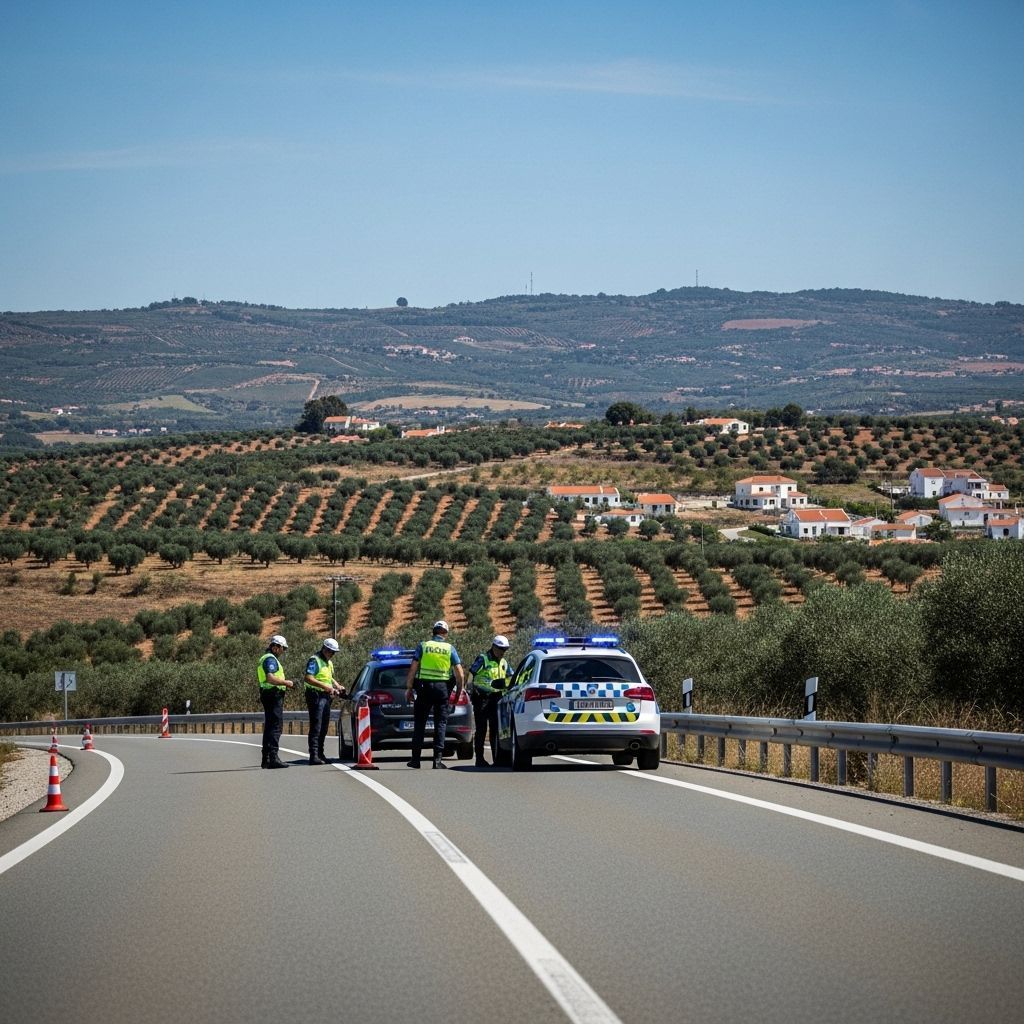
Portugal's Civic-Military Programme Offers Free Driving Licence—But Implementation Remains Uncertain
Young Portuguese aged 18 to 23 now have a political pathway to a free driving licence, but the catch is immediate: the Portugal Parliament has endorsed a recommendation, not a law. Until the Government Cabinet acts to transform this into binding legislation, the offer remains aspirational rather than actionable.
The initiative, branded "Defender Portugal," received parliamentary approval as a recommendation to the executive in late May 2026. As of the time of writing, this recommendation has not yet been transformed into binding legislation by the government. The proposal received backing from the ruling PSD, CDS-PP coalition and support from Chega and Iniciativa Liberal (IL). Opposition from Livre, PCP, Bloco de Esquerda, and PAN signals a divided chamber. The measure targets a pressing problem: Portugal's Armed Forces have struggled with recruitment since transitioning to an all-volunteer model in 2004, with first-time enlistments declining from 3,054 in 2020 to just 2,192 in 2023.
Key Takeaways
• Free driving licence upon completion of a 3–6 week programme at military facilities—a benefit worth €1,000–€1,500 in standard acquisition costs
• €439 one-time payment representing 50% of basic Armed Forces training allowance
• Career boost: Programme completion counts toward entrance exams for Armed Forces, police, fire brigades, and security services
• Status: Parliamentary recommendation only—no start date, no funding allocated, no implementing decree-law yet published
What Attracts Young People?
The driving licence incentive is the scheme's centerpiece. In Portugal, obtaining a full licence typically requires €1,000–€1,500 in combined costs: theory courses, practical instruction, exam fees, administrative charges, and potential retakes. For working-class or middle-income youth, this barrier is real. The programme essentially crowdsources this investment through military training—a trade young adults may find pragmatic.
The €439 payment functions as modest compensation for lost wages during the residential portion. For university students or those between jobs, a three-to-six-week summer commitment with free meals, lodging, and skills training holds appeal, especially if the driving licence emerges at the end.
Employment prospects sweeten the deal. Military service completion—even brief volunteering—signals reliability to recruiters and provides formal credential value in civil service exams. This resonates with a generation entering a competitive job market.
Why This Matters for Portuguese Living at Home
For residents struggling with mobility costs, the scheme's timing coincides with broader economic pressures. Inflation has eroded household purchasing power. A free licence removes friction for young adults seeking to enter labour markets where transport independence is assumed—rural employment, trade work, or roles requiring geographical flexibility.
However, the three-to-six-week residential requirement creates practical friction. Those with summer internships, family caregiving duties, or precarious income cannot easily sacrifice five to six weeks, even for tangible gain. The programme implicitly favours those with economic slack—students whose families absorb lost earning potential, or young people in savings-friendly positions.
Regionally, youth in smaller towns and rural areas may disproportionately benefit. Urban residents in Lisbon and Porto often delay driving and rely on public transit. The incentive structure may inadvertently skew recruitment toward economically marginal regions and less-educated demographics—a tension the Ministry of Defence has not publicly addressed.
How Europe Is Competing for Military Youth
Portugal's approach arrives amid a continent-wide recruitment scramble. Across NATO and EU member states, rising defence budgets and aging populations have created competition for young volunteers.
Poland offers €1,500 monthly during one-month basic training, plus a professional driving licence and meals. France began rolling out a 10-month voluntary scheme in 2026 with €800–€950 monthly stipends. Germany raised starting salaries to €2,600 monthly and subsidizes driving courses. The United Kingdom piloted a £26,000 annual "gap year" scheme for 18–25-year-olds beginning 2026. Belgium introduced one-year voluntary service at approximately €2,000 monthly starting September 2026. Croatia reintroduced two months of mandatory service at €1,100 monthly in January 2026.
Portugal's €439 payment and licence offer is modest by regional comparison. The scheme bets on patriotic appeal and practical utility rather than lucrative compensation. For young people in Portugal comparing opportunities, these European alternatives may influence decisions about whether to wait for Portugal's program or pursue options elsewhere in the EU, where freedom of movement allows Portuguese citizens to participate in some schemes.
The Political Fault Lines
The parliamentary vote exposed ideological splits. Left-wing opposition parties (PCP, Bloco de Esquerda, Livre, PAN) framed the initiative as a "marketing stunt" and trivialization of military service. Critics alleged it transforms barracks into "theme parks for teenagers" and questioned whether short-term incentive-seekers possess the discipline military work demands.
Military syndicates and associations privately expressed skepticism. Professional soldiers worry that volume-driven recruitment sacrifices personnel quality and commitment. If thousands of 18-year-olds enlist primarily for a free licence and pocket money, retention and morale may suffer. The Armed Forces would face a revolving door rather than a stable pipeline.
Funding concerns persist. Who pays for driving instruction at scale? The Ministry of Defence has not released budget projections or contractor arrangements. If a small pilot program balloons into thousands of participants, infrastructure and staffing gaps could render implementation chaotic.
Timing ambiguity also troubles critics. The Government has not announced a launch window. Late 2026? 2027? Until a Decree-Law appears in the Diário da República (the official gazette), the offer remains speculative. Youth planning their summer need certainty, not hopes.
What Happens Behind the Scenes Now
The Portugal Cabinet must draft and approve an implementing Decree-Law before recruitment begins. This legal instrument must specify:
• Eligibility screening (criminal history, health, motivation vetting)
• Training curriculum and military facility locations
• Driving instruction logistics (which schools, manual vs. automatic transmission, licence categories)
• Pass/fail protocols (what happens if a youth fails the driving test?)
• Tax and labour status of the €439 payment
• Discharge procedures and contractual obligations post-completion
Public consultation, coordination with the Armed Forces General Staff, and budget line-item approval add months to the process. Political sources suggest debut in late 2026 or early 2027, contingent on 2027 State Budget negotiations. No guarantees exist.
Comparative European Context: Mental Health Emphasis
In the same parliamentary session, lawmakers approved a "Strong Mind" national mental health plan for Armed Forces personnel and their families. The General Staff must publish annual mental health reports starting 2027. This reflects broader NATO-wide recognition that psychological support accelerates retention and morale.
Portugal's mental health initiative mirrors Sweden's consciousness-raising around military service quality and support structures. The combination—recruitment incentive plus wellness infrastructure—signals a maturing approach to professional soldiering. Whether both initiatives proceed in tandem or suffer budget trade-offs remains unclear.
What Should Interested Youth Do Now?
If you are aged 18–23 and interested in this programme, here are concrete steps:
Monitor Official Channels:
• Visit the Portugal Ministry of Defence website (www.defesa.gov.pt) regularly for updates on "Defender Portugal"
• Check the Diário da República (www.diariodarepublica.pt) for publication of the implementing Decree-Law—this is the official legal notification
• Follow official social media accounts from the Ministry of Defence and Armed Forces General Staff
What to Prepare:
• Ensure your criminal record is clear (minor convictions may be reviewed case-by-case)
• Obtain a basic health check to confirm no disqualifying medical conditions
• Gather identification documents (citizen card, passport, proof of residence)
• Document any existing driving experience or education
Realistic Timeline:As of June 2026, the programme remains in the recommendation phase. A launch is most likely to occur in late 2026 or early 2027, pending government action and budget approval. Do not expect applications to open immediately. Treat this as a future opportunity, not an immediate one.
Stay Informed:Subscribe to alerts from the Ministry of Defence or consider contacting your local military recruitment office to request updates. When the implementing Decree-Law is published, application procedures and deadlines will be clearly outlined.
Unanswered Questions Keeping Young People Waiting
• When will the implementing Decree-Law be published?
• How many annual places will exist?
• Will applicants face competitive selection or first-come, first-served admission?
• What disqualifies candidates (criminal record, family history, medical conditions)?
• If someone fails the driving test after 5 weeks of military training, do they keep the €439 or repeat the course?
• Is the €439 taxable income under Portuguese tax law?
• Will the driving licence permit all vehicle categories (category B for cars only, or also vans)?
• Can international driving licences be reciprocally recognized, or is this Portuguese-only?
• What role, if any, will private driving schools play versus military-run instruction?
• Are there restrictions on how soon after completion participants must renew or upgrade their licence?
These specifics matter enormously to prospective volunteers. Without them, recruitment messaging rings hollow.
The Verdict: Hope, Not Yet Opportunity
Parliamentary approval is a symbolic milestone, not a launch announcement. Young Portuguese aged 18 to 23 should monitor official government channels—not social media posts—for definitive updates. The Portugal Ministry of Defence website and the Diário da República will signal real progress.
For now, "Defender Portugal" remains in the early implementation phase: a proposal from a ruling coalition keen to demonstrate action on recruitment, backed by partial political consensus, stalled at the legal implementation gateway. Interested youth should treat this as a future opportunity, not an immediate one, and monitor developments as mid-2026 transitions into later months.
The free driving licence is real in principle, valuable in practice, and uncertain in timeline. That paradox—simultaneously appealing and unavailable—encapsulates the state of Portuguese military recruitment in mid-2026.