France's lethal July heat wave is reshaping how Portugal and neighboring countries prepare for extreme summer conditions, as French authorities implement emergency measures that have cut access to landmark attractions, halted major festivals, and exposed the escalating human and economic toll of climate-driven temperature spikes.
Why This Matters
• Over 2,300 heat-related deaths recorded in France since May 2024, with June alone linked to more than 2,000 fatalities — a mortality spike that underscores the immediate danger facing southern European populations.
• Major cultural and economic disruption: France cancelled Bastille Day fireworks nationwide and shut the Eiffel Tower, Louvre Museum, and other landmarks early, signaling the threshold at which tourism-dependent economies must prioritize public safety.
• Third consecutive heat wave since May — a frequency that challenges traditional seasonal planning for businesses, public services, and residents across Portugal and the Iberian Peninsula.
• Wildfire risk escalates dramatically: A single blaze in the Pyrénées-Orientales consumed 4,900 hectares before containment, while Météo-France placed 71 zones under high fire danger alerts.
Record-Breaking Temperatures and Unprecedented Scope
More than one-third of France entered maximum red alert status this week, with temperatures between 37°C and 41°C hammering regions including Paris and Île-de-France. The capital recorded 37°C on Saturday, July 11, and the overnight low of 24.2°C made it the hottest June night in Parisian records. On June 24, the town of Pissos hit 44.3°C, the highest daily temperature in France since 1947.
Météo-France characterized the event as "prolonged, intense, and widespread," forecasting extreme heat to persist until at least mid-next week. The rest of the country, save for about ten communes in Corsica and the southeast, remains under orange alert — the second-highest tier.
This is France's third major heat wave since May. The May episode caused roughly 300 deaths, while June's surge was associated with more than 2,000 fatalities in a single week, with over 1,000 additional deaths recorded in just three consecutive days. Most victims were aged 65 or older, and a notable rise in deaths occurred within private residences, highlighting the vulnerability of isolated elderly populations.
How France Is Responding: Emergency Protocols and Protection Centers
Since the catastrophic 2003 heat wave — which killed an estimated 15,000 to 19,000 people in France — the country has built one of the world's most comprehensive heat resilience programs. The Plan Canicule, established in 2004, operates a four-tier warning system that triggers coordinated responses across meteorological, health, and civil protection agencies.
Under red alert conditions, authorities activate the ORSEC "extreme heat" plan for the first time in history. This protocol mandates the creation of climate-controlled protection centers in every affected department, offering vulnerable residents air-conditioned shelter, cots, drinking water, first-aid kits, and medical monitoring.
Météo-France updates a color-coded alert map daily, and municipalities must provide access to cooled public spaces, track at-risk residents, and ensure water distribution. A national toll-free hotline — 0 800 06 66 66 — offers guidance for people in fragile situations.
Worker protections have also expanded. Employers must implement heat mitigation measures, including adjusted work processes, increased water supplies, and training. Delivery platforms now suspend service in red-alert zones to protect couriers.
Cultural and Economic Fallout: Festivals Cancelled, Landmarks Closed
The immediate economic impact is staggering, though full accounting will take months. Major festivals including Solidays, Chambord Live, and Garorock anticipate losses in the millions of euros. Smaller events face existential threats, with organizers warning of significant financial damage, rising insurance premiums tied to climate risk, and inadequate public compensation for cancellations.
Cultural venues altered operations to protect visitors and staff. The Eiffel Tower closed at 4:00 PM over the weekend, the Louvre moved closing time to 4:00 PM through Monday, and the Musée d'Orsay shut at 5:00 PM through Wednesday.
Cities across France cancelled traditional Bastille Day fireworks on July 14, and Paris firefighters suspended their customary barrack dances — a decision met with frustration in the cultural sector. Critics labeled the wave of cancellations "incomprehensible" and demanded clearer criteria from authorities, arguing that the lack of transparent decision-making thresholds creates unpredictability for event planning.
The Tour de France shortened its ninth stage — originally scheduled between Malemort and Ussel in Corrèze — by 30 kilometers due to heat danger for riders and spectators.
Wildfire Risk and Containment Efforts
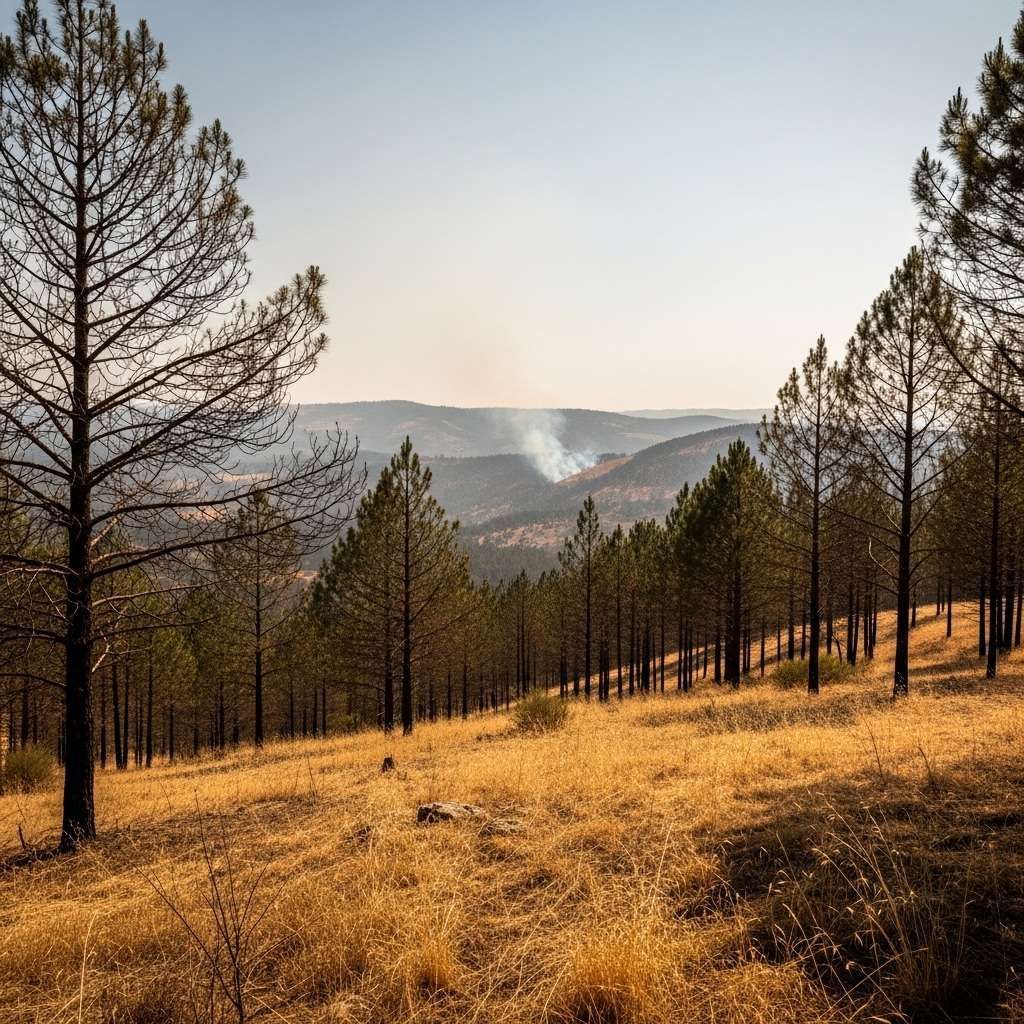
The wildfire threat intensified in parallel with soaring temperatures. Météo-France's forest meteorological service placed Haute-Garonne under red alert for extremely high fire risk, while 70 additional zones remained on orange. In Cher, authorities restricted forest access outright.
The blaze near Trévillach in the Pyrénées-Orientales, which scorched approximately 4,900 hectares, has been contained, meaning the fire remains within its perimeter and is no longer spreading, according to local officials. Meanwhile, a fire in the mountainous area near Die in Drôme weakened thanks to rainfall.
Climate Trends: A New Normal for Southern Europe
France's 2024 heat wave sequence fits a disturbing acceleration. Two-thirds of the 53 heat waves recorded in France since 1947 have occurred in the 21st century. Half took place before 2010 (over 60 years); the other half arrived after 2010 (in just 15 years).
Annual average temperatures in France have risen 2.1°C over the past 70 years (1954–2024). June 2024 became the hottest June on record in Western Europe, with some French and German regions experiencing temperatures 9°C above normal. The overnight low of 21.6°C on June 23–24 was the warmest night since 1947, surpassing the previous record from July 2019.
Météo-France projects that by 2050, temperatures above 40°C could occur annually, with local records potentially reaching 50°C. In a +4°C warming scenario, France would see ten times more heat wave days and tropical nights, with prolonged episodes starting in mid-May and, in worst-case projections, lasting through late September without respite.
What This Means for Portugal
Portugal faces parallel risks, and France's experience offers both cautionary lessons and operational blueprints. The Portuguese Institute for Sea and Atmosphere (IPMA) already issues heat warnings, but the scale and lethality of France's 2024 summer demonstrate that Portugal may need to expand cooling centers, enhance elderly monitoring, and establish clearer cancellation protocols for public events.
Tourism-dependent regions in Portugal should anticipate operational disruptions similar to those in Paris — reduced hours at cultural sites, event cancellations, and heightened insurance costs. The wildfire threat remains acute, particularly in the interior and Algarve, where vegetation and topography amplify fire spread.
Employers in Portugal should review workplace heat policies, especially in construction, agriculture, and delivery sectors. The French model — mandatory water provision, adjusted schedules, and targeted training — provides a tested framework for immediate implementation.
Long-Term Adaptation and Resilience
French cities are embedding climate resilience into urban planning: planting trees for shade, creating pedestrian and cycling corridors with canopy cover, and converting public spaces into cooling centers for residents without air conditioning. Paris has run simulations to prepare for 50°C scenarios.
Portugal has already experienced severe heat and wildfire seasons, but the frequency and intensity documented in France this year suggest that 2024 marks a threshold year for southern Europe. The mortality figures — over 2,300 deaths in France since May — demonstrate that heat is no longer a seasonal inconvenience but a public health emergency requiring year-round preparation.
As Météo-France and climate scientists emphasize, these extremes are not anomalies but the new baseline. The question for Portugal and its neighbors is not whether similar conditions will arrive, but how quickly adaptation measures can be scaled to match the accelerating threat.