Published: May 2026
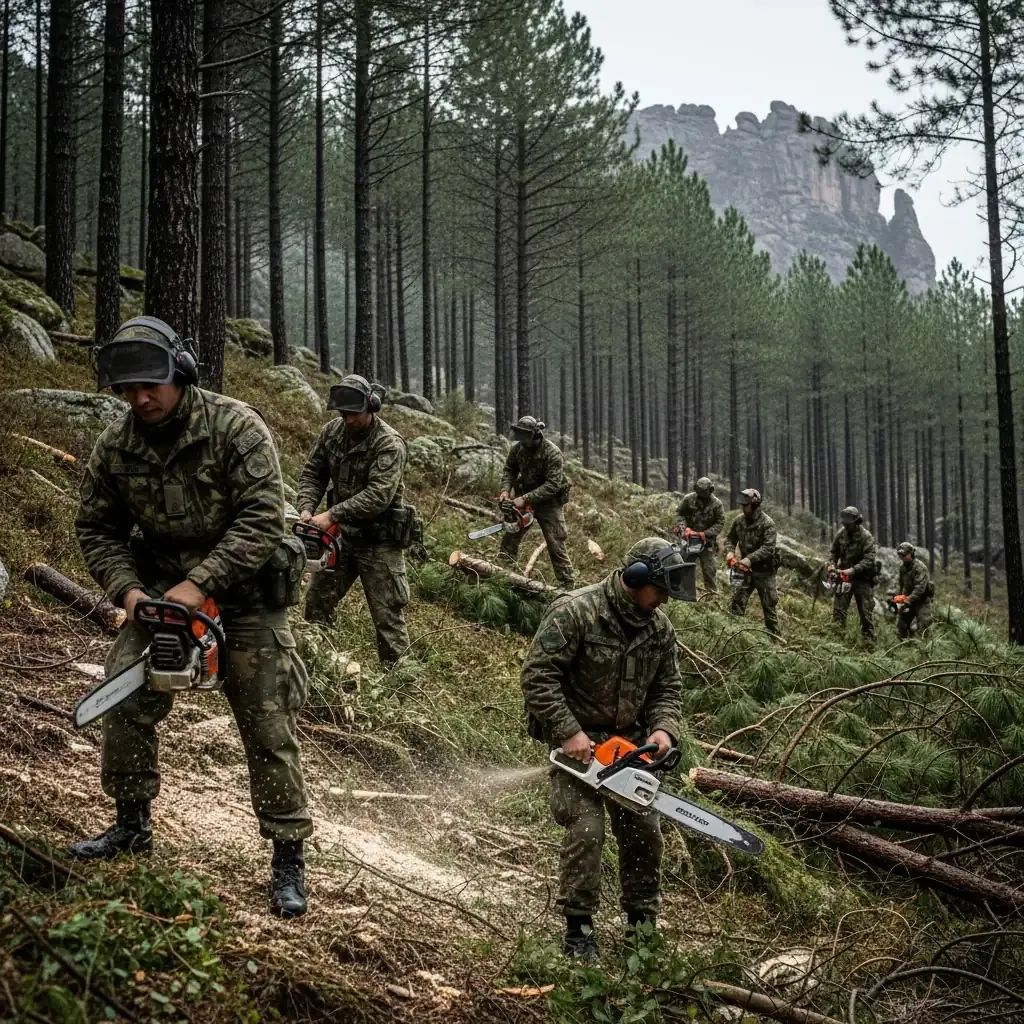
Portugal's forest owners faced a tight compliance squeeze as the May 31 wildfire prevention deadline approached, with the country's main forestry federation demanding that the June 30 grace period currently reserved for disaster zones be extended nationwide. The request came amid equipment shortages, waterlogged soils, and escalating cleanup costs that left rural landowners struggling to meet legal brush-clearing requirements before summer fire season.
Why This Matters
• Fines loomed large: Individual property owners faced penalties ranging from €150 to €1,500—potentially hitting €10,000 in specific cases—while corporate entities risked fines up to €25,000.
• Cost spike: Clearing work came at considerable expense to landowners, with fuel price increases pushing costs higher amid contractor shortages.
• Uneven enforcement window: Municipalities hit by January–February storms had until June 30, but the rest of the country had to comply by May 31—a disparity the industry said defied practical reality.
The Two-Tier Timeline Problem
Portugal's Ministry of Civil Protection and Forestry set divergent compliance dates for secondary-network fuel management under the country's rural fire prevention framework. General territory owners had to complete brush clearing and vegetation control by May 31, 2026. But councils covered by calamity declarations—those affected by depressions Kristin, Leonardo, and Marta between late January and early March—were granted an extra month until June 30.
Luís Damas, head of the National Federation of Forest Owner Associations (FNAPF), argued the distinction was arbitrary. "The government extended the deadline for affected zones but not for the rest. What we asked is for the same extension to apply countrywide, matching the storm zones," he told press at the time.
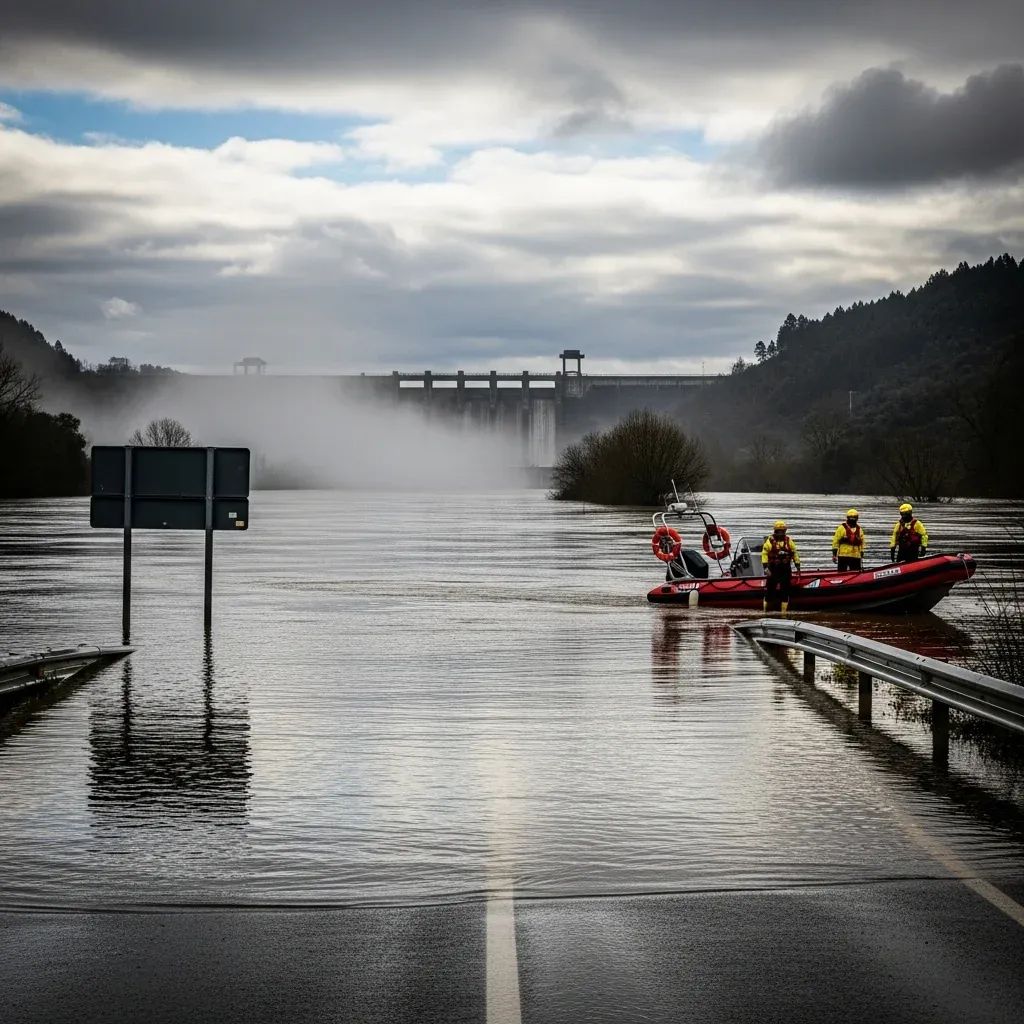
The federation's case rested on three pillars: persistent wet weather, resource scarcity, and economic pressure. Damas pointed out that saturated soils across much of mainland Portugal made clearing work inefficient. "When you cut fine vegetation around homes with so much water still in the ground, you'll likely need to do the operation once—or maybe twice," he explained. Once temperatures rose, the abundant soil moisture would trigger rapid regrowth of the very brush and grasses the law required landowners to trim, potentially leaving compliant owners in breach again within weeks.
Storm Aftermath and Contractor Bottlenecks
The triple strike of Kristin, Leonardo, and Marta in early 2026 caused significant damage across Portugal, toppling tens of thousands of trees and saturating hillsides to the point of landslide risk. The chaos diverted nearly all available forestry contractors and equipment to emergency salvage and debris removal in the hardest-hit areas.
"There are no companies, no labor, no capacity left for many owners," Damas said. "Everyone rushed to assist the most affected regions. And you can't buy machinery overnight." The bottleneck was compounded by ongoing cleanup from the previous summer's wildfires, with significant volumes of charred timber still awaiting extraction. The result: a nationwide queue for clearance services that could not be resolved in the three weeks remaining until the general May 31 cutoff.
Municipal governments, which technically held reserve powers to step in and clear non-compliant properties at owner expense, lacked the operational capacity to enforce the rule at scale. "No municipality has ever really entered into this, because they don't have the capacity either," Damas observed.
What This Meant for Landowners
Rural and forest property owners across Portugal had to navigate a patchwork of regulatory, logistical, and financial hurdles as the compliance window narrowed. The legal clearing mandate required removal of grass, scrub, and undergrowth around rural and forest buildings, with trees needing to be pruned or spaced to reduce fire risk. Costs for this work varied significantly depending on terrain and local contractor availability.
Clearing costs ranged widely, with some contractors commanding premium rates for urgent work in the weeks before the deadline. Diesel price surges had rippled through the entire cost structure, hitting both labor rates and machine hire fees.
Failure to comply by the deadline triggered a fine schedule that started at €150 for individuals and escalated to €1,500, with upper bounds reaching €10,000 in aggravated cases. Corporate landowners faced a ceiling of €25,000. Beyond fines, municipalities could dispatch crews to complete the work and invoice owners for the full cost—a legal mechanism rarely activated but theoretically enforceable.
The government had allocated €40 million from the Recovery and Resilience Plan (PRR) to assist storm-affected zones with debris removal and land clearing. However, this aid applied exclusively to calamity-declared municipalities, leaving the broader countryside without equivalent financial relief.
A Call for Regulatory Fairness
The FNAPF's push for a uniform June 30 deadline hinged on climatic consistency. "The weather was still erratic; temperatures had dropped," Damas noted at the time. "People needed time so they didn't immediately face a fine." He contended that extending the timeline would align enforcement with ecological reality: vegetation growth patterns and soil moisture conditions were largely regional, not municipal, and the arbitrary geographic split created an unequal compliance burden.
The federation also highlighted a perverse incentive embedded in the calendar. Landowners who cleared too early—while soils remained waterlogged—faced the prospect of rapid regrowth that breached height and density thresholds before fire season even began, exposing them to fines despite good-faith compliance. A June 30 universal deadline would have allowed vegetation to dry naturally, making clearing more durable and cost-effective.
The Broader Fire Prevention Context
Portugal has long grappled with catastrophic wildfire seasons, driven by a combination of dense, unmanaged undergrowth, climatic volatility, and fragmented rural land ownership. The secondary fuel management network—comprising privately owned buffer zones around structures and along access routes—forms a critical firebreak system designed to slow fire spread and facilitate firefighting access.
The European Union has intensified its focus on wildfire resilience, with significant forest area burned across the bloc in recent years. The recently enacted Nature Restoration Law mandates member states to restore ecosystems and strengthen fire prevention. Meanwhile, the EU Deforestation Regulation (EUDR) imposes strict traceability requirements on timber and related products to curtail global forest loss.
Within this framework, Portugal's approach combined hard deadlines with targeted financial support and the threat of enforcement action. The effectiveness of the model depended on logistical feasibility—a factor the FNAPF argued had been fundamentally compromised by the January–March storm sequence and its cascading effects on contractor availability and site conditions.
The Outcome
As the May 31, 2026 deadline approached, thousands of forest and rural property owners across non-calamity zones remained in a compliance gray area. The government showed willingness to adjust timelines in disaster contexts but did not signal openness to a broader extension. Enforcement would test the capacity of municipal inspection regimes and the political appetite for large-scale fining of rural constituents already burdened by storm recovery costs and fuel price inflation.
Landowners in calamity-declared areas proceeded on the June 30 timeline, while others faced a race against both the calendar and the elements.